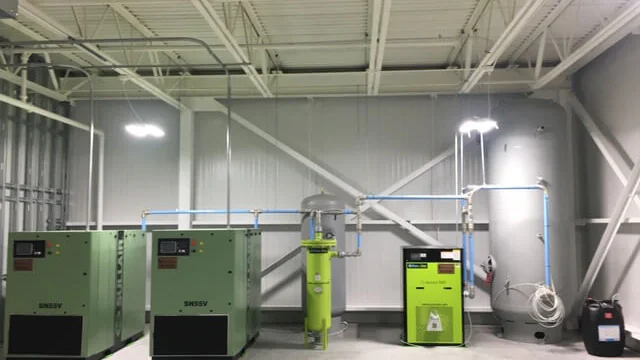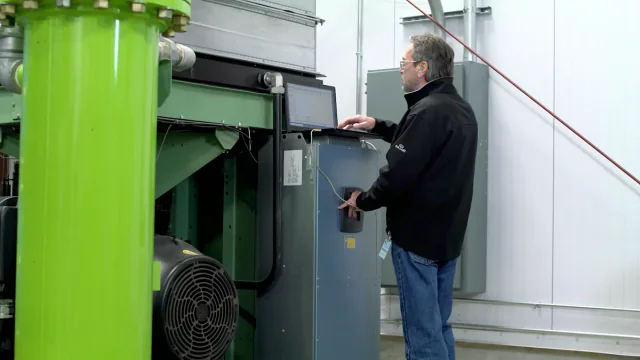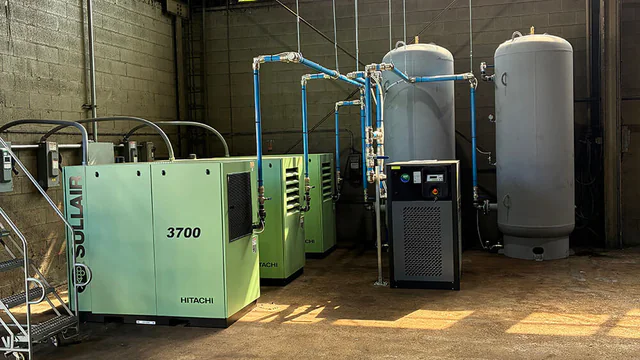
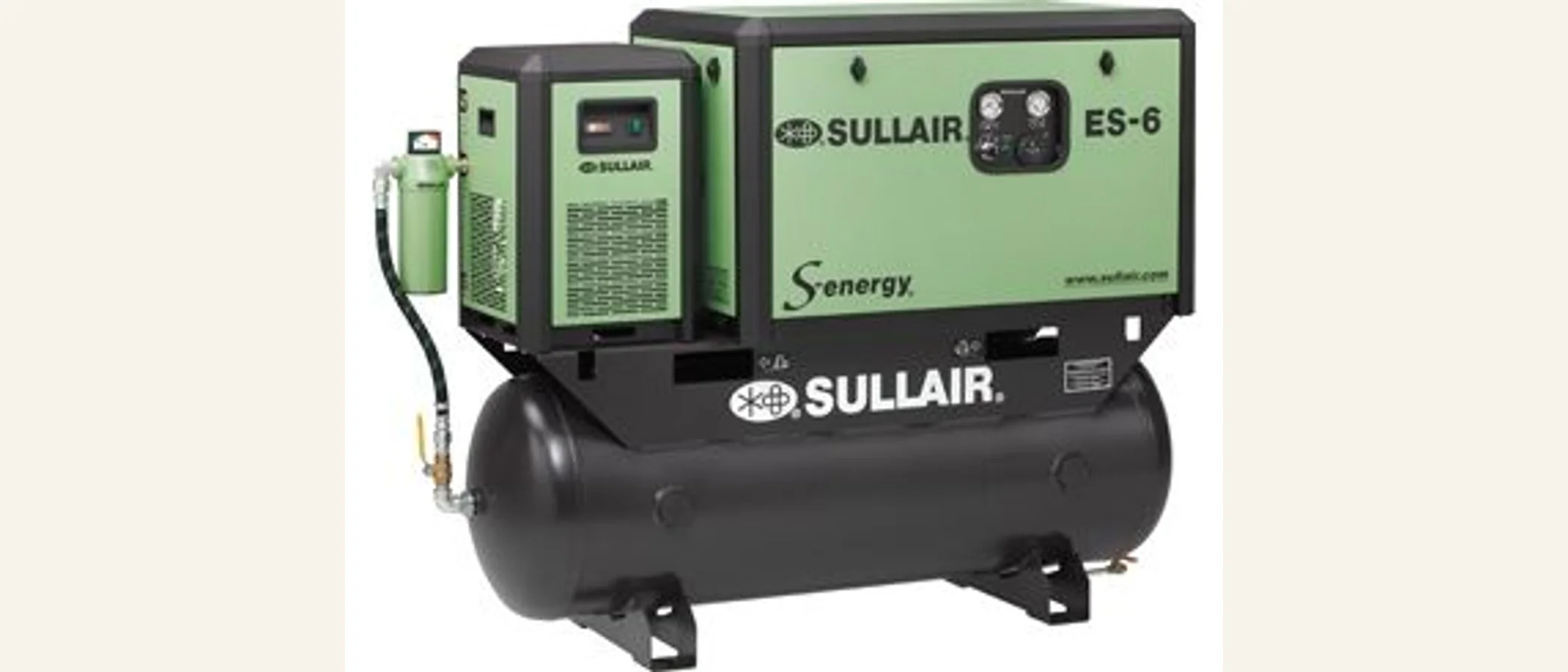
A reliable and efficient compressed air system is crucial for any industrial facility. Industrial air compressors are the backbone of many industrial operations, providing a constant supply of compressed air for handy use. In this beginner's guide, we'll give an overview of industrial air compressors and offer tips for selecting the best compressor for your needs.
In this article
What is an Industrial Air Compressor and What Can it be Used For?
An industrial air compressor draws in air from the surrounding environment. Then it compresses it into a smaller volume to increase its pressure. The compressed air is stored in a tank or cylinder until it is used. Compressed air is a powerful tool because it can be used for a wide range of applications, from powering tools to controlling processes and conveying materials. One of the most common uses of industrial air compressors is to power pneumatic tools. These tools, such as nail guns, sanders, and spray guns, require a constant supply of compressed air to operate effectively. Additionally, many manufacturing processes, such as plastic injection molding and metal stamping, rely on compressed air to power equipment and machinery. They can also control the flow of materials in a production line or regulate the temperature and humidity in a room. Compressed air can also be used for cleaning, either as a standalone cleaning tool or to power other cleaning equipment. Another common use of compressed air is for cooling. Compressed air can cool down equipment, such as motors or electrical components, that generate a lot of heat during operation. Cooling can mitigate overheating and thus extend the life of the equipment. Finally, compressed air can be used to convey materials, such as powders or granules, through pipes. This procedure is known as pneumatic conveying and is often used in food processing and pharmaceutical industries.
Types of Industrial Air Compressors
There are many industrial air compressors, each with unique features and advantages. Here are some of the most common types:
- Scroll air compressors - These compressors use interlocking spiral scrolls to compress air and are ideal for small-scale operations.
- Reciprocating air compressors - These compressors use pistons to compress air and are ideal for small to medium-sized operations.
- Rotary screw air compressors - These compressors use two rotating screws to compress air and are suitable for large industrial applications.
- Centrifugal air compressors - These compressors use high-speed rotating impellers to compress air and are used in large-scale industrial operations.
A Beginner's Guide to Choosing an Industrial Air Compressor
Selecting the right industrial air compressor can be daunting. Still, with some basic knowledge, you can make an informed decision. Here's a step-by-step guide to help you choose the right compressor:
Determine your airflow and pressure requirements
Calculate how much compressed air you need for your operations. Understanding these requirements will help you determine the size and capacity of the compressor you require. Additionally, determine the maximum pressure required for your applications. This will help you determine the compressor's pressure rating.
Choose between stationary or portable
Consider whether you need a stationary or portable compressor based on your operations' mobility requirements. Stationary compressors are typically installed in one location and have larger tanks and higher capacities, while portable compressors are designed to be easily moved from one location to another and have smaller tanks and lower capacities.
Evaluate energy efficiency
When selecting an industrial air compressor, it's essential to consider its energy efficiency to reduce operating costs. High-efficiency compressors use less energy and can help reduce energy costs over time, making them a more cost-effective choice. Brabazon offers a range of energy-efficient compressors, including models with variable speed drives that can adjust compressor output to match demand, resulting in further energy savings. We also offer compressed air system audits.
Choose a reputable supplier
Select a supplier with experience installing and maintaining industrial air compressors. At Brabazon, we understand the importance of having a reliable and efficient compressed air system in your facility. Our turnkey air compressor installation service includes everything you need for safe, well-informed, and efficient air compressor set-up and installation.
The Four Main Types of Industrial Air Compressors Explained
If you're new to industrial compressed air, understanding the four primary compressor types will help you make sense of why different applications call for different equipment:
Rotary Screw Compressors: The workhorse of industrial compressed air. Two intermeshing helical screws (rotors) trap and compress air continuously as it moves through the compression chamber. Rotary screw compressors are designed for continuous-duty operation and are the most common choice for manufacturing, food processing, automotive, and general industrial applications. Brabazon is an authorized Sullair dealer for rotary screw compressors throughout the Midwest.
Reciprocating (Piston) Compressors: A piston moves back and forth in a cylinder to compress air, similar in concept to a car engine. Reciprocating compressors are better suited for intermittent duty applications, lower flow requirements, and high-pressure applications (such as breathing air or PET bottle blowing). They generally require more maintenance than rotary screw units due to more moving parts and lubrication requirements.
Centrifugal Compressors: These large, high-flow machines use a rotating impeller to accelerate air and convert velocity into pressure. Centrifugal compressors excel in very high-volume, continuous-duty applications such as large chemical plants, refineries, and central utility systems. They are typically oil-free by design, making them attractive for critical clean-air applications.
Scroll Compressors: Two spiral elements - one fixed, one orbiting - compress air in a quiet, low-maintenance package. Scroll compressors are popular for dental offices, laboratories, and small-scale manufacturing where low noise and oil-free air are priorities. Brabazon's medical and laboratory compressor offerings include scroll-based systems.
Key Specifications You Need to Know Before Buying
Before contacting Brabazon about a new air compressor, it helps to have a clear picture of your requirements: Peak CFM demand (cubic feet per minute of air), required system pressure (PSI), duty cycle (continuous, intermittent), power supply available (voltage, phase), and whether you need oil-free air. Brabazon's account managers will guide you through this process and perform an on-site demand assessment if needed.
Get Your Compressed Air System Up and Running with Brabazon
Industrial Air Compressor Basics FAQ
What is the difference between CFM and PSI?
CFM (cubic feet per minute) is the volume of air a compressor delivers - essentially the "quantity" of air. PSI (pounds per square inch) is the pressure at which it's delivered - the "intensity." Both matter. A tool or process that requires 10 CFM at 90 PSI needs a compressor that delivers at least that much at that pressure. Running your system at the lowest pressure that meets your needs reduces energy consumption and equipment wear.
Do I need an oil-free compressor?
Oil-free compressors are required for applications where any oil contamination of the compressed air is unacceptable - food contact surfaces, pharmaceutical manufacturing, electronics assembly, and certain painting applications. For general industrial use (powering pneumatic tools, operating actuators, conveying materials), a properly maintained lubricated rotary screw compressor with appropriate downstream filtration is typically sufficient and far more cost-effective than oil-free equipment.
How much does an industrial air compressor cost?
Industrial rotary screw compressors range from approximately $5,000-$15,000 for small (5 to 25 HP) units to $30,000-$100,000+ for larger (50 to 250 HP) configurations. Installation, dryers, filtration, and receivers add to the total project cost. Brabazon provides complete turnkey pricing and can also discuss the Airtility program for facilities that prefer to avoid capital equipment purchases.
Why is Brabazon a trusted compressor partner in the Midwest?
Brabazon has served industrial customers in Wisconsin, Illinois, Minnesota, Indiana, and Missouri for decades. As an authorized Sullair dealer and service center, our technicians receive factory training and annual recertification. We operate from 14 locations across the Midwest, ensuring rapid response when you need service most.
Keep going: tools and next steps
- CFM calculator: turn this guide into a number: estimate required cfm from your tools or motor HP.
- Industrial air compressors: the full category: rotary screw, oil free, portable, and piston.
- Single stage vs two stage: the first fork in the road for piston buyers.
- SCFM vs CFM explained: the flow rating trap that undersizes compressors.
Questions on your own system? Call 800.825.3222 and ask for an engineer. We answer 24/7.
Written by
Heath Brabazon
President