Choosing the wrong industrial air compressor is an expensive mistake. Whether you're running a manufacturing plant in Green Bay, a food processing facility in Chicago, or a pharmaceutical operation in Minneapolis, the air compressor at the heart of your production line has to be sized, configured, and maintained correctly - or it becomes your most costly liability.
Brabazon has been helping Midwest industrial facilities select, install, and service air compressors since 1978. In that time, we've seen the same selection mistakes made over and over. This guide walks you through the most important factors in choosing the right system - so you don't end up with a compressor that's too small to meet peak demand, too large to run efficiently, or wrong for your industry's air quality requirements.
In this article
Step 1: Determine Your Compressed Air Demand
The most fundamental question in compressor selection is: how much air do you actually need? This is measured in CFM - cubic feet per minute - and represents the volume of compressed air your tools, equipment, and processes consume at any given time.
To calculate your total demand, list every piece of pneumatic equipment in your facility and identify its CFM requirement at operating pressure. Add those figures together to get your peak demand. Then add a 20 to 25% buffer for future expansion, leaks (the average industrial facility leaks 20 to 30% of its compressed air), and simultaneous tool operation.
Common mistake: Sizing for average demand rather than peak demand. If your stamping presses all cycle at once during a production surge, your compressor needs to keep up - or your line stops.
Step 2: Choose the Right Pressure (PSI)
Once you know your CFM requirement, you need to determine the pressure - measured in PSI - that your system must maintain. Most industrial facilities operate between 90 and 125 PSI. Specialty applications like plasma cutting, sandblasting, and certain medical processes may require higher pressures.
Design your system around the highest-pressure application in your facility, then use pressure regulators to step down to lower-pressure requirements elsewhere. Running your entire system at unnecessarily high pressure wastes energy and accelerates wear on compressor components.
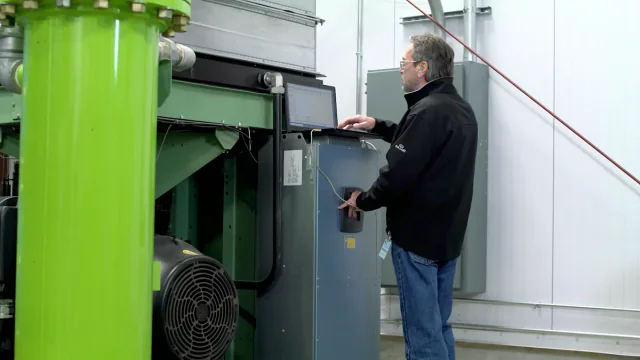
Brabazon tip: A compressed air audit - which our technicians perform throughout Wisconsin, Illinois, Minnesota, and Missouri - will map your actual system pressure, identify pressure drop points, and give you data-driven sizing recommendations rather than guesswork.
Step 3: Select the Compressor Type
There are two primary types of industrial air compressors used in manufacturing and industrial settings:
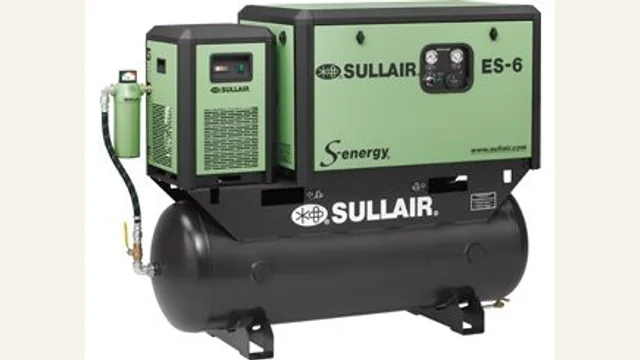
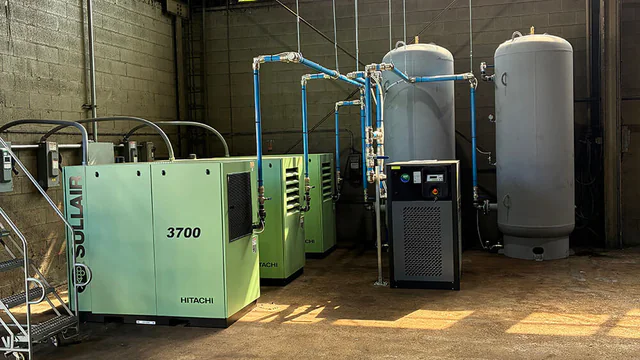
Rotary Screw Compressors are the workhorse of modern industry. They deliver continuous, steady compressed air, operate efficiently across a wide range of CFM and PSI, and are well-suited to applications requiring constant airflow - assembly lines, spray painting systems, pneumatic conveying, and more. Brabazon is a Sullair-authorized dealer and services all major rotary screw brands including Atlas Copco, Ingersoll Rand, Kaishan, Quincy, and Kaeser.
Reciprocating (Piston) Compressors are better suited to intermittent, lower-volume demand - smaller shops, maintenance bays, and applications where the compressor runs in short cycles rather than continuously. They have higher pressure capability but are generally less efficient at sustained output than rotary screw units.
For high-demand industrial applications, rotary screw compressors are almost always the right choice. Reciprocating compressors are best used as backup units or in facilities with genuinely intermittent demand cycles.
Step 4: Consider Air Quality Requirements
Not all compressed air is equal - and in some industries, contamination in your compressed air is a regulatory violation, not just an operational problem. The ISO 8573 standard classifies compressed air quality by three parameters: particulate content, water content, and oil content.
Oil-free compressors are required in:
- Pharmaceutical manufacturing and packaging
- Food and beverage production
- Electronics and semiconductor fabrication
- Medical device manufacturing
- Automotive paint and coating operations
Oil-flooded compressors with downstream filtration are acceptable in:
- General manufacturing and assembly
- Construction and heavy industry
- Warehousing and material handling
- Mining and extraction operations
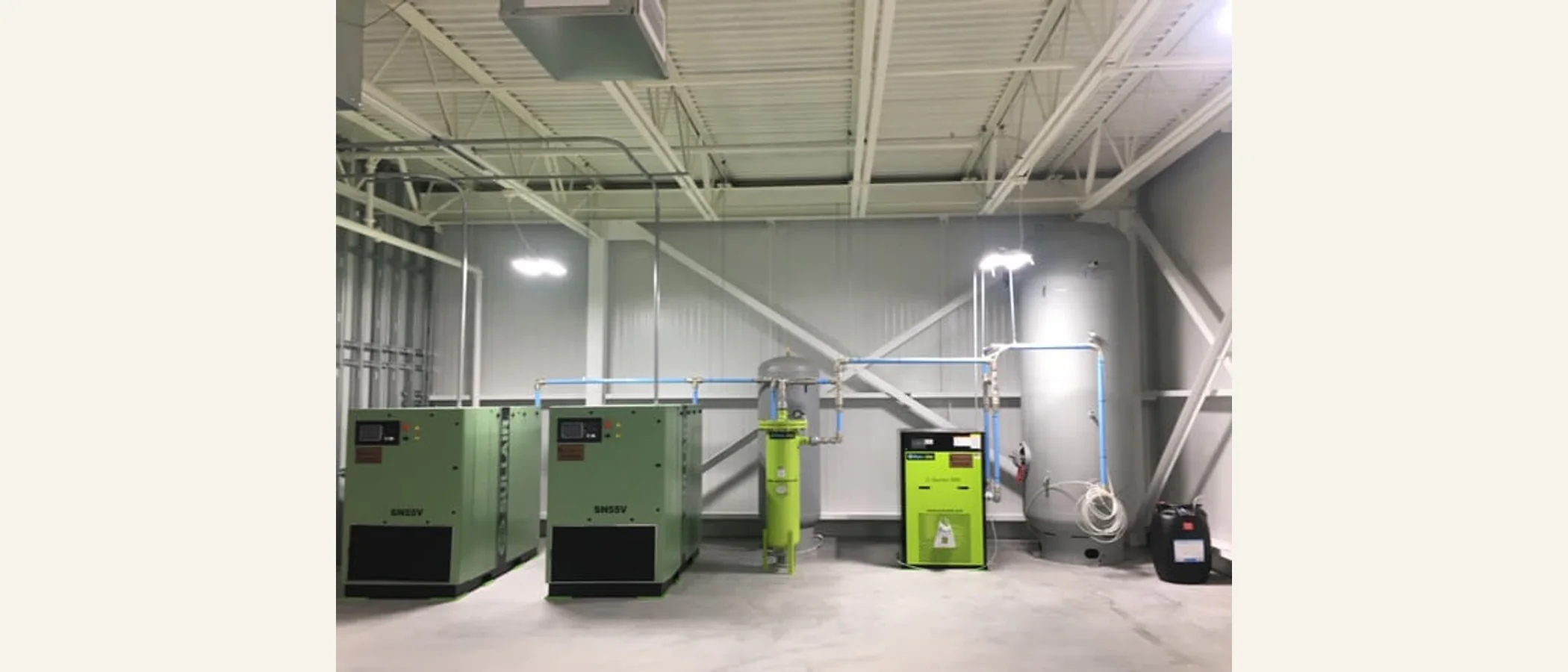
Beyond oil content, air dryers and filters are essential in nearly every application. Moisture in compressed air causes corrosion, freezes pneumatic controls in cold environments, and degrades product quality. Brabazon supplies and services refrigerated dryers, desiccant dryers, and inline filtration systems matched to your air quality specifications.
Step 5: Plan for Efficiency and Total Cost of Ownership
The purchase price of an air compressor is only a fraction of its total cost of ownership. Across the life of a compressor, electricity accounts for roughly 70 to 80% of total operating costs. A variable speed drive (VSD) compressor can reduce energy consumption by 35 to 50% in applications with variable demand - which describes most industrial facilities.
When evaluating compressors, ask your Brabazon account manager to calculate the total cost of ownership over 5 to 10 years, factoring in energy costs, scheduled maintenance, and expected component life. In most cases, a higher-efficiency VSD compressor pays for the premium within 18 to 36 months through energy savings alone.
Maintenance costs are also a critical factor. Brabazon's preventive maintenance programs keep your compressor running at peak efficiency, catch problems before they cause downtime, and preserve your warranty coverage. Our technicians carry OEM-grade parts for all major brands in fully stocked service vans - so most maintenance and repair visits are completed on the first call, without waiting on parts.
Talk to an Expert
Need Help Choosing the Right Compressor?
Brabazon's industrial equipment specialists serve 7 branches serving 14 metro areas across Wisconsin, Illinois, Minnesota, and Missouri. Whether you're replacing an aging compressor, expanding your facility's air system capacity, or troubleshooting a chronic pressure problem, our factory-trained team can help you size the right solution, install it correctly, and keep it running with ongoing service and maintenance support.
Call us at 800.825.3222 or contact us online to schedule a compressed air assessment at your facility. We offer emergency service 24 hours a day, 7 days a week - with live representatives answering every call.
Written by
Heath Brabazon
President