Industrial vacuum systems are often treated as background infrastructure - the equipment that's always there, always running, and rarely thought about until something goes wrong. But a vacuum system is a complex assembly of interdependent components, and understanding how each one functions (and fails) is essential for maintaining the performance and reliability that production depends on.
Brabazon supplies, installs, and services industrial vacuum systems throughout Wisconsin, Illinois, Minnesota, and Missouri. Our technicians are factory-trained on major vacuum system brands including Busch, Becker, Elmo Rietschle, and Gast, and have experience with the full range of industrial vacuum applications - from packaging and material handling to pharmaceutical processing and food production. This guide explains the key components of an industrial vacuum system and what failure of each component looks like in practice.
In this article
The Vacuum Pump: Heart of the System
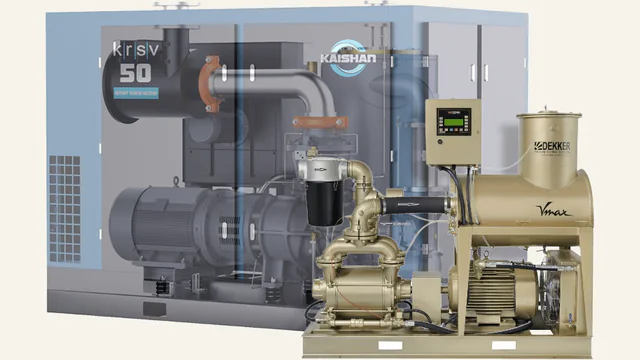
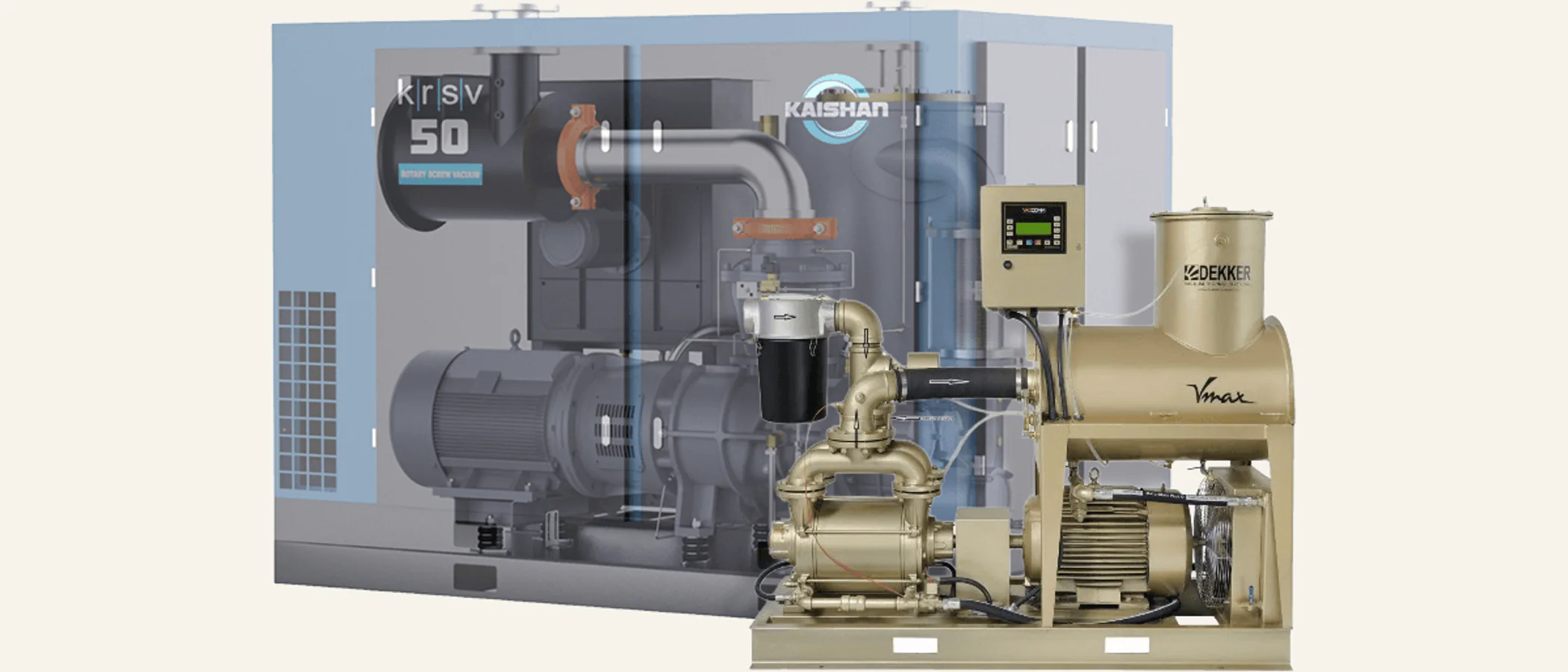
The vacuum pump is the primary mechanical component - it removes air and gas from the system to create and maintain the required vacuum level. There are several pump technologies used in industrial applications, each suited to different performance requirements:
Rotary vane pumps are widely used in packaging, woodworking, and general industrial applications. They use rotating vanes to compress and expel gas, and can achieve deep vacuum levels efficiently. They require regular oil changes and vane inspection as part of preventive maintenance.
Liquid ring pumps use a rotating liquid ring (typically water) to compress gas. They're well-suited to wet or humid process streams, chemical vapor handling, and applications where the pumped gas must be kept cool. They're highly tolerant of liquid carryover, making them common in papermaking, chemical processing, and pharmaceutical applications.
Dry claw and screw vacuum pumps operate without internal lubrication in the pumping chamber, making them ideal for clean, oil-free vacuum requirements in pharmaceutical, food processing, and electronics manufacturing. They have lower maintenance requirements than oil-sealed designs but require careful monitoring of temperature and clearances.
Roots blowers (Booster pumps) are used in combination with a primary vacuum pump to extend the achievable vacuum range or increase pumping speed. They're commonly found in metallurgical, chemical, and semiconductor applications requiring deep vacuum levels.
Vacuum Separators and Filtration
The vacuum separator (or gas-liquid separator) removes liquid droplets, particles, and condensate from the gas stream before it reaches the vacuum pump. In many industrial applications - particularly those involving wet process streams, coolants, or chemical vapors - protecting the pump from liquid ingestion is critical. Liquid entering a vacuum pump can cause catastrophic internal damage, including bent vanes, bearing failure, and seized rotors.
Filtration in vacuum systems serves two purposes: protecting the pump from particulate damage on the inlet side, and meeting environmental or air quality requirements on the exhaust side. Inlet filters trap particulates from the process stream before they reach pump internals. Exhaust filters (often oil mist eliminators on oil-sealed pumps) capture oil aerosols from the pump exhaust, preventing oil contamination of the facility environment.
Vacuum Receivers and System Piping
A vacuum receiver is a storage vessel that maintains a reserve of vacuum capacity, smoothing out demand fluctuations and allowing the pump to operate in a more efficient load/unload cycle rather than continuously modulating against variable demand. Properly sized receivers reduce pump running time, extend component life, and improve system response to sudden demand changes.
System piping design is critical in vacuum applications - more so than in compressed air systems in many respects. Because vacuum systems operate at sub-atmospheric pressure, any leak in the system allows atmospheric air to enter, reducing the achievable vacuum level and increasing pump load. Piping should be sized to minimize pressure drop, with smooth interior surfaces and minimal directional changes. All connections must be vacuum-rated and properly sealed.
Vacuum System Controls and Monitoring
Modern industrial vacuum systems use variable speed drives (VSDs) and programmable controllers to match pump output to actual system demand - similar to VSD compressors in compressed air applications. VSDs can reduce vacuum pump energy consumption by 30 to 50% in applications with variable demand cycles, with payback periods of 1 to 3 years in most industrial applications.
Monitoring systems track vacuum level, pump operating temperature, oil pressure (on oil-sealed units), and operating hours. Remote monitoring capability allows Brabazon technicians to track system performance parameters and identify developing issues before they cause failures - particularly valuable for critical process applications where vacuum system downtime has severe production consequences.
Common Vacuum System Failure Modes
Understanding where vacuum systems fail helps maintenance teams catch problems early. The most common failure modes include pump oil degradation (causing increased operating temperature and reduced pumping efficiency), vane wear in rotary vane pumps (producing reduced vacuum performance and increased noise), seal failures (causing vacuum leaks that increase pump load and reduce system vacuum level), and separator failures (allowing liquid carryover to reach the pump).
Brabazon's vacuum system technicians perform comprehensive PM services including oil analysis, vane inspection and replacement, seal inspection, filter replacement, and full system leak-down testing. Most PM visits also include a review of system performance data and a report on component condition and remaining service life estimates.
Talk to a Vacuum Specialist
Need Help with Your Industrial Vacuum System?
Brabazon's vacuum system specialists serve industrial facilities throughout Wisconsin, Illinois, Minnesota, and Missouri. Whether you're troubleshooting a performance issue, need a PM program for your vacuum equipment, or are planning a new vacuum system installation, our factory-trained technicians are available 24/7 at 800.825.3222.
Talk to an engineer online or call to discuss your vacuum system requirements.
Keep going: tools and next steps
- Industrial vacuum pumps and systems: liquid ring, dry screw, claw, and rotary vane pumps with a sizing calculator.
- Best industrial pump brands: how Dekker, Becker, Kaishan, and others compare.
- Vacuum pump repair: factory-trained rebuilds for every component covered in this guide.
- Free sizing calculators: compressed air tools with every formula shown.
Questions on your own system? Call 800.825.3222 and ask for an engineer. We answer 24/7.
Written by
Heath Brabazon
President