Industrial blowers
Positive displacement blowers for dilute-phase grain, meal, and feed conveying and silo aeration.
Spec a conveying blower
Industry: Agriculture and grain handling
Grain Handling Air Spec Plate
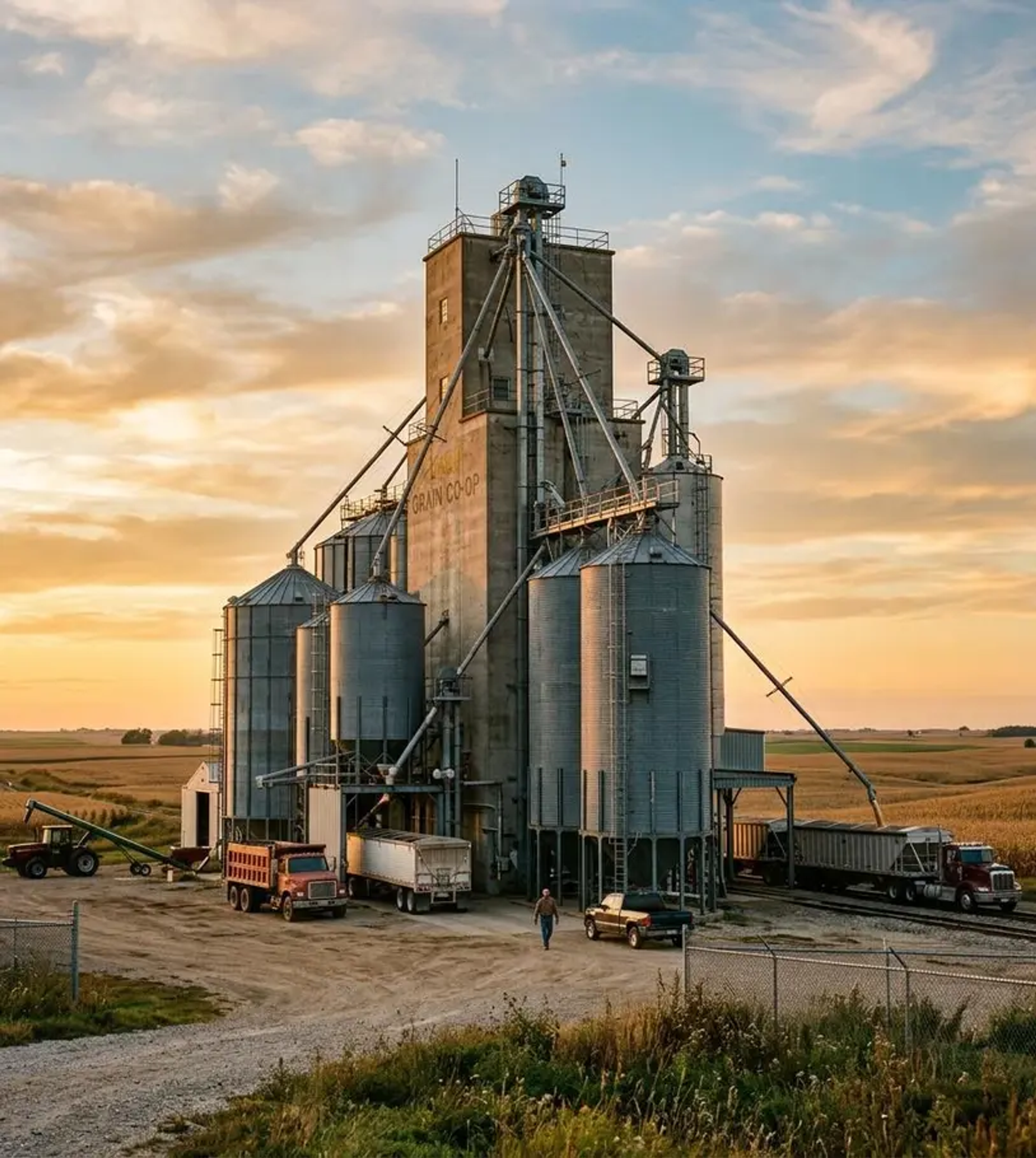
Grain elevators, feed mills, and seed operations run two distinct air jobs. Pneumatic conveying of grain, meal, and feed needs high-volume, low-pressure air from positive displacement blowers so product moves gently without cracking. Plant compressed air, separate from conveying, runs gate and diverter actuation that routes product and baghouse pulse-jet cleaning that controls grain dust. On top of that, the load swings hard between harvest and off-season, and grain dust loads intake air heavily, so rental capacity, service agreements, and intake filtration matter as much as base sizing.
Grain handling splits into two air jobs: high-volume blower air for pneumatic conveying of product, and plant compressed air for gate actuation and baghouse pulse-jet cleaning. Add heavy seasonal swing and grain dust, and sizing takes care.
Two air jobs in a grain handling operation
Conveying: Positive displacement blowers delivering high volume at low pressure for dilute-phase grain, meal, and feed transfer, sized to line length and material bulk density so kernels move gently.
Plant air: A right-sized rotary screw compressor with drying and filtration for gate and diverter actuation and for baghouse pulse-jet dust control, with heavy-duty intake filtration for the dust load.
Seasonal cover: Rental fleet units for the harvest peak and breakdown risk, plus a service agreement that schedules pre-harvest inspection and dust-load filter changes.
Run the numbers yourself
Off-season is the right time to schedule a service agreement inspection so equipment is ready before harvest.
Positive displacement blowers moving grain, meal, and feed through dilute-phase lines with gentle, high-volume handling.
Plant compressed air operating the gates and diverters that route product between elevator legs and storage bins.
Dry, consistent header air firing the pulse-jet cleaning that keeps grain dust collectors inside their differential pressure.
Compressed air for pneumatic actuators, packaging, and bagging equipment on the feed mill process line.
Clean, dry air for seed cleaning, sizing, and treating equipment where product quality depends on gentle handling.
Blower and compressed air for silo aeration and pneumatic assist that keeps stored product flowing on discharge.
Rental fleet units covering the harvest window and any breakdown when elevator and mill downtime is most costly.
Heavy-duty staged intake filtration protecting compressor and blower airends in high grain-dust environments.
Four disciplines keep conveying gentle, gates actuating, baghouses inside their differential pressure, and equipment ready through the harvest peak.
Dilute-phase conveying of grain, meal, and feed needs high air volume at low pressure to carry product without cracking kernels. That is a positive displacement blower duty, not a job for the plant utility compressor. Running a conveying line off a utility header wastes energy and starves the actuation and cleaning air. We size the blower package to line length, material bulk density, and required throughput so product moves gently and the line stays clear.
Separate from conveying, a grain elevator or feed mill runs plant compressed air for gate and diverter actuation and for baghouse pulse-jet cleaning. Actuation needs steady pressure so gates seat and route product correctly; the baghouse needs dry air holding consistent header pressure so each pulse releases the dust cake. A right-sized rotary screw compressor with drying and filtration covers both loads without oversizing.
Grain handling load spikes at harvest and runs light the rest of the year. Buying enough capacity to cover the peak means paying to store idle equipment most of the calendar. The honest answer for most operations is to own the year-round base load and cover the harvest peak and breakdown risk with rental fleet units, backed by a service agreement that schedules pre-harvest inspection so the base equipment is ready before the first loads arrive.
Grain and feed dust loads intake air heavily, so compressors and blowers in this industry need heavy-duty staged intake filtration and more frequent filter service than a clean plant. Neglected filtration shortens airend and element life and drops efficiency, and it becomes a housekeeping problem around a combustible dust. We specify filtration for the dust load and put filter changes on a schedule through a service agreement.
For a typical country elevator with an attached feed mill, the package we configure most pairs a positive displacement blower for dilute-phase grain and feed conveying with a right-sized rotary screw compressor for gate actuation and baghouse pulse-jet cleaning. Heavy-duty intake filtration protects both airends against grain dust. The harvest peak and any breakdown risk are covered with rental fleet units rather than idle owned capacity, and a service agreement schedules the pre-harvest inspection and dust-load filter changes. See the rotary screw page for plant air options.
Typical project: agriculture and grain handling
A common scenario in this industry is a feed mill trying to run its pneumatic conveying off the same utility compressor that also feeds gate actuation and baghouse cleaning, then finding the header starves during harvest and gates hesitate. A typical project starts when that operation needs both more conveying capacity and reliable actuation air before the first loads arrive. Brabazon-configured equipment addresses this by moving conveying onto a dedicated positive displacement blower package sized to the line and product, freeing the utility compressor to hold steady pressure for gate actuation and dry, consistent header pressure for the baghouse pulse-jet cycle. Heavy-duty intake filtration is added for the grain dust, a rental unit covers the harvest peak, and a service agreement schedules the pre-harvest inspection. The result is gentle conveying, gates that seat reliably, and a dust collector that stays inside its differential pressure.
Factory-trained technicians dispatch from 7 branches serving 14 metro areas across Wisconsin, Illinois, Minnesota, and Missouri with an under 2 hour average emergency response. Find your nearest branch:
Dilute-phase pneumatic conveying of grain, meal, and feed almost always runs on positive displacement blowers delivering high air volume at low pressure, not a plant utility compressor. Blowers suit the high volume and gentle handling needed to move product without cracking kernels. Sizing depends on line length, material bulk density, and the throughput the elevator or feed mill needs.
Grain elevators use plant compressed air for gate and diverter actuation that routes product between legs and bins, for baghouse pulse-jet cleaning that controls grain dust, and for general maintenance and blowdown. This is separate from the conveying air, which comes from blowers. A modest rotary screw compressor with drying and filtration covers the actuation and cleaning loads.
Grain handling load spikes hard at harvest and runs light off-season, so buying enough capacity to cover the peak means paying for idle equipment most of the year. Rental units cover the harvest peak and any breakdown during the window when downtime is most costly. A service agreement schedules pre-harvest inspections so the base equipment is ready before the first loads arrive.
Grain and feed dust loads the intake air heavily, so compressors and blowers in elevators and feed mills need heavy-duty intake filtration and more frequent filter service than a clean plant would. Neglected intake filtration shortens airend and element life and drops efficiency. We specify staged filtration for the dust load and put filter changes on a schedule through a service agreement.
Brabazon serves agricultural, grain handling, and feed producers from 7 Midwest branches serving 14 metro areas across Wisconsin, Illinois, Minnesota, and Missouri, close to rural elevators and mills. Family owned since 1978 and the authorized Sullair distributor since 1984, we rent harvest-peak capacity, service blowers and compressors, and average an under 2 hour emergency response.
Tell us your conveying lines, gate and baghouse actuation loads, seasonal schedule, and dust conditions. We size the blower package, plant air compressor, and harvest-peak rental so the operation is ready before the first loads arrive.
Press Escape to close. Use the arrow keys to move through results.