Compressed Air Dryers and Filters: Air Dryers & Filters Sized to Your System
Stop moisture, oil, and particulates at the right dew point with dryers and filters sized to your compressor and your process.
What a compressed air dryer does and who needs one
A compressed air dryer removes the water vapor that would otherwise condense in your piping and tools. Brabazon Pump, Compressor and Vacuum offers a complete line of industrial air dryers and compressed air filtration systems engineered to improve air quality and protect critical downstream equipment. Moisture, oil aerosols, and particulates in compressed air cause corrosion, equipment failure, product spoilage, and costly downtime. Brabazon's dryer and filtration solutions eliminate these contaminants, helping Midwest facilities maintain clean, dry, reliable compressed air throughout their systems.
Air Dryers & Filters we stock and service
-
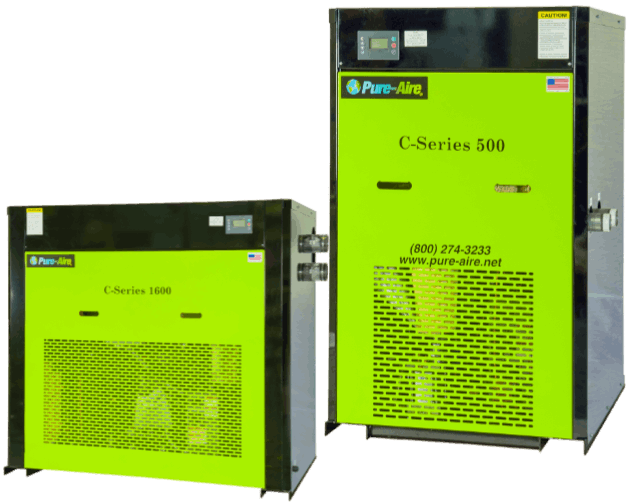
Pure-Aire C Series Cool Force Cycling, Refrigerated Air Dryer

- Type
- Cycling refrigerated
- Best for
- Variable load plant air with energy savings
-
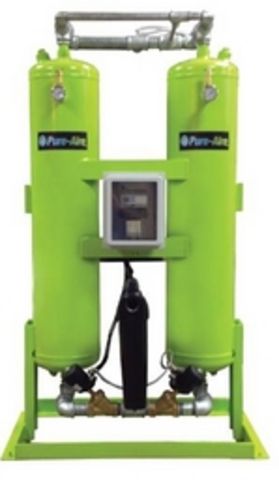
Pure-Aire H Series Heavy-Duty, Heatless Regenerative Air Dryer
- Type
- Heatless regenerative desiccant
- Best for
- Very low dew points and outdoor lines
-
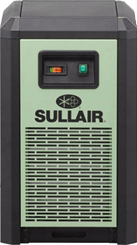
Sullair RN Refrigerated Non-Cycling

- Type
- Non-cycling refrigerated
- Best for
- Steady, continuous plant air
-

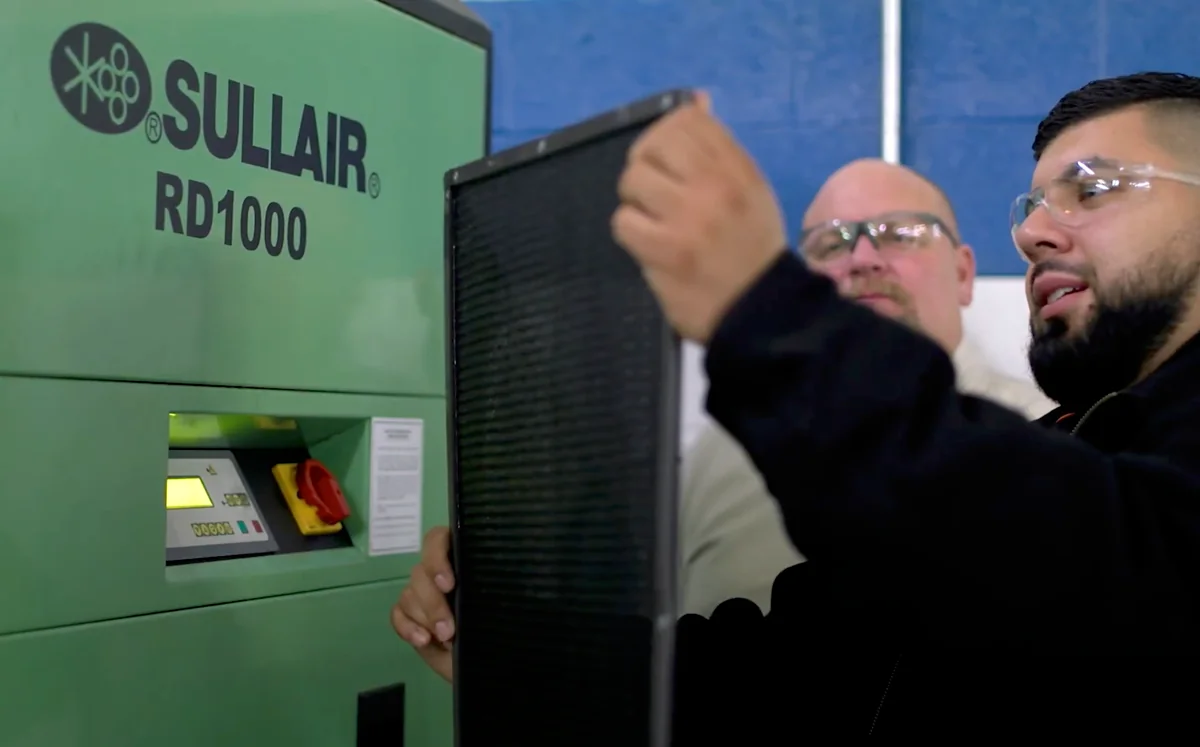
Sullair RD Refrigerated Digital Cycling
- Type
- Digital cycling refrigerated
- Best for
- Fluctuating demand with tight dew point control
How to choose a compressed air dryer for your facility
Choose the dryer by the pressure dew point your process needs, then size it to the compressor flow at your real inlet temperature and pressure. Refrigerated dryers are the lowest-cost fit for general plant air; desiccant dryers earn their higher operating cost only when you need very low dew points. Two number one ranked guides walk through the decision in depth: refrigerated versus desiccant air dryer comparison and how to choose a compressed air dryer for your facility. To size the compressor that feeds the dryer, use our CFM calculator.
Refrigerated versus desiccant at a glance
| Dryer type | Typical dew point | Best use |
|---|---|---|
| Refrigerated (cycling and non-cycling) | About 35 to 50 F pressure dew point | General plant air, tools, and most manufacturing |
| Heatless regenerative desiccant | Down to -40 F pressure dew point or lower | Instrument air, outdoor lines, and freeze-prone areas |
Where clean, dry compressed air matters most
Dry, filtered air protects product and equipment across manufacturing, food and beverage, pharmaceutical and medical, electronics, and automotive facilities. For a broader air treatment overview and the brand lineup, see our industrial air dryers and compressed air filters page.
Pair treatment with the right source: rotary screw or oil free compressors. Installation, service and repair, and compressed air audits are backed by 7 branches serving 14 metro areas, including Milwaukee and Minneapolis.
Why Brabazon for air treatment
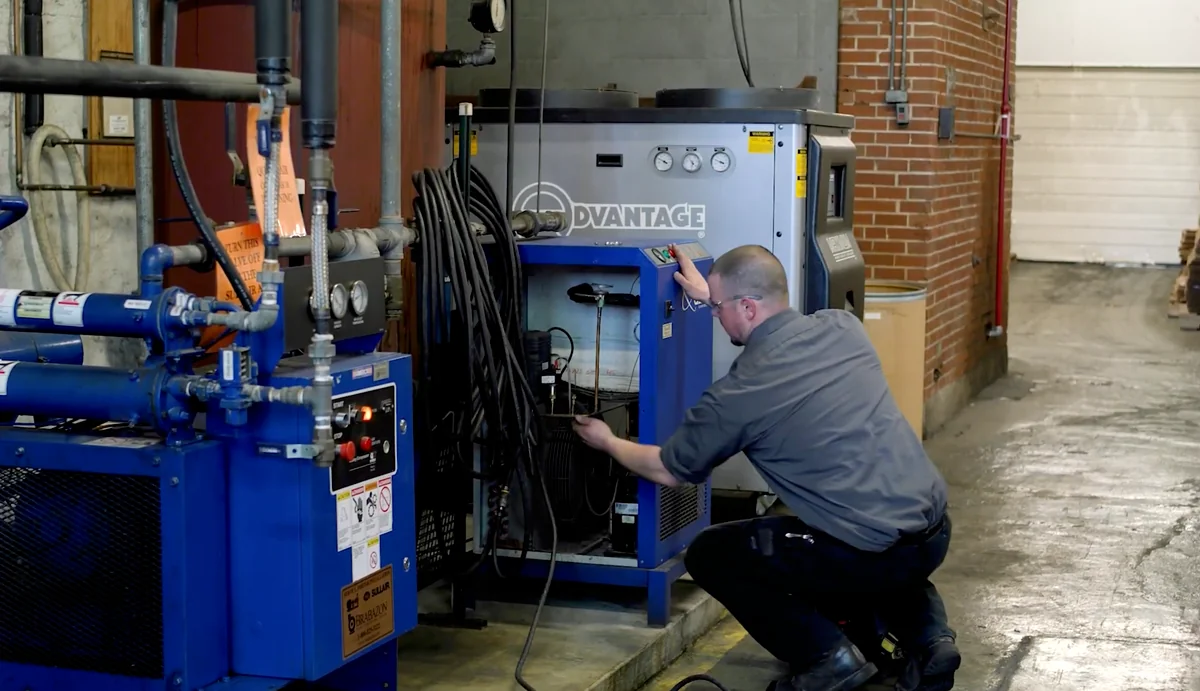
- 24/7 emergency response from 7 branches serving 14 metro areas
- Factory-trained technicians for refrigerated and desiccant dryers
- 7 branches serving 14 metro areas across WI, IL, MN, and MO
- Family owned since 1978
Compressed air dryer questions, answered first
What does a compressed air dryer actually do?
A compressed air dryer removes water vapor from compressed air so it condenses in the dryer instead of in your piping, tools, and process equipment. Compressing air concentrates moisture, and without a dryer that moisture causes corrosion, equipment failure, product spoilage, and costly downtime. The dryer holds the air at a controlled pressure dew point so the rest of the system stays dry.
Refrigerated or desiccant: which compressed air dryer do I need?
Refrigerated dryers reach roughly a 35 to 50 F pressure dew point and cover general plant air, tools, and most manufacturing at the lowest operating cost. Desiccant (regenerative) dryers reach -40 F or lower and are the right choice for instrument air, outdoor piping, and freeze-prone lines. Our refrigerated versus desiccant comparison walks through the tradeoffs in detail.
How do I size a compressed air dryer for my facility?
Size the dryer to the compressor flow it must handle at your actual inlet temperature and pressure, then confirm the dew point your application requires and any correction factors for hot or humid conditions. Undersizing shows up as wet air under peak load. Our engineers size the dryer with the compressor and filters as one system so the dew point holds across your duty cycle.
Do I need filters as well as a dryer?
Usually yes. Filters remove particulates, oil aerosols, and liquid before and after the dryer, protecting the dryer and delivering clean air downstream. Moisture, oil aerosols, and particulates in compressed air cause corrosion, equipment failure, product spoilage, and costly downtime, so a matched dryer and filtration package is how facilities maintain clean, dry, reliable compressed air throughout their systems.
Can Brabazon service the dryer after installation?
Yes. Factory-trained technicians install, service, and repair refrigerated and desiccant dryers and filters, with 24/7 emergency response from 7 branches serving 14 metro areas. Family owned since 1978, Brabazon keeps common dryer and filter parts stocked so repairs and desiccant changes do not stall production.
Not sure which dryer or filter you need?
Book a compressed air audit and an engineer will measure your dew point, flow, and losses, then recommend the right treatment. Compressor down right now? We answer 24/7.
Request a compressed air dryer quote
Or call 800.825.3222 any time. We answer 24/7.
Request a compressed air dryer quote
Request received. If you need someone now, call 800.825.3222.
Our team will follow up using the contact details you provided.
Please fill in all required fields (name, company, email, phone, preferred contact method, ZIP, and city), or call 800.825.3222.