Oil-free compressors
Class 0 oil-free machines and nitrogen feed air for canning lines and sterile wort aeration.
Spec Class 0 canning air
Industry: Breweries and distilleries
Brewery and Distillery Air Spec Plate
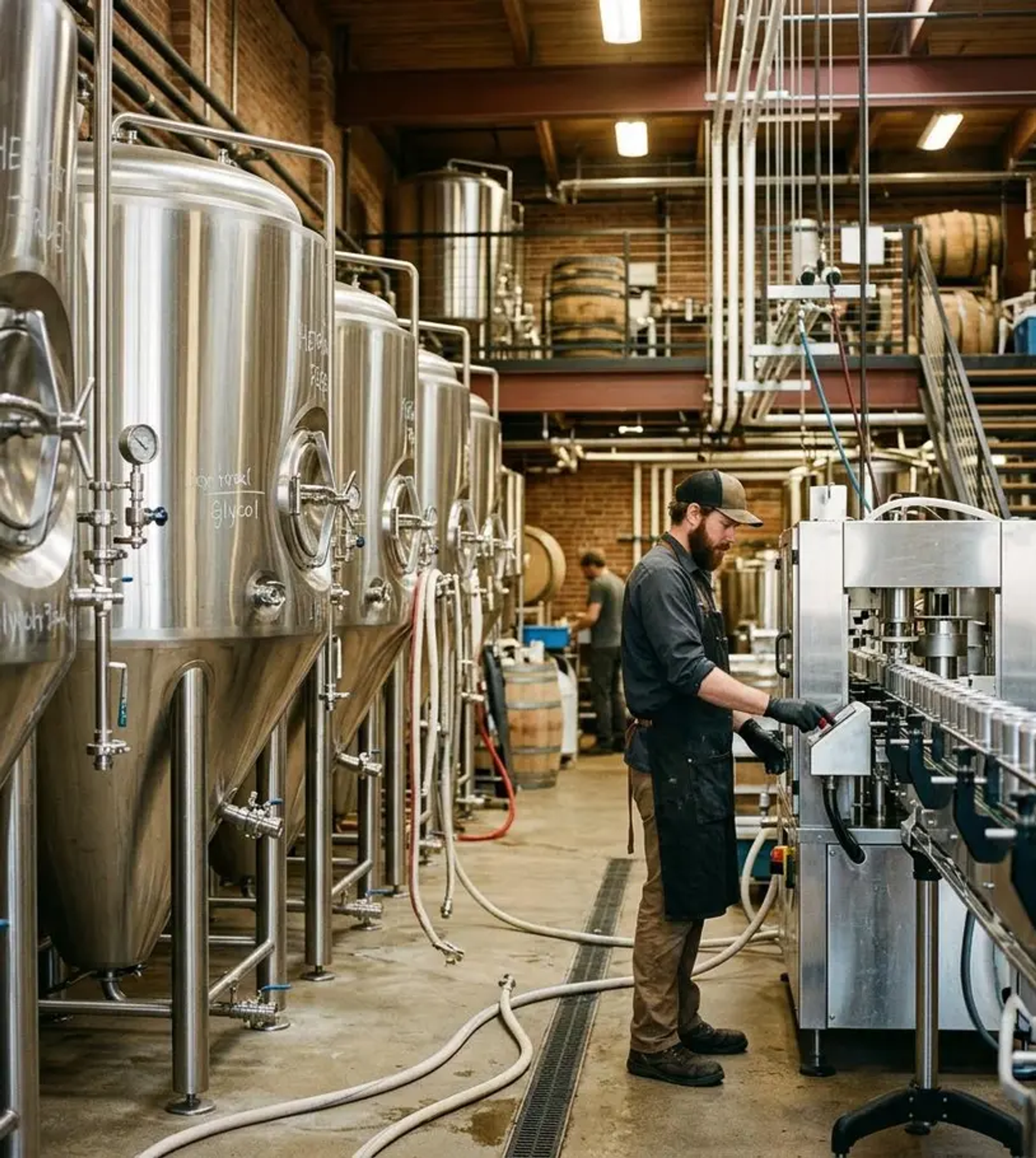
Breweries and distilleries run several duties off one plant room. Canning lines need oil-free contact air to ISO 8573-1 Class 0 for can rinsing blow-off and filler actuation near open beer. Nitrogen for can dosing, tank and line purging, and nitro pours often justifies an on-site PSA or membrane generator fed from the compressed air system, sized to your dissolved oxygen target and volume. Wort aeration uses sterile-filtered oil-free air, and higher-volume aeration or grain conveying belongs on low-pressure blowers. Keg wash, cellar work, and shop tools run on oil-injected utility air. Splitting these circuits keeps oil-free and nitrogen capital where product quality is at stake.
Producers run oil-free contact air on the canning line, nitrogen for dosing and purging, sterile air for aeration, and oil-injected utility air for the cellar. Matching each duty to the right machine and the right nitrogen technology sets the cost and reliability of the system.
The air and gas circuits in a brewery or distillery
Canning air: Oil-free Class 0 (ISO 8573-1) for rinsing blow-off, can clearing, and filler actuation near open product. Sized to line speed.
Nitrogen: PSA for higher purity where dissolved oxygen targets are tight; membrane for moderate purity purging. Fed from the plant air header, sized to volume and purity.
Aeration: Sterile-filtered oil-free air for wort at pitching; blowers for higher-volume aeration and grain conveying.
Utility air: Oil-injected VSD rotary screw for keg wash, cellar transfer, distillery bottling, proofing, and shop tools.
Run the numbers yourself
See our food and beverage page for shared sanitary air and nitrogen guidance.
Oil-free contact air driving filler actuation, empty can clearing, and can rinsing blow-off on high-speed canning lines.
On-site nitrogen dosing and headspace purging to control dissolved oxygen in the can and protect flavor and shelf life.
Nitrogen purging of brite tanks, fermenters, and transfer lines to displace oxygen before filling with finished product.
Nitrogen supply for nitro coffee and stout dispense, on-site generation replacing cylinder and dewar deliveries.
Sterile-filtered oil-free air aerating wort at pitching, and low-pressure blowers for higher-volume aeration duties.
Compressed air and blowers driving keg wash and fill machines, line clearing, and cellar transfer actuation.
Blowers and dilute-phase conveying moving malt and spent grain through the brewhouse and to storage.
Distillery bottling line air, plus utility air for proofing water systems and pneumatic controls in the barrel warehouse.
Four decisions determine whether a brewery or distillery air and nitrogen system protects product quality and controls operating cost.
Steady nitrogen demand for canning, purging, and nitro pours often justifies on-site generation. A PSA or membrane generator fed from the compressed air system replaces cylinder and dewar deliveries with a fixed cost per unit of gas. Membrane units are simple for moderate purity, and PSA reaches higher purity when dissolved oxygen targets demand it. The break-even against cylinder supply depends on monthly volume and required purity.
Can rinsing blow-off, empty can clearing, and filler actuation near open beer put air close to product-contact surfaces. ISO 8573-1 Class 0 oil-free supply prevents oil carryover there. Utility air for keg wash, cellar work, and shop tools away from the product zone can run oil-injected with high-efficiency filtration. Splitting the two circuits keeps oil-free capital focused where product quality is at stake.
Where air is used to aerate wort at pitching, it must be oil-free and passed through a sterile-grade filter so nothing off-flavor or unsanitary reaches the fermenter. The volume is modest and the purity requirement is high. Higher-volume aeration and tank movement can move onto low-pressure blowers, keeping the compressor sized for actuation and blow-off rather than process air.
Distilleries share the packaging air profile of breweries, with oil-free contact air on bottling lines and utility air for pneumatic controls. Proofing water systems and barrel warehouse operations add pneumatic valve and pump actuation on their own utility circuit. Sizing a system that covers bottling peaks and steady utility loads keeps the packaging line running without starving the rest of the plant.
For a production brewery adding a canning line, the package we configure most pairs an oil-free rotary screw sized to the line for rinsing blow-off and filler actuation with an on-site nitrogen generator fed from the plant header, PSA where the dissolved oxygen target is tight and membrane where purging tolerates moderate purity. A separate oil-injected VSD compressor covers keg wash, cellar, and shop tools, and grain conveying moves onto industrial blowers. See the oil-free compressor page and the rotary screw page for equipment details.
Typical project: Breweries and distilleries
A common scenario in this industry is a brewery moving from bottle and keg into canning while still buying nitrogen in cylinders. The new canning line needs oil-free contact air the existing oil-injected utility compressor cannot supply cleanly, and cylinder nitrogen cost climbs with every can dosed and every tank purged. A typical project starts when the brewery sizes an oil-free machine to the canning line for rinsing blow-off and filler actuation, adds an on-site nitrogen generator fed from the plant header, PSA for the tight dissolved oxygen target on the can and membrane where purging allows, and keeps the oil-injected utility compressor for keg wash and cellar work. The result is clean contact air that protects flavor and shelf life, a fixed cost per unit of nitrogen instead of recurring deliveries, and utility air left free for the rest of the plant. Brabazon sizes the oil-free air, the nitrogen generator, and the utility supply to the line speed and gas volume of the brewery.
Factory-trained technicians dispatch from 7 branches serving 14 metro areas across Wisconsin, Illinois, Minnesota, and Missouri with an under 2 hour average emergency response. Find your nearest branch:
On-site generation usually makes sense once a brewery runs steady nitrogen for canning, tank and line purging, and nitro pours. A PSA or membrane generator fed from your compressed air system removes cylinder and dewar deliveries and gives a fixed cost per unit of gas. Membrane units are simple for moderate purity around 95 to 99 percent, while PSA reaches higher purity when purging demands it. The break-even against cylinder supply depends on your monthly volume and required purity.
For dissolved oxygen control in the can, breweries generally want high-purity nitrogen for dosing and purging headspace, often in the 99.5 percent range or higher, which points to a PSA generator. Tank and line purging can tolerate lower purity in many cases, where a membrane system is simpler. The right technology depends on the lowest dissolved oxygen target on the line and the total volume of gas the brewery consumes.
Air that contacts the product zone, such as can rinsing blow-off, empty can clearing, and filler actuation near open beer, should be oil-free to ISO 8573-1 Class 0 to avoid oil carryover onto product-contact surfaces. General line actuation and utility air away from the product zone can run on oil-injected machines with high-efficiency filtration. Splitting the two circuits keeps oil-free capital where it matters.
Yeast needs oxygen at the start of fermentation, so many breweries aerate wort with sterile-filtered oil-free air on the way to the fermenter, while others use bottled oxygen. Where air is used it must be oil-free and passed through a sterile-grade filter so nothing off-flavor or unsanitary reaches the wort. Higher-volume aeration and tank movement duties can also run on low-pressure blowers rather than a compressor.
Brabazon has been the authorized Sullair dealer since 1984 and has served producers across Wisconsin, Illinois, Minnesota, and Missouri since 1978 from 7 branches serving 14 metro areas. We size oil-free air, on-site nitrogen, and blowers for canning, packaging, and cellar work, and we dispatch emergency service with an under 2 hour average response.
Tell us your canning line speed, dissolved oxygen target, nitrogen demand, aeration approach, and cellar loads. We size the oil-free air, the on-site nitrogen generator, and the utility air to match your production.
Press Escape to close. Use the arrow keys to move through results.