Pumps and blowers
The equipment lineup for process, sludge, and dewatering duty.
See pumps and blowers
Industry: Wastewater treatment
Aeration Spec Plate
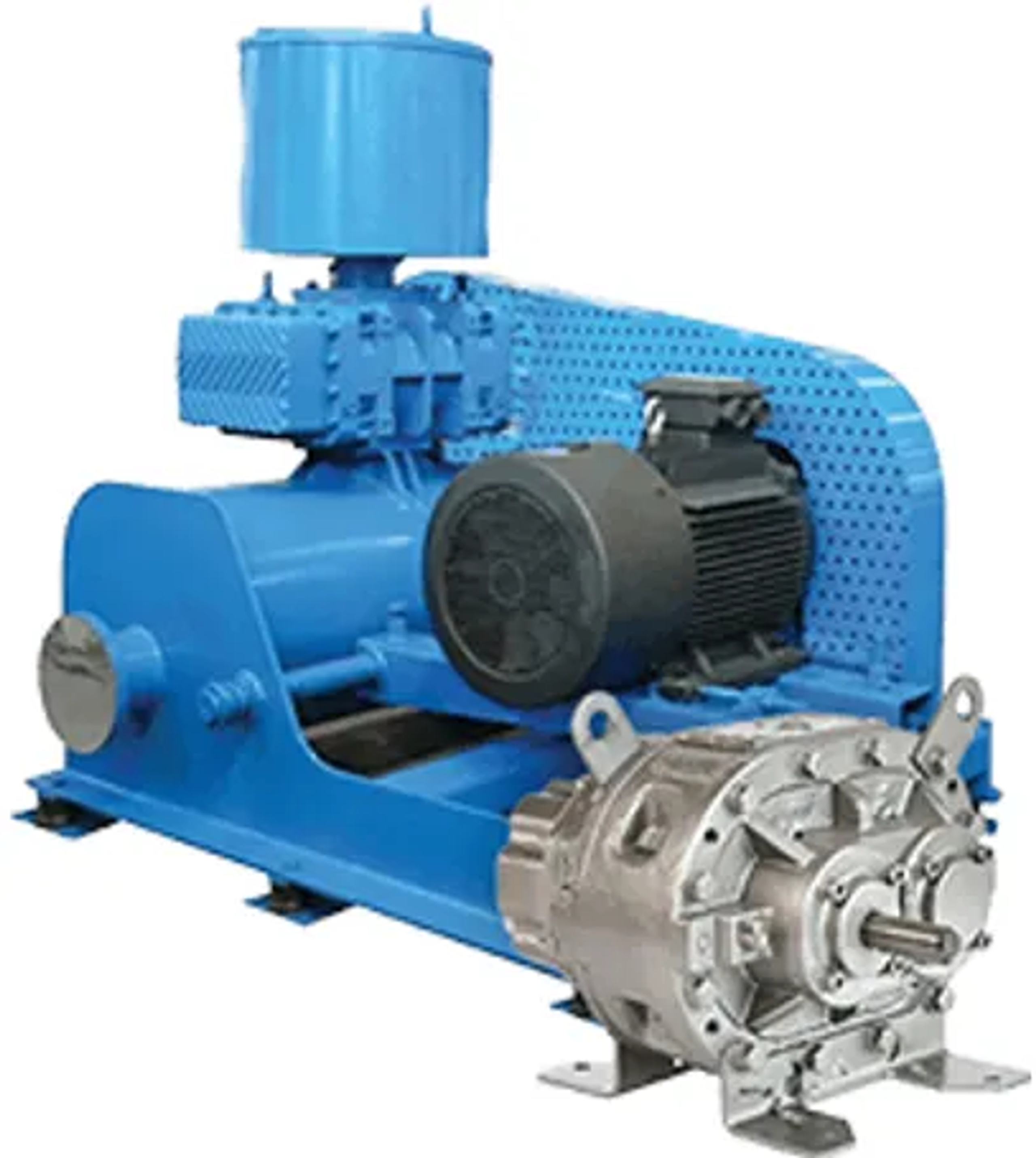
When the power bill climbs every summer and the blowers spend the night blowing off, the plant is paying for turndown it does not have. The technology call follows the load profile: high-speed turbo blowers are the efficiency leaders on large steady loads but turn down only about 2 to 1, screw blowers hold high efficiency across roughly 4 to 1 for swinging diurnal loads, and lobe PD machines remain the simple choice for small and pressure-variable duties. Aeration is worth this attention because EPA guidance puts it at 50 to 60 percent of plant electricity. The estimator below starts from what you run today.
Enter what runs today. The output is an annual energy estimate and the savings range a higher-efficiency or VSD blower typically captures. Planning-level math from your inputs; a logged evaluation confirms it.
Enter your blower type, horsepower, hours, and rate to see the annual numbers.
Run the numbers yourself
The basin blowers that dominate the plant power bill.
Gas mixing and aeration air for stable digestion.
Keeping influent channels fresh and solids moving.
Air scour blowers cleaning filter media on cycle.
Aerated grit chamber air keeping organics in flow.
Timed high-volume air breaking filter beds loose.
Air movement through scrubbers and biofilters.
Pumps and air for thickening and dewatering trains.
Four facts drive nearly every blower decision at a treatment plant. None of this is gated behind a form.
EPA energy guidance for the water sector reports that aeration commonly accounts for 50 to 60 percent of a treatment plant's electricity use. That single number is why blower technology, sizing, and turndown decide the operating budget more than any other mechanical choice in the plant.
Turbo blowers post the best wire-to-air efficiency near their design point but give up range, typically about 2 to 1. Screw blowers hold high efficiency across roughly 4 to 1 turndown. Lobe PD machines are the least efficient of the three but the most forgiving. The right pick follows the load profile, not the brochure number.
Plants are commonly designed for a 20 year flow that has not arrived, so blowers idle along throttled or blowing off, which wastes energy every hour. Sizing from actual diurnal DO demand, with a small unit for night loads, beats one big machine at every plant we have logged.
A blower is only as efficient as the signal driving it. Dissolved oxygen probes feeding a control loop that trims blower output to the setpoint routinely cut aeration energy on their own, and they are the prerequisite for getting catalog efficiency out of any new blower.
For plants with a swinging diurnal load, the configuration we recommend most is a screw blower carrying the day load with a smaller PD or screw unit trimming nights, both on DO setpoint control. Large plants with steady loads justify high-speed turbo machines at the design point. Every path starts with logging what the basin actually demands, and the equipment lives on the pumps and blowers page.
Typical project: aeration keep and optimize
A common scenario is a municipal plant asking for a turbo blower quote to replace three lobe PD units that run throttled around the clock. The right first step is to log the basins for a couple of weeks: often the data shows night demand at a third of day demand, inside what the existing machines can serve with speed control. A typical project then becomes two VFDs, DO probes, and a control loop trimming to setpoint, at a fraction of the turbo capital cost, and the aeration line item on the power bill drops enough to fund the next upgrade. The turbo conversation waits for the plant expansion, when the load will justify it. Brabazon logs the load, specs the controls, and installs the VFDs and blowers for this kind of project.
Factory-trained technicians support municipal and industrial plants from 7 branches serving 14 metro areas with an under 2 hour average emergency response. Find your nearest branch:
At a steady load near design, high-speed turbo blowers are the most efficient wire-to-air; across a widely varying load, screw blowers often win because they hold efficiency over about 4 to 1 turndown. Lobe PD blowers trail both on energy but remain the simple, pressure-tolerant choice for small and rough duties.
EPA energy guidance for wastewater puts aeration at 50 to 60 percent of typical treatment plant electricity use. That is why a blower efficiency project usually outranks every other mechanical upgrade in payback, and why the estimator on this page starts from your horsepower and hours.
Turndown is the ratio between maximum and minimum useful output, and it matters because basin demand swings day to night. A blower with 2 to 1 turndown must blow off or cycle when demand drops below half, wasting energy, while a 4 to 1 machine keeps trimming to the DO setpoint.
Not automatically: a PD blower with a VFD and a working DO control loop can be the right keep-and-optimize answer, especially at small plants and on digester or grit duty where pressure varies. The replacement case is strongest on large, steady aeration loads running near constant output.
Yes, when demand varies: trimming blower speed to a DO setpoint eliminates blow-off and throttling losses, and on PD machines a VFD is the single best retrofit available. The savings scale with how far and how often your load swings from the design point.
Brabazon services blowers and process pumps for municipal and industrial plants from 7 branches serving 14 metro areas across Wisconsin, Illinois, Minnesota, and Missouri, with an under 2 hour average emergency response. We support operators and consulting engineers from selection through rebuild.
Send us the blower nameplates, runtime, and your electric rate. You get back the annual energy picture, the honest keep-or-replace call, and the payback math for each path.
Press Escape to close. Use the arrow keys to move through results.