An industrial compressed air system is made up of many interconnected components, each playing a critical role in generating, treating, storing and distributing clean, dry, properly pressurized air to your facility's equipment. Understanding these components helps you make better purchasing decisions, troubleshoot problems faster and maintain your system more effectively.
In this article
The Air Compressor (Compression Unit)
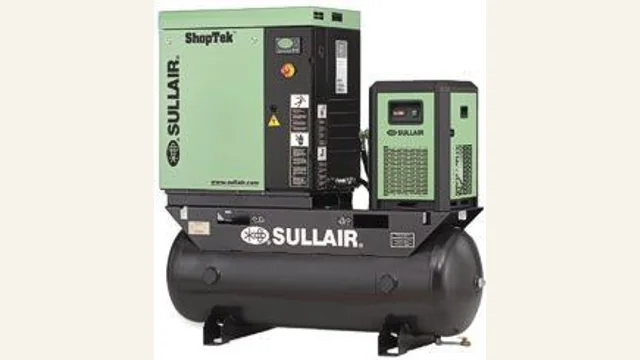
The air compressor is the heart of the system - it takes in atmospheric air and compresses it to the required operating pressure. The most common types in industrial use are rotary screw compressors and reciprocating piston compressors. Key compressor components include:
Airend (compression element):
The core assembly containing the rotors or pistons that actually compress the airDrive motor:
Powers the airend, typically an electric motor sized in horsepowerDrive system:
Connects the motor to the airend via belts, gears or a direct couplingInlet valve/inlet filter:
Controls air flow into the compressor and removes dust and debris from incoming airControl system:
Manages start/stop, pressure settings, load/unload cycling and system monitoring
Air/Oil Separator (Oil-Lubricated Compressors)
In oil-lubricated rotary screw compressors, the oil/air mixture exiting the airend must be separated before the air enters the downstream system. The separator vessel and separator element remove the vast majority of oil from the compressed air (typically reducing oil carryover to 1 to 3 ppm). The oil falls to the bottom of the separator, where it is cooled and returned to the airend.
Oil Cooler and Aftercooler
Compression generates significant heat. Two heat exchangers manage this:
Oil cooler:
Cools the compressor lubricating oil before it returns to the airendAftercooler:
Cools the compressed air after it leaves the compressor, typically to within 15°F of ambient temperature. This cooling causes much of the moisture in the air to condense before it reaches downstream equipment.
Moisture Separator and Drain
Located after the aftercooler, the moisture separator collects condensed water and removes it from the air stream via an automatic condensate drain. Proper drain function is critical - a failed drain allows water to carry over into the air system.
Air Receiver Tank (Storage Tank)
The air receiver stores compressed air and serves several important functions:
- Buffers demand peaks, reducing compressor cycling and start/stop frequency
- Provides additional moisture separation and cooling
- Maintains system pressure stability
- Provides emergency air reserve for short-duration high-demand events
Receiver tanks are sized in gallons and should be selected based on compressor output (CFM) and system demand characteristics.
Compressed Air Dryer
Even after the aftercooler and moisture separator, compressed air still contains significant moisture vapor. A compressed air dryer removes this residual moisture to achieve a safe pressure dew point for your application. The two main types are:
Refrigerated dryer:
Achieves a pressure dew point of ~35°F - suitable for most industrial applicationsDesiccant dryer:
Achieves dew points of -40°F to -100°F - required for critical applications, outdoor lines in cold climates, or instrument air
Compressed Air Filters
Filters remove contaminants from compressed air at various points in the system:
Coalescing filters:
Remove liquid water and oil aerosolsParticulate filters:
Remove dust, rust and pipe scaleActivated carbon filters:
Remove oil vapor and odors - required for food-grade and breathing air
Filters should be installed in series (coalescing → particulate → carbon if needed) and have elements replaced at the manufacturer's recommended intervals.
Compressed Air Piping
The distribution piping carries compressed air from the compressor room to end-use equipment throughout your facility. Common materials include aluminum, stainless steel, copper and black iron. Piping should be sized to minimize pressure drop and designed to allow condensate to drain toward collection points.
Point-of-Use Components
At each piece of equipment or tool, a filter-regulator-lubricator (FRL) unit conditions the air for that specific application:
Filter:
Final removal of moisture and particles at point of useRegulator:
Reduces line pressure to the operating pressure required by the tool or machineLubricator:
Adds a fine oil mist for pneumatic tools that require lubrication (not used with oil-free applications)
Compressed Air System Design and Parts from Brabazon
Brabazon Pump, Compressor and Vacuum supplies complete compressed air systems and individual components - from compressors and dryers to filters, piping and point-of-use accessories. Our application engineers help design systems optimized for your facility's specific pressure, flow and air quality requirements. Contact Brabazon to discuss your compressed air system needs.
PARTS & SERVICE