Compressed air storage tanks are one of the most underutilized tools in industrial compressed air system design. Facilities that are experiencing pressure drops during peak demand, compressors that short-cycle on and off at a high rate, or systems that cannot support new equipment additions often find the solution is not a larger compressor - it is additional storage. This guide explains how compressed air storage tanks work, when they solve real problems, and how to calculate the right tank size for your application.
In this article
What a Compressed Air Storage Tank Actually Does
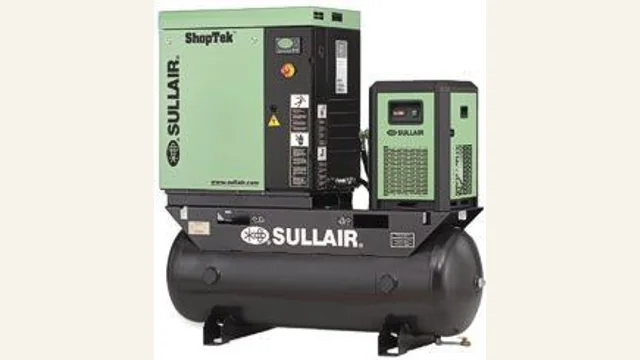
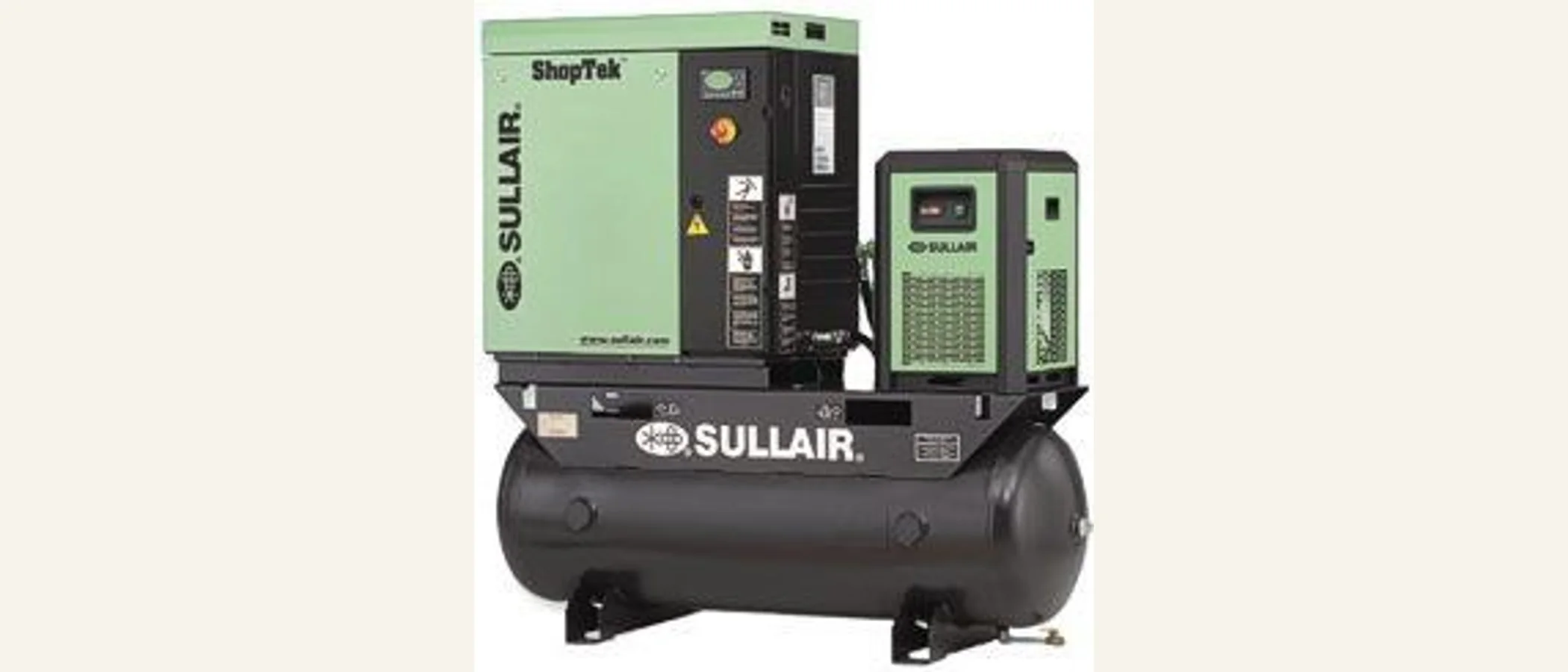
A compressed air receiver tank stores a volume of compressed air at system pressure. When demand temporarily exceeds the compressor's output capacity - during a peak demand event - the tank supplies air from storage to bridge the gap, preventing system pressure from dropping. When demand falls below compressor output, the tank refills. The tank acts as a buffer between the compressor's steady output and the system's variable demand.
This buffering function provides several benefits: it prevents pressure drops during demand spikes, it allows the compressor to run fewer on/off cycles (reducing mechanical wear and energy consumption from inefficient cycling), and it allows facilities to meet short-duration peak demands without adding permanent compressor capacity.
Three Problems That Storage Tanks Often Solve
Problem 1: Pressure drops during peak demand. If your system pressure drops when specific equipment starts - a large actuator opens, a press cycle begins, multiple tools run simultaneously - a storage tank located near the high-demand equipment can supply air during the demand spike before pressure drops reach the point of use. This is often faster and less expensive than upgrading the compressor or distribution piping.
Problem 2: Compressor short-cycling. A fixed-speed compressor that cycles on and off more than 6 to 10 times per hour is short-cycling - the demand is just enough to trigger the compressor's low-pressure cut-in, but the compressor quickly satisfies demand and cuts out, only to cycle again shortly after. Each start puts stress on the motor and compressor, accelerates wear, and wastes energy. Increasing receiver tank capacity reduces cycling frequency by giving the compressor more air to pump before reaching cut-out pressure and more volume for the system to draw down before reaching cut-in pressure.
Problem 3: Insufficient capacity for new equipment. When adding new compressed air-using equipment to an existing system, the question is whether the compressor can support the additional load. In many cases, if the new equipment's demand is intermittent, additional storage capacity allows the existing compressor to meet the average demand without needing to be replaced or supplemented with another compressor.
How to Size a Compressed Air Receiver Tank
The basic formula for sizing a receiver tank to handle a demand event is:
V = (T × Q × Pa) / (P1 - P2)
Where:
V
= required tank volume (cubic feet)T
= time of the demand event (minutes)Q
= demand during the event that exceeds compressor output (CFM)Pa
= atmospheric pressure (14.7 PSIA at sea level)P1
= initial tank pressure (PSIG + 14.7)P2
= minimum acceptable system pressure (PSIG + 14.7)
Example: You have a demand event that exceeds compressor output by 50 CFM for 30 seconds (0.5 minutes), starting at 100 PSIG and you cannot allow pressure to drop below 85 PSIG.
V = (0.5 × 50 × 14.7) / ((100 + 14.7) - (85 + 14.7)) = 367.5 / 15 = 24.5 cubic feet ≈ 183 gallons
This is a simplified calculation - a proper sizing analysis also accounts for compressor output during the event, tank location relative to the demand point, and piping losses between the tank and the point of use. But it illustrates how the calculation works and gives you a reasonable starting estimate.
Primary vs. Secondary Storage: Where to Put the Tank
A primary receiver tank located immediately after the compressor (and after the dryer and filtration) serves as general system storage. It buffers the whole system and is the starting point for any compressed air system design. Standard sizing for a primary receiver is 1 to 2 gallons per CFM of compressor output - a 100 CFM compressor should have at least a 100 to 200 gallon primary receiver.
Secondary receiver tanks are located downstream, closer to the specific points of high demand. They serve as local storage that responds to localized demand spikes without affecting the broader system. Secondary receivers are particularly effective for stamping presses, large actuators, and other equipment with high instantaneous demand followed by significant idle time. A secondary receiver located within a few feet of the high-demand equipment reacts immediately to the demand spike, with the distribution system and primary receiver refilling it during the idle period.
Tank Maintenance Requirements
Compressed air receiver tanks are ASME-coded pressure vessels and require periodic inspection per applicable codes and regulations. Key maintenance items:
Drain condensate regularly.
Tanks accumulate condensate - particularly in humid summer conditions. An automatic drain on the tank bottom prevents condensate accumulation, which causes internal corrosion and eventually pushes water into the distribution system. Manual drain valves should be opened briefly at least once per shift in high-humidity conditions.Inspect for external corrosion.
Tanks located in damp or humid environments can corrode externally. Inspect annually and address rust promptly.Internal inspection.
Older tanks should be internally inspected for rust, pitting, and wall thinning. A tank that has accumulated significant internal rust is shedding that rust into your air system. Tanks with significant internal corrosion should be replaced.Safety relief valves.
Verify that safety relief valves are functional and set to the correct relief pressure. A seized or corroded relief valve on a pressure vessel is a safety hazard.
When a Larger Compressor Is the Real Answer
Storage tanks solve peak demand problems - they cannot solve sustained demand problems. If your system demand consistently exceeds compressor output over an extended period (more than a few minutes), no amount of storage will compensate. In that situation, additional compressor capacity is the right answer. A Brabazon system analysis can determine whether your pressure or capacity problems are peak demand issues (solved with storage) or sustained demand issues (requiring compressor capacity). Getting that diagnosis right saves significant capital expense.
Related Resources
- Compressor & System Installations - Brabazon designs and installs complete compressed air systems including receiver tanks
- Compressed Air System Audits - identify pressure drop problems that a storage tank could solve
- Refrigerated vs. Desiccant Air Dryers - storage tanks and dryers are key components of a well-designed system
Talk to a Storage Tank Specialist