Winter is harder on compressed air systems than most plant managers realize. Freezing temperatures damage condensate drains, crack piping, and cause moisture in the system to freeze in critical locations - including the compressor intake, drain lines, and outdoor piping runs. Unheated compressor rooms in the Midwest can see temperatures well below 0°F, which is outside the safe operating range of most compressed air equipment. Taking the time to properly winterize your system in the fall prevents costly winter failures and protects your equipment investment. Here is what to do before the cold sets in.
In this article
Understand Your Compressor's Minimum Operating Temperature
Most standard rotary screw air compressors are rated for ambient operating temperatures between 35°F and 105°F (2°C-40°C). Below 35°F, compressor oil thickens significantly, making cold starts difficult and potentially damaging - the compressor must work harder to turn the airend through cold, viscous oil. Below freezing, condensate in the compressor and piping can freeze, blocking drains, cracking drain bodies, and causing pressure-related failures.
Check your compressor's specification sheet for its minimum ambient temperature rating. If your compressor room regularly drops below that threshold in winter, you need one or more of the following: enclosure heating, oil sump heating, or a winter-grade oil.
Protect the Compressor Room
The simplest winterization measure is ensuring the compressor room stays above the minimum operating temperature. For most installations, this means:
- Sealing gaps around doors, windows, and pipe penetrations that allow cold air infiltration
- Installing a thermostatically controlled space heater sized for the room volume and your winter low temperature
- Redirecting some of the compressor's heat output to maintain room temperature (compressors generate significant heat during operation - this can be leveraged for space heating with the right ductwork arrangement)
- Ensuring the compressor room ventilation system has dampers that can be partially closed during cold weather without compromising cooling
Protect Condensate Drain Lines
Condensate drain lines that run through unheated spaces or exit to the outdoors are highly vulnerable to freezing. A frozen drain line backs up condensate into the system, eventually saturating the air with moisture and potentially damaging downstream equipment. Protect exposed drain lines with:
- Pipe insulation wrap rated for your minimum expected temperature
- Heat tape on exposed outdoor sections, thermostatically controlled to activate at 38°F
- Routing changes that keep drain lines inside heated spaces wherever possible
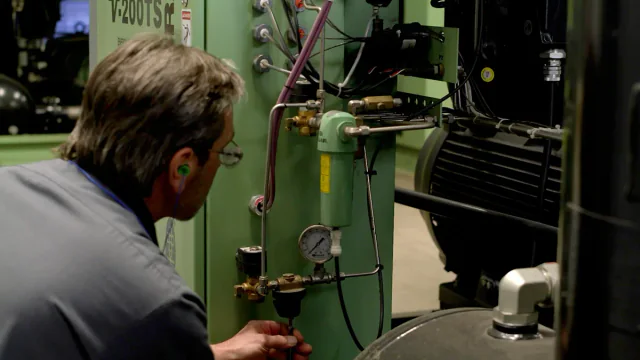
Inspect all automatic drains before winter - a drain that is marginal in summer will fail in January. Replace questionable drains in the fall rather than waiting for a frozen-drain event in January.
Switch to Winter-Grade Compressor Oil
Standard compressor oil viscosity increases significantly below 40°F, making cold starts hard on bearings and the airend. Many compressor manufacturers offer winter-grade or all-season synthetic oils with lower pour points that maintain appropriate viscosity at low temperatures. If your compressor room regularly sees temperatures below 40°F before startup, switching to a winter-grade synthetic oil reduces cold-start wear and improves startup reliability. Consult your compressor manufacturer's specifications for approved low-temperature oil grades.
Protect Outdoor and Exposed Piping
Any compressed air distribution piping that runs through unheated spaces or outdoors is at risk of moisture freezing inside the pipe, particularly at low points where condensate accumulates. Before winter:
- Drain all low points in outdoor piping runs
- Verify that all outdoor pipe sections have functioning drains or drain valves that can be manually opened if automatic drains freeze
- Insulate exposed piping in unheated areas
- Consider heat tracing for critical outdoor runs that cannot be rerouted or adequately insulated
- Check that all pipe supports are secure - ice formation and thermal contraction stress pipe hangers
Service the Air Dryer Before Winter
Your compressed air dryer is working harder in winter - cold inlet air carries less moisture, but the temperature differential between inlet air and ambient drives condensation patterns differently than summer. More importantly, a dryer that is marginal in summer will fail in winter when compressor rooms get cold. Service the dryer in the fall:
Refrigerated dryers:
Clean condenser coils, verify refrigerant charge, test the hot gas bypass valve that prevents freeze-up of the heat exchanger in cold ambient conditionsDesiccant dryers:
Check desiccant for contamination, verify regeneration purge function, inspect switching valves
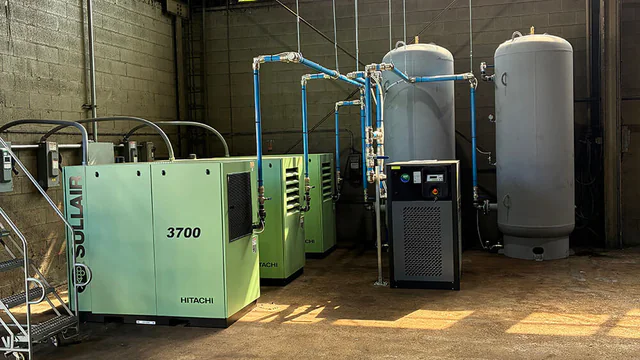
Refrigerated dryers have a freeze point - if the ambient temperature around the dryer drops below approximately 35°F, the heat exchanger can freeze. Ensure refrigerated dryers are located in heated spaces.
Prepare a Cold-Start Procedure
For facilities that shut down completely over weekends or holidays, a cold-start procedure ensures the compressor comes back up safely after extended cold-weather shutdowns. Key elements:
- Allow the compressor room to warm to minimum operating temperature before starting
- Verify oil level before starting - cold oil settles and level gauges may read differently than warm
- For units with a sump heater: verify it is functional before extended cold-weather shutdowns
- Start the compressor and run it unloaded for 5 to 10 minutes before loading, allowing oil to warm and reach operating viscosity
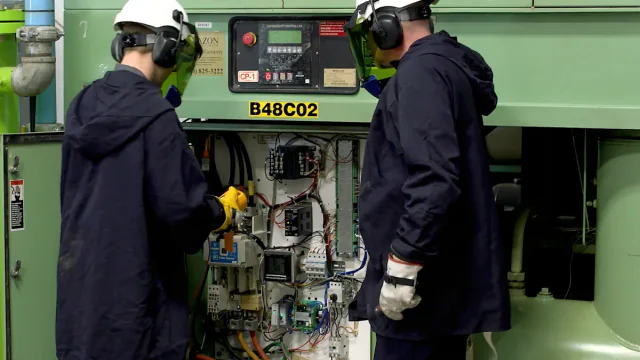
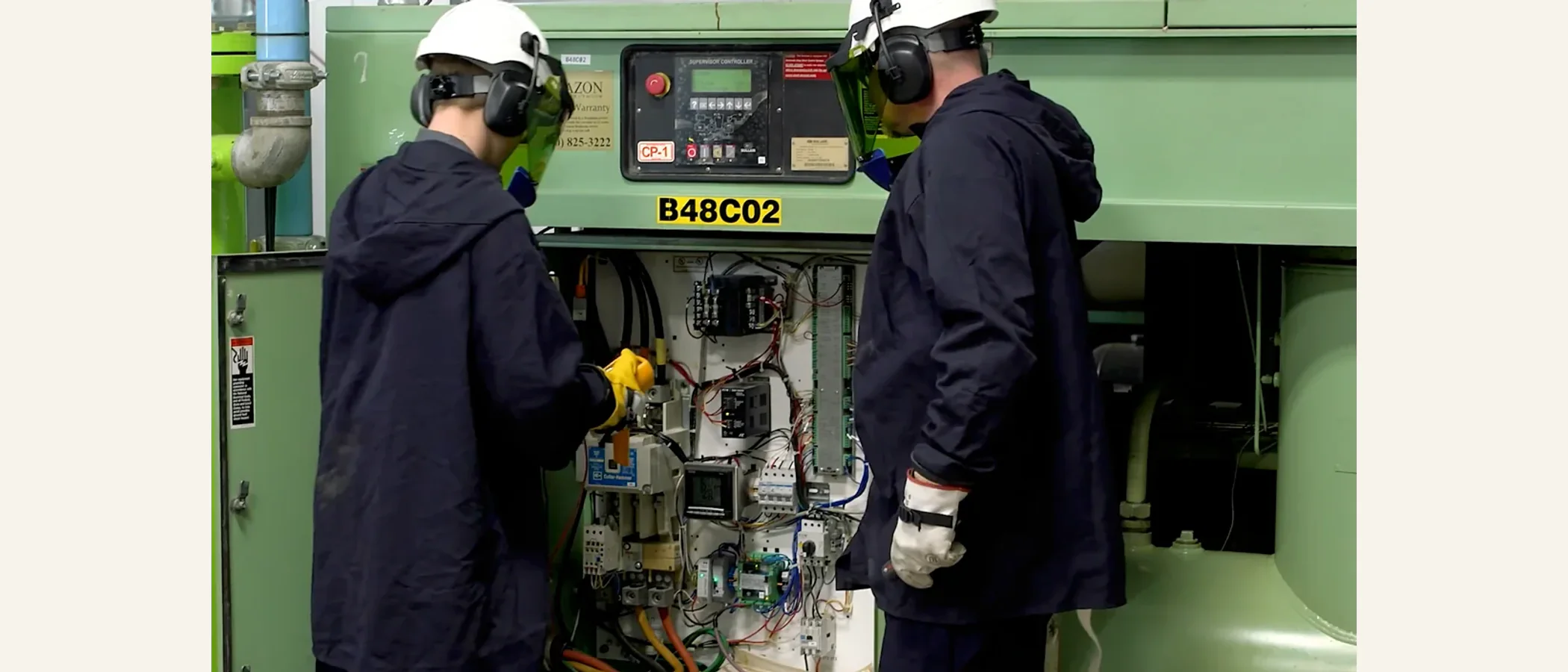
Brabazon Fall PM Service
Brabazon offers fall preventive maintenance service visits throughout our Midwest territory - Illinois, Wisconsin, Minnesota, Indiana, Missouri, and surrounding states. Our factory-certified technicians complete all manufacturer-specified PM tasks, winterize condensate management systems, assess compressor room conditions, and identify any equipment issues before they become winter failures. Schedule fall PM service in September or October to ensure availability before the first hard freeze.
Related Resources
- Service Agreements - Brabazon's PM programs include seasonal preparation as part of the schedule
- 24/7 Emergency Repair - if a freeze-up or cold-weather failure happens, we respond around the clock
- Spring Compressed Air System Checklist - what to do when the weather warms back up
Schedule Winter PM Service