Breathing air compressors
The equipment category page: packages, panels, and monitors.
See breathing air equipment
Specialty: Grade D breathing air
Grade D Spec Plate
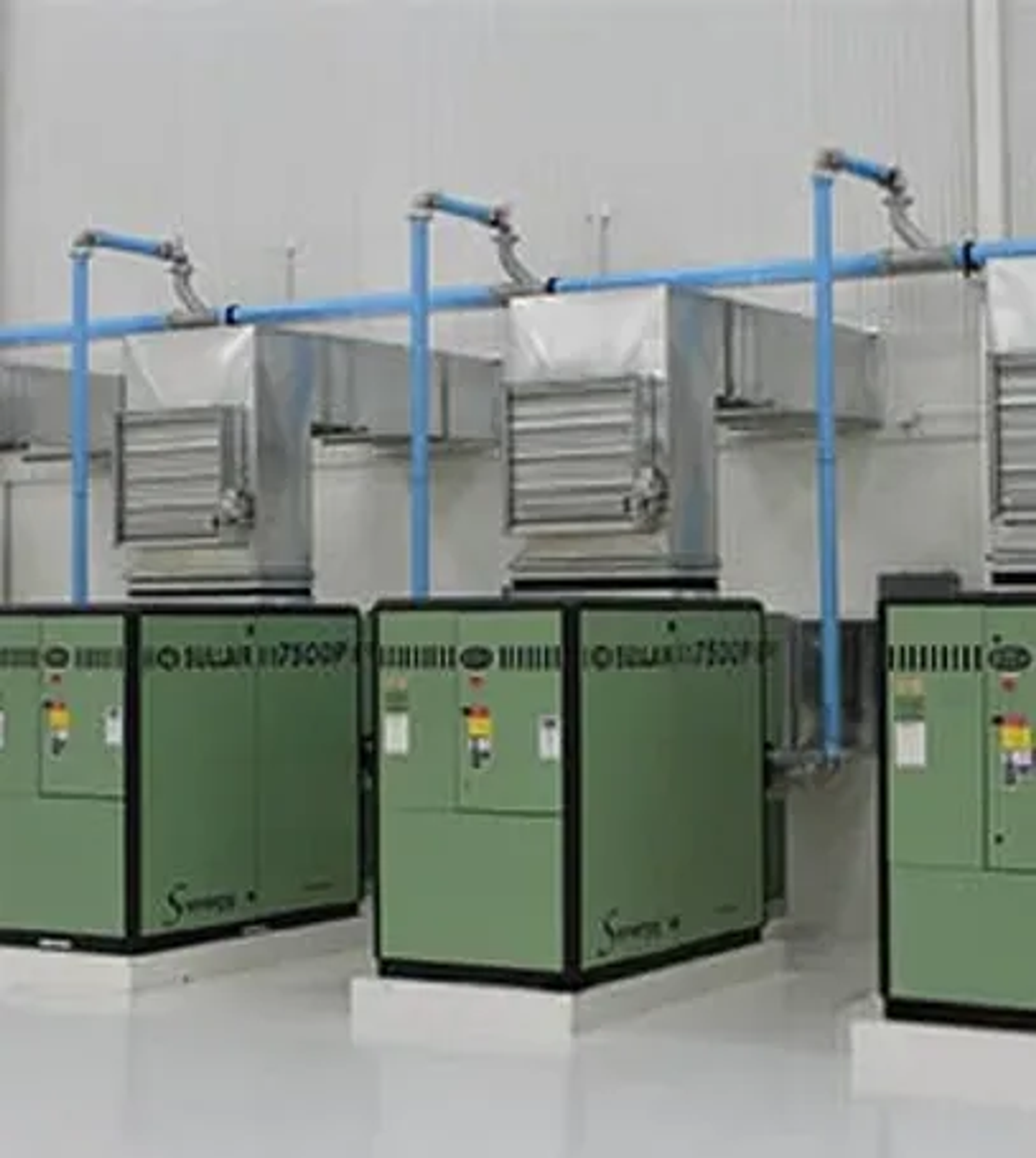
When a worker straps into a supplied-air hood, the air behind it becomes a life safety system, and OSHA 1910.134 says exactly what that means: at least Grade D air per CGA G-7.1, delivered by a breathing air compressor or a purification panel on plant air, with CO monitoring and fittings that cannot cross-connect, sized to the number of workers on air at once. The checklist below maps your application to the requirements and the equipment path.
Pick the work your crews do on supplied air. The output is the compliance requirements, the monitoring you need, and the equipment path. A starting checklist for your written respiratory protection program, confirmed by an engineer.
Choose an application above to see the compliance checklist and equipment path.
Run the numbers yourself
Supplied-air hoods for blasters in dust that cartridges cannot handle.
Airline respirators in booths with isocyanate coatings.
Supplied air where the atmosphere cannot be trusted.
Airline air for interior coating and cleaning crews.
Supplied air for powders and vapors beyond cartridge limits.
Cascade and compressor systems supporting SCBA refill.
Supplied-air respirators on high-hazard abatement work.
Airline hoods in fume and heat around melt and pour.
Four requirements carry almost every citation and every audit question about supplied air. None of this is gated behind a form.
The respiratory protection standard requires that compressed breathing air meet at least Grade D per CGA G-7.1, and it assigns the employer the duty to prove it: couplings incompatible with other gas lines, moisture control, and CO limited to 10 ppm with monitoring or frequent testing on oil-lubricated compressors.
CGA G-7.1 Grade D means oxygen 19.5 to 23.5 percent, condensed hydrocarbons at or below 5 mg per cubic meter, carbon monoxide at or below 10 ppm, carbon dioxide at or below 1000 ppm, and no pronounced odor. Every element of a breathing air system exists to hold one of those numbers.
An overheating oil-lubricated compressor can generate carbon monoxide and feed it straight to a hood. That is why 1910.134 requires a continuous CO alarm or frequent testing on oil-lubricated supply, and why every system we install carries a calibrated monitor wired to alarm, whatever the compressor type.
Each supplied-air respirator draws a nameplate flow, commonly 4 to 15 CFM depending on hood or mask type. The system is sized from the number of workers on air at the same time, at the pressure the respirator maker specifies, with reserve so adding one worker never starves another.
Most installations land on one of two paths: a dedicated breathing air compressor package where no clean plant air exists, or a purification panel with coalescing, carbon, and hopcalite stages converting existing plant air to Grade D, always with a calibrated CO monitor wired to alarm. Both paths, with monitors and airline fittings, live on the breathing air equipment page, which pairs with this guide.
Typical project: blast room breathing air retrofit
A common scenario starts when a fabricator running blasters on tight-fitting cartridge respirators has a respiratory protection audit flag the exposure levels. A typical Brabazon project converts the existing plant air with a wall-mounted purification panel, hopcalite CO removal, a continuous CO monitor alarmed at 10 ppm, and two regulated airline drops with respirator-unique fittings in the blast room. Sized this way, the system passes the follow-up audit, and because the panel is specified with reserve, the shop can add a third drop later when it hires another blaster without re-engineering the source.
Factory-trained technicians install, calibrate, and service breathing air systems from 7 branches serving 14 metro areas. Find your nearest branch:
OSHA 1910.134 requires that compressed breathing air meet at least Grade D per CGA G-7.1, delivered through couplings that cannot cross-connect with other gas lines, with CO kept at or below 10 ppm using monitoring or frequent testing on oil-lubricated compressors. The employer owns proving all of it.
Grade D is the CGA G-7.1 specification OSHA references: 19.5 to 23.5 percent oxygen, hydrocarbon mist at or below 5 mg per cubic meter, carbon monoxide at or below 10 ppm, carbon dioxide at or below 1000 ppm, and no pronounced odor. It is the minimum quality for supplied-air respirators in general industry.
Yes, through a purification panel that filters, removes CO with a hopcalite stage, and monitors the output, plus respirator-unique fittings so nobody plugs a hood into raw plant air. A panel converting existing plant air is often the most economical route for booths and blast rooms already piped for air.
If the supply compressor is oil-lubricated, OSHA requires either a continuous CO alarm or frequent testing, and a continuous monitor is the only version that catches an overheating compressor in real time. We treat a calibrated CO alarm as standard equipment on every breathing air installation.
Divide the compressor output by the respirator draw: hoods and loose-fitting helmets commonly pull 6 to 15 CFM each, tight-fitting masks less. A small dedicated package covers 1 to 3 users, and larger packages or converted plant air systems scale to 20 and beyond, sized at the respirator pressure spec.
Brabazon engineers, installs, and services breathing air compressors, purification panels, and CO monitoring from 7 branches serving 14 metro areas across Wisconsin, Illinois, Minnesota, and Missouri, with calibration and filter service on a schedule your safety audit can point to. Breathing air is a listed Brabazon specialty.
Tell us the application, the number of workers on air, and what compressor you have today. You get back the compliant equipment path, dedicated package or purification panel, with monitoring and service scheduled.
Press Escape to close. Use the arrow keys to move through results.