Oil-free compressors
The Class 0 equipment page: models, sizing, and the certification explained.
Size a Class 0 system
Industry: Pharmaceutical and Medical
Qualification Spec Plate
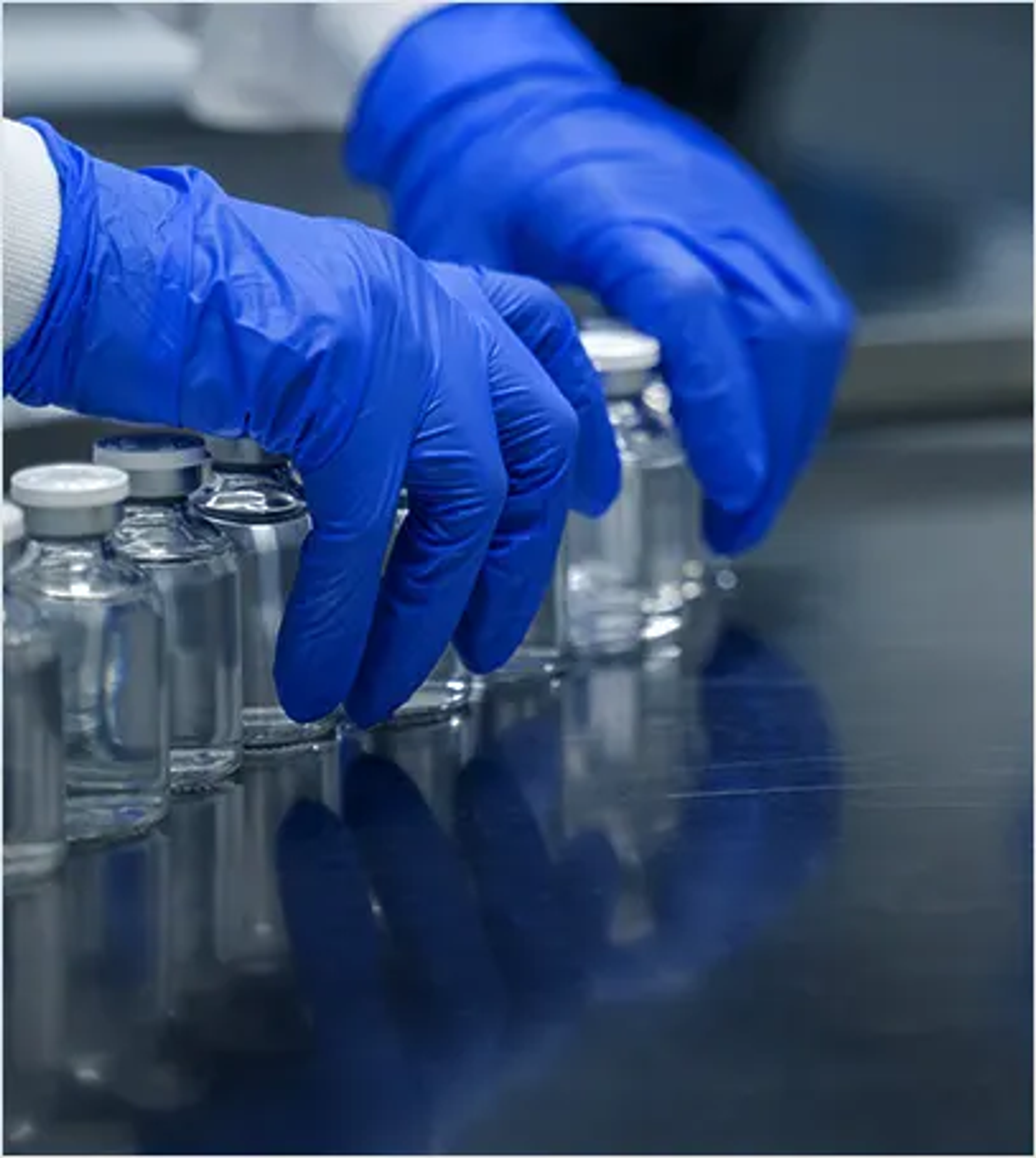
Pharma and medical air must be oil-free Class 0, validated, and documented. Here is what qualification actually requires from your compressed air system.
Pick your context. The output is the governing standards, required air class, monitoring you will need, and the equipment path, so you know what qualification actually asks for before the auditor does.
Choose a context above to see the governing standards and required air class.
Run the numbers yourself
Direct product contact air on coaters and presses, the clearest Class 0 case.
Filling line actuation and blanket air inside aseptic suites.
Chamber release and stoppering air on freeze dryers.
Process air introduced into ISO 14644 classified spaces.
Analyzers, valve actuation, and lab bench air.
Printer, camera, and rejecter air on packaging serialization.
Clean assembly and leak-test air for device manufacturing.
Source equipment behind NFPA 99 medical gas systems.
Pharma and medical air sits under different rulebooks depending on where it goes. These are the four we help customers document.
21 CFR 210 and 211 make compressed air a quality-impacting utility wherever it can contact product. That means a defined air specification, qualification of the installed system, and change control on anything in the air train.
The air spec itself: define classes for particles, water, and oil per point of use, then prove them. Pharma systems sample and test on a schedule, commonly quarterly, and keep the certificates in the validation file.
Air introduced into a classified space becomes part of the room's contamination budget. Process air into an ISO 7 or better room needs sterile filtration at point of use and a documented filter integrity program.
Hospital medical air is its own world: duplex source equipment, dew point and CO monitoring, master alarms, and installer and verifier credentials per NFPA 99. It is a life safety system, not a plant utility.
For cGMP process air we install Sullair oil-free rotary screw compressors, TUV certified to ISO 8573-1 Class 0, packaged with heatless desiccant drying at a monitored -40 F dew point and sterile point-of-use filtration, and we supply the documentation your IQ and OQ protocols call for. Hospital systems get NFPA 99 duplex and triplex medical air packages from the medical air page, and suites using supplied-air respirators add Grade D breathing air.
Typical project: pharmaceutical and medical air
A common scenario in this industry starts with a medical device manufacturer planning one large validated air system for an entire new building. The right approach is to map the points of use against the quality plan first: the assembly cleanroom needs Class 0 air with sterile filtration and a documented test schedule, while the QC lab and utility drops do not. A typical solution is a right-sized oil-free system dedicated to the cleanroom with a monitored desiccant dryer, plus a separate small package for lab and utility air outside the validated boundary. Qualification then covers only the system that needs it, which cuts both the capital cost and the ongoing testing burden the quality unit has to carry. Brabazon configures and installs the equipment for this kind of project and supplies the documentation that IQ and OQ protocols call for.
Factory-trained technicians dispatch from 7 branches serving 14 metro areas with an under 2 hour average emergency response. Find your nearest branch:
Yes at any product contact point, and in practice almost every pharma air system is built on certified ISO 8573-1 Class 0 oil-free compressors because qualification is far simpler when the compressor cannot add oil. Trying to validate oil removal from a lubricated machine adds a failure mode your quality unit has to defend forever.
Medical air is patient-breathing air governed by NFPA 99 with duplex sources, alarms, and credentialed installation, while pharmaceutical air is process air governed by cGMP and your own ISO 8573-1 specification. A hospital needs NFPA 99 equipment, and a pharma plant needs a validated Class 0 system, and the two standards do not substitute for each other.
Auditors expect a written air specification per ISO 8573-1, initial qualification data, and periodic test certificates, with quarterly testing the common cadence at product contact points. The tests cover particles, moisture, oil, and usually viable counts where air enters classified space.
No, lab instrument air usually needs to be clean and dry, commonly ISO 8573-1 Class 1.2.1, but it does not need NFPA 99 medical infrastructure. A compact oil-free unit or a small scroll package with a desiccant dryer covers most labs at far lower cost than a medical system.
A -40 F pressure dew point from desiccant drying is the standard spec for cGMP process air, both for microbial control and to protect product from moisture. The dryer needs a dew point monitor with recorded readings so the number is provable during qualification and audits.
Brabazon supports validated oil-free systems from 7 branches serving 14 metro areas across Wisconsin, Illinois, Minnesota, and Missouri, with an under 2 hour average emergency response and Sullair OEM parts stocked. We have serviced industrial compressed air since 1978 and supply documentation packages that fit your change control.
Send us your points of use and classifications. An engineer will map each one to its governing standard and quote a system your quality unit can qualify.
Press Escape to close. Use the arrow keys to move through results.