Industrial blowers
Positive displacement blowers for pneumatic conveying of abrasive foundry sand and dust.
Spec conveying blowers
Industry: Foundry and metal casting
Foundry Air Spec Plate
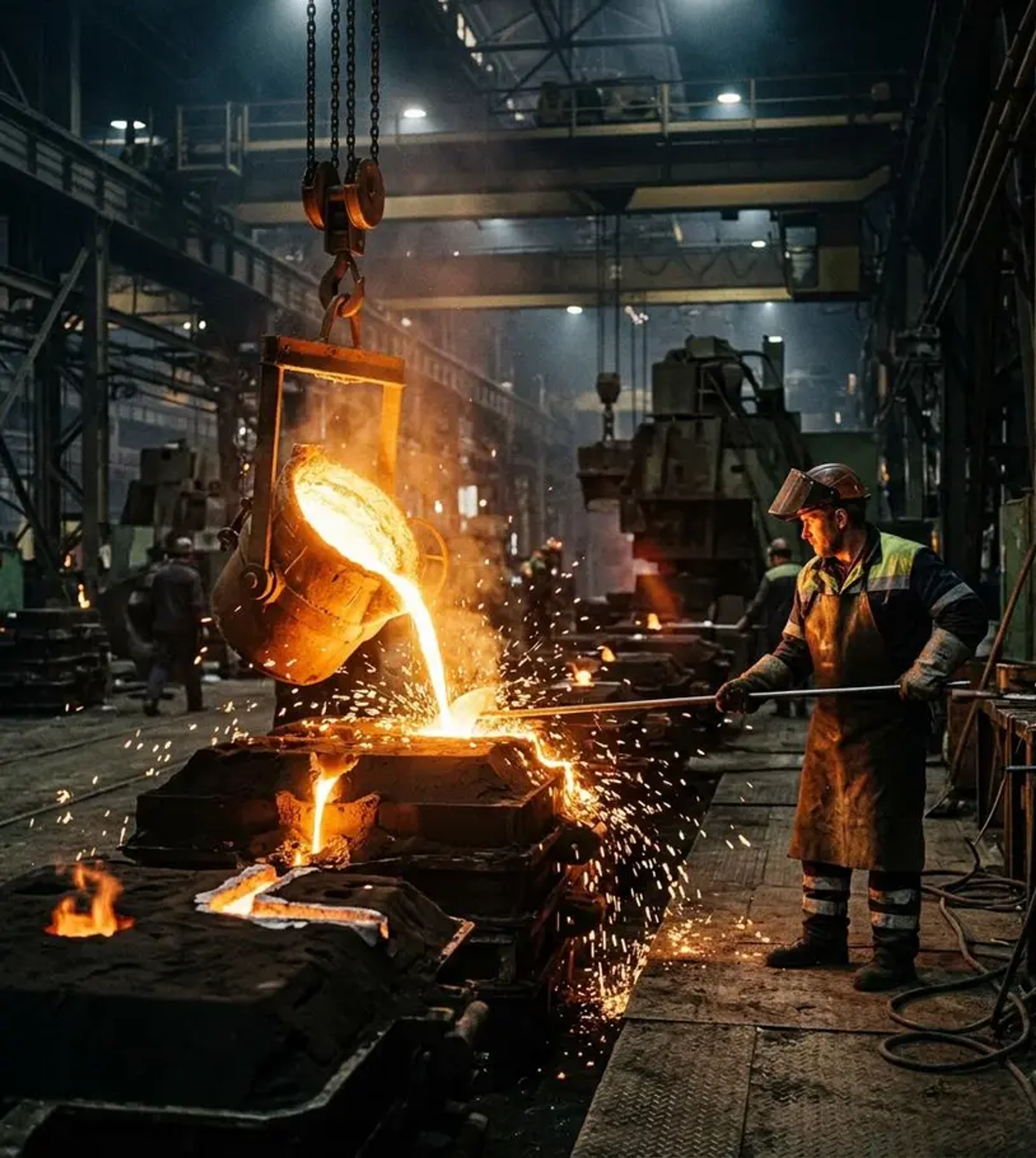
A foundry loads compressed air in sharp bursts and runs its compressors in punishing conditions. Cold box core blowers need consistent, dry air so blow density and gas cure stay repeatable, and moisture there means scrap. Pneumatic conveying moves abrasive sand, molding machines actuate on shop air, and pulse-jet baghouses fire short, high-volume bursts to clean their bags, which demands storage sized for the pulse. On top of that, the compressor room is hot and dusty, so intake filtration, duty-rated maintenance intervals, and room ventilation sized for the real summer ambient are part of the design, not an afterthought.
A foundry loads compressed air in bursts for core blowing and dust collection, moves abrasive sand pneumatically, and runs its compressors in heat and dust. Sizing for the burst demand and designing the room for the real ambient is what keeps the system alive.
Three things that size a foundry air system
Burst demand: Core blows and baghouse pulses are short and sharp. Size receiver storage for the burst event so cores pack right and pulse cleaning holds, not just the average CFM.
Air quality: Desiccant dry the core making and dust collector air so moisture does not scrap cores or foul pulse valves. Wet air also makes conveyed sand clump.
Room conditions: Design intake filtration, ventilation, and heat rejection for the real hot, dusty ambient, and set shorter duty-rated maintenance intervals to match.
Run the numbers yourself
Book a foundry air audit to log the burst demand and room conditions before you size new equipment.
Consistent dry air blows sand and binder into core boxes so blow density and gas cure stay repeatable across shifts.
Dilute and dense-phase conveying moves abrasive foundry sand between silos, mullers, and molding lines.
Compressed air actuates squeeze, jolt, and pattern draw cylinders on green sand and no-bake molding machines.
Short high-volume air pulses fire down filter bags to shake off collected dust and keep the collector flowing.
Air tools for shakeout, grinding, chipping, and cleaning castings in the finishing department.
Blowers and compressed air aerate and cool reclaimed sand so it returns to the line at the right condition.
Instrument and utility air for pouring line actuation, ladle handling, and pattern shop equipment.
Heat rejection and forced ventilation keep the compressor room within rating in a hot foundry ambient.
Four disciplines keep foundry compressed air from scrapping cores, jamming conveying, starving the baghouse, and cooking the compressors.
Cold box core making blows sand and binder into a core box and then gases the core to cure. Moisture in the blow air changes how the sand packs and how the gas catalyst reacts, which produces soft cores, blows, and scrap. Desiccant drying to a low pressure dew point on the core making header, with steady pressure and adequate storage for the blow event, keeps core density and cure repeatable from shift to shift.
Foundry sand is highly abrasive, and moving it pneumatically depends on clean, dry compressed air and correctly sized blowers. Wet air makes sand clump and jam conveying lines, and the same airborne dust that loads the process also loads the compressor intake. Positive displacement blowers handle continuous sand and dust transfer, and the compressed air feeding conveying is dried and filtered so it adds no moisture to the sand.
Pulse-jet baghouses clean their bags with short, high-volume bursts of air. The demand is intermittent but sharp, so the system needs receiver storage sized for the pulse event, not just the average, or the pulses starve and cleaning falls off. Dry air is essential because condensate fouls the diaphragm pulse valves and manifold. Brabazon sizes the receiver and drying so the collector holds its cleaning cycle and keeps the foundry within its dust permit.
Foundries run hot and dirty, and both cut compressor life. High ambient temperature reduces cooling and can trip a machine on high temperature, so the compressor room needs heat rejection and ventilation sized for the real summer ambient. Airborne sand and metallic dust load intake filters quickly, so foundry compressors use heavy-duty intake filtration and shorter, duty-rated maintenance intervals. Placement, ventilation, and filtration are part of the design, not an afterthought.
For a working foundry, the setup we configure most includes a duty-rated rotary screw with heavy-duty intake filtration and VSD control, a twin-tower desiccant dryer on the core making and dust collector header, and receiver storage sized for the core blow and baghouse pulse events rather than the average. The compressor room gets ventilation and heat rejection sized for the real summer ambient, and positive displacement blowers handle abrasive sand conveying. See the rotary screw page and the industrial blowers page for equipment details, and the rentals page for outage air.
Typical project: Foundry and metal casting
A common scenario in this industry is a foundry running its cold box core machines and pulse-jet baghouse off a compressor with no storage sized for the bursts, in a compressor room that bakes in summer. Cores came out soft and inconsistent when the blow air pressure sagged, the baghouse cleaning fell off when pulses starved, and the compressor tripped on high temperature on the hottest days. A typical project starts when the plant logs the real burst demand and room ambient: Brabazon then adds receiver storage sized for the core blow and pulse events, puts desiccant drying on the core and dust collector header, upgrades the intake filtration for the airborne sand, and adds ventilation and heat rejection sized for the summer ambient. The core scrap, the baghouse cleaning, and the summer trips are addressed together because they share the same undersized system.
Factory-trained technicians dispatch from 7 branches serving 14 metro areas with an under 2 hour average emergency response. Find your nearest branch:
Cold box core making blows sand and binder into a core box and then gases the core to cure it. Consistent, dry air is critical because moisture in the blow air changes how the sand packs and how the amine or gas catalyst behaves, which leads to soft cores, blows, and scrap. Desiccant drying to a low pressure dew point on the core making header keeps blow density and cure repeatable from shift to shift.
Foundry sand is moved by pneumatic conveying, both dilute phase for lighter transfer and dense phase for abrasive bulk sand over longer runs. Because foundry sand is highly abrasive and dust-laden, the compressed air feeding conveying must be clean and dry so it does not add moisture that causes sand to clump, and the compressor intake must be filtered against the airborne dust that shortens compressor life.
Pulse-jet baghouses clean their filter bags with short, high-volume bursts of compressed air fired down the bags to shake off collected dust. These pulses are intermittent but demand a lot of air in a short window, so the system needs adequate receiver storage sized for the pulse demand and dry air to keep the pulse valves and manifold from icing or corroding. Wet air fouls diaphragm valves and reduces cleaning effectiveness.
Foundries are hot and dusty, and both shorten compressor life. High ambient temperatures reduce cooling capacity and can force a compressor to shut down on high temperature, so the compressor room needs heat rejection and ventilation sized for the real ambient, not a mild-day rating. Airborne sand and metallic dust load intake filters fast, so foundry compressors need heavy-duty intake filtration and shorter filter service intervals than a clean plant.
Brabazon has supported foundries and metal casting operations from 7 branches serving 14 metro areas since 1978 and has been the authorized Sullair dealer since 1984. We service core making air, sand handling, molding actuation, and dust collector air, with an under 2 hour average emergency response and maintenance intervals set for hot, dusty foundry conditions.
Tell us your core making process, sand handling, molding line, and dust collection load, along with your compressor room conditions. We size the supply, drying, storage, and blowers for the burst demand and the heat and dust of a real foundry.
Press Escape to close. Use the arrow keys to move through results.