Portable diesel compressors
Towable and skid-mounted diesel units for quarry drilling, breaking, and remote plant air.
Size a portable diesel unit
Industry: Aggregates, asphalt and concrete
Aggregate and Asphalt Air Spec Plate
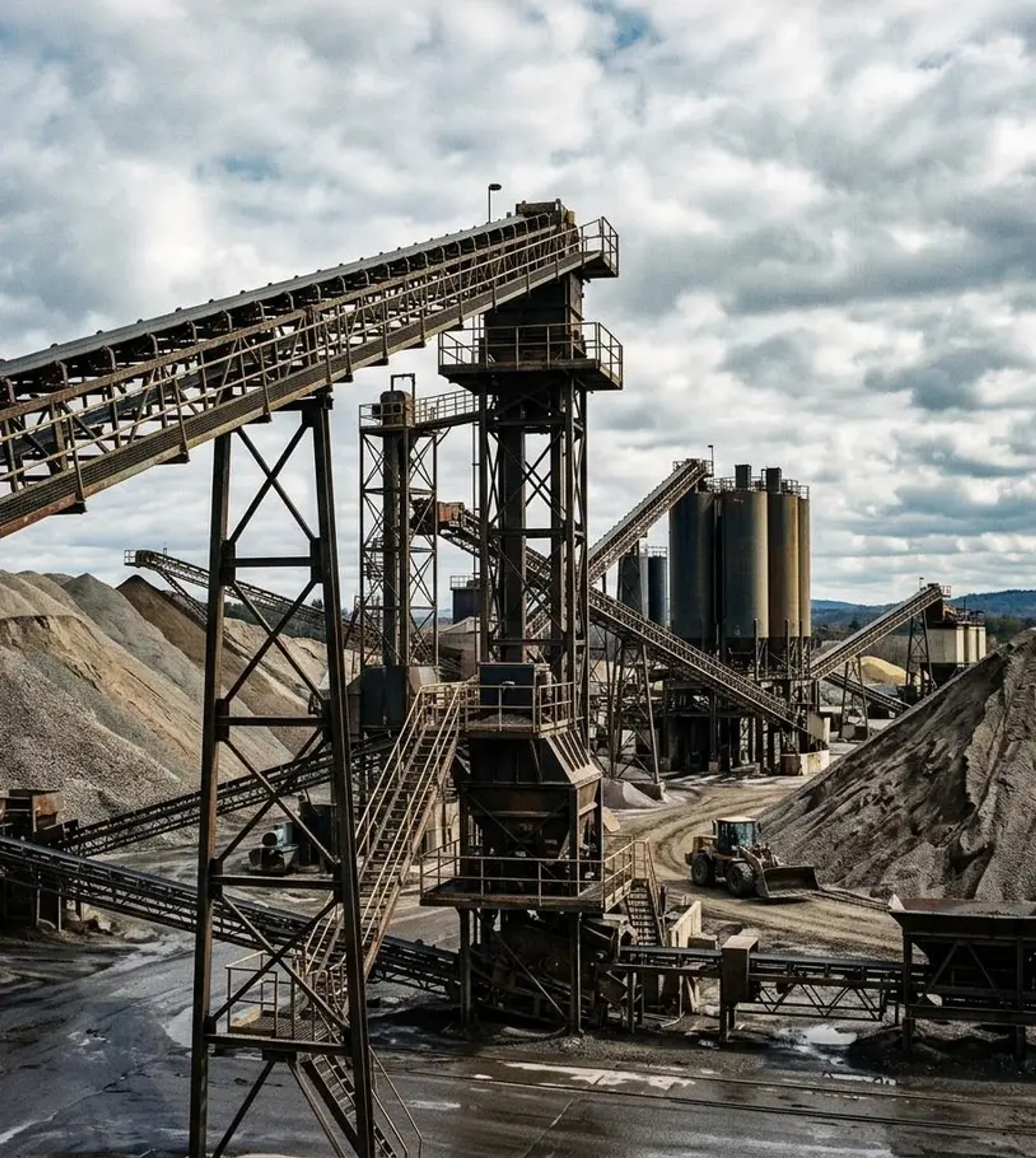
Aggregate, asphalt, and concrete operations run three distinct air jobs. Quarry drilling and breaking need high-pressure portable diesel air at the working face. Asphalt plant baghouses need dry air holding consistent header pressure so the pulse-jet cleaning cycle keeps filter bags from blinding. Cement, fly ash, and filler need positive displacement blowers for dense-phase conveying and silo aeration. On top of that, the work is seasonal and dusty, so fleet sizing, cold-weather startup, and intake protection all matter as much as raw capacity.
These operations split into three air jobs: high-pressure portable air for drilling and breaking, dry consistent header air for baghouse pulse-jet cleaning, and blower air for conveying and silo fluidizing. Each is sized differently.
Three air jobs on an aggregate and asphalt site
Drilling and breaking: Portable diesel units at 375 to 1600 CFM and 100 to 350 psi, matched to the drill air demand and hole depth, with heavy-duty intake filtration for the dust load.
Baghouse pulse-jet air: Dry air holding consistent header pressure at every solenoid so each reverse pulse releases the dust cake and the collector stays inside its differential pressure.
Conveying and aeration: Positive displacement blowers for dense-phase cement and fly ash conveying, plus silo aeration pads and fluidizing air, sized to line length and material bulk density.
Run the numbers yourself
See our mining and construction page for portable air and rental fleet guidance that carries over to quarry sites.
Portable diesel air for down-the-hole drills, top-hammer rigs, and pneumatic breakers at active quarry faces.
Dry, consistent header air firing the pulse-jet solenoids that shake the dust cake off asphalt plant filter bags.
Positive displacement blowers moving cement, fly ash, and mineral filler through dense-phase conveying lines.
Aeration pads and fluidizing air keeping silo cones live so powder discharges without bridging or rat-holing.
Instrument-grade air operating gate, diverter, and slide-gate actuators on the plant control sequence.
Compressed air for dust suppression nozzles, screen cleaning, and equipment blowdown around crushing and screening.
Rental portable units covering harvest-season paving peaks, relocatable crushing spreads, and breakdown fill-in.
Heavy-duty intake filtration and staged pre-cleaners protecting compressor airends in high-dust quarry and plant air.
Four disciplines keep drilling productive, baghouses inside their differential pressure, and conveying lines clear across the season.
The pulse-jet cleaning cycle on an asphalt plant baghouse depends on a sharp reverse-air pulse to release the dust cake. If header pressure sags between solenoid firings, the pulse loses energy, the cake stays on the bag, differential pressure climbs, and the bags eventually blind. Sizing the receiver and supply to hold header pressure at every solenoid, and keeping the air dry, is what keeps the collector inside its design differential pressure.
Quarry drills and breakers demand high pressure and high volume in dusty, remote conditions. Under-sizing the portable unit starves the drill and slows penetration; the wrong pressure rating stalls the bit at depth. Match the unit to the drill air demand and hole depth, add margin for hose and manifold losses, and specify heavy-duty intake filtration for the dust load. Rental fleet units cover seasonal peaks without carrying idle capital over winter.
Cement, fly ash, and mineral filler move best through positive displacement blowers delivering high volume at low to moderate pressure. Trying to run a conveying line off a plant utility compressor wastes energy and starves the utility header. Dense-phase conveying, silo aeration pads, and fluidizing air are all blower duties. We size the blower package to line length, material bulk density, and throughput so the line stays clear.
Aggregate and asphalt work is seasonal across the Midwest, so equipment sits idle over winter and must start reliably in spring. Cold weather starting on diesel units needs block heaters, correct oil, fuel conditioning, and battery care, plus a layup routine before winter shutdown. A service agreement schedules the fall shutdown and spring recommissioning so the fleet is ready the day the season opens.
For a typical asphalt plant with an attached crushing spread, the package we configure most pairs a towable portable diesel compressor for drilling and blowdown with a positive displacement blower for cement and filler conveying and silo aeration. A properly sized receiver and dryer hold the baghouse header pressure steady so the pulse-jet cycle keeps the bags clean. Seasonal peaks are covered with rental fleet units rather than idle owned capacity, and a service agreement schedules spring startup and fall layup. See the portable diesel page for fleet options.
Typical project: aggregates, asphalt and concrete
A common scenario in this industry is an asphalt plant fighting a baghouse that keeps climbing on differential pressure until the fan chokes and production slows. A typical project starts when the pulse-jet cleaning cannot release the dust cake because header pressure sags between solenoid firings and the air carries moisture. Brabazon-configured equipment addresses this by sizing a receiver and dryer to hold consistent, dry header pressure at every solenoid, so each reverse pulse has the energy to shed the cake. On the same visit the cement and filler conveying is moved off the strained utility compressor onto a dedicated blower package sized to the line, and a rental unit covers the seasonal drilling peak. The result is a baghouse that stays inside its design differential pressure and a utility header that no longer starves.
Factory-trained technicians dispatch from 7 branches serving 14 metro areas with an under 2 hour average emergency response. Find your nearest branch:
Down-the-hole and top-hammer drills at aggregate quarries typically call for 375 to 1600 CFM at 100 to 350 psi depending on hole diameter and depth. Larger DTH rigs need high-pressure two-stage portable units. Size the compressor to the drill manufacturer air demand plus a margin for hose losses and dust suppression, then confirm the pressure rating matches the bit depth.
Baghouse filter bags blind when the pulse-jet cleaning system cannot deliver a strong enough reverse pulse to shake the dust cake loose. That happens when header pressure sags or the air is wet. A correctly sized dry air supply holding consistent header pressure at each solenoid keeps the pulse energy high enough to release the cake, so differential pressure stays in range and the fan does not choke.
Dense-phase pneumatic conveying of cement and fly ash usually runs on positive displacement blowers or dedicated conveying compressors delivering high volume at low to moderate pressure, not a plant utility compressor. Blowers also drive the aeration pads and fluidizing air that keep silo cones flowing. Sizing depends on line length, material bulk density, and required throughput.
Cold weather starting on portable diesel units is handled with block heaters, cold-weather rated oil, fuel conditioning, and battery maintenance. Seasonal aggregate operations that idle over winter should follow a layup and recommissioning routine. A service agreement puts the spring startup and fall shutdown on a schedule so the fleet is ready when the season opens.
Brabazon has supported aggregate, asphalt, and concrete producers from 7 branches serving 14 metro areas since 1978 and has been the authorized Sullair distributor since 1984. We rent portable diesel fleet units, service baghouse and blower air systems, and average an under 2 hour emergency response across our territory.
Tell us your drill air demand, baghouse pulse-jet configuration, conveying line details, and seasonal schedule. We size the portable diesel fleet, blower package, and baghouse air supply to match your operation.
Press Escape to close. Use the arrow keys to move through results.