Oil-free compressors
Class 0 oil-free machines for filling, capping, and blow-off in the dairy product zone.
Spec Class 0 contact air
Industry: Dairy processing
Dairy Plant Air Spec Plate
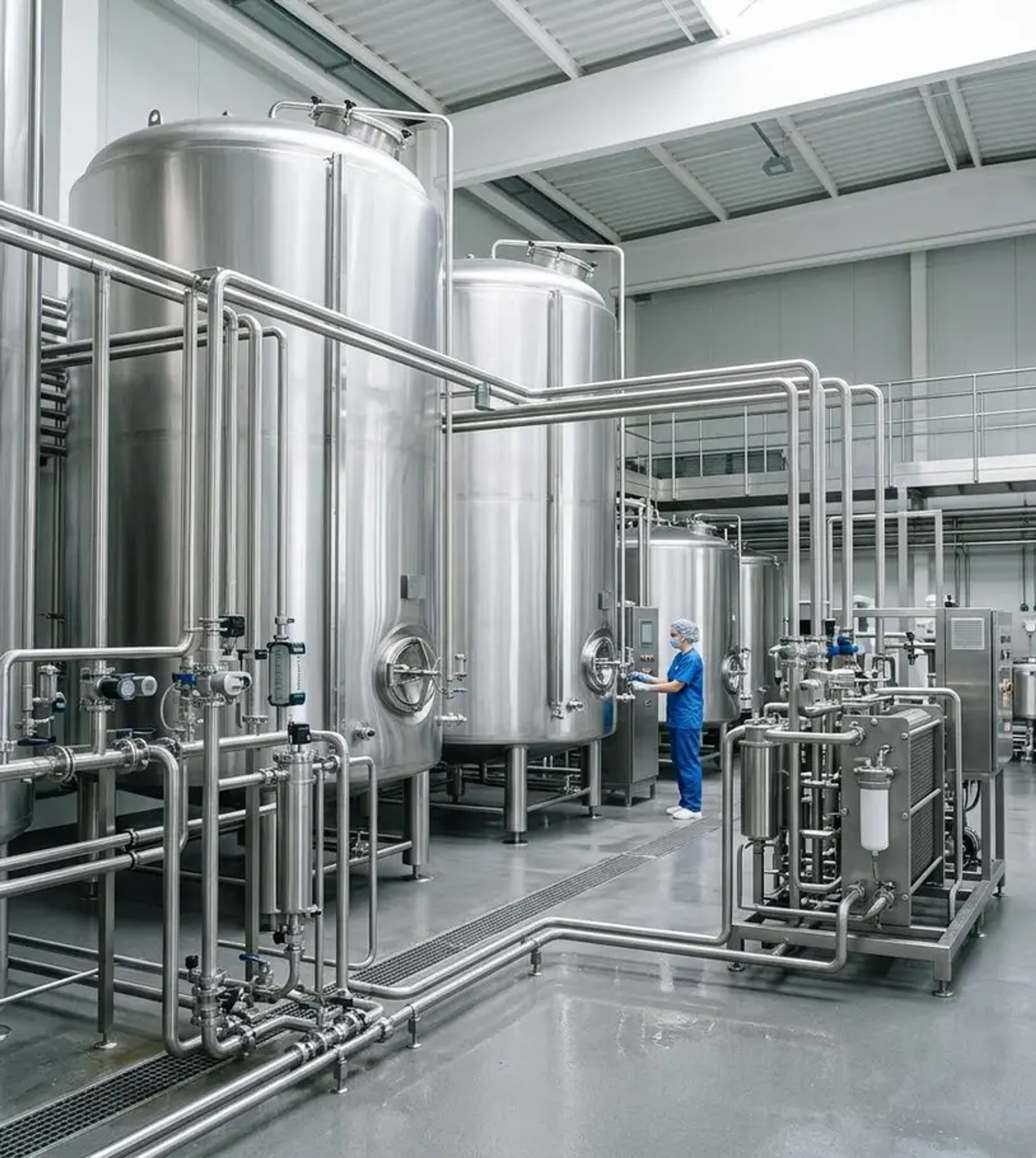
Dairy plants run two distinct air qualities. Contact air, the air that touches product, product-contact surfaces, or the inside of packaging, must be oil-free to ISO 8573-1 Class 0, dried to a low dew point, and filtered at the point of use to support 3-A sanitary design and the food safety expectations behind the Pasteurized Milk Ordinance. Utility air for CIP support and shop tools can run on standard oil-injected machines. High-volume, low-pressure duties such as vat agitation, whey conveying, and powder handling belong on blowers, not compressors, because a compressor is oversized and inefficient at that pressure.
A dairy plant splits its air into contact air that must be oil-free and dry, and utility air for CIP support and shop tools. Getting the split right, and using blowers for aeration duties, sets the equipment configuration and the energy cost.
Three air circuits in a dairy plant
Contact air: Oil-free Class 0 (ISO 8573-1), dried to a low dew point, sterile-grade or high-efficiency filtration at the point of use. Fillers, cappers, and blow-off near open product. N+1 with auto-failover.
Utility air: Oil-injected rotary screw with refrigerated drying for CIP support, line clearing, and shop tools. Kept on a separate header from the contact circuit.
Aeration and conveying: Blowers for vat agitation, whey and permeate movement, and powder conveying. High volume at low pressure, far more efficient than a compressor.
Run the numbers yourself
See our food and beverage page for shared sanitary air treatment guidance.
Oil-free contact air actuating fillers and dosing valves near open milk, cream, and cultured product where oil carryover is unacceptable.
Clean, dry contact air driving cappers, seamers, and heat-seal stations on jugs, bottles, cups, and pouches.
Oil-free air clearing film, drying containers, and blowing off packaging surfaces on high-speed dairy packaging lines.
Pneumatic valve actuation and low-pressure blower air for vat controls, cut and stir agitation, and press skids.
Compressed air and blowers supporting whey transfer, membrane filtration back-pressure control, and permeate movement.
Utility air blowing lines clear after clean-in-place cycles and actuating CIP valve manifolds throughout the plant.
Dilute-phase conveying of milk powder, whey powder, and dry dairy ingredients using blowers and clean air.
Instrument and utility air for pneumatic controls on ammonia and glycol refrigeration serving pasteurizers and cold storage.
Four disciplines keep a dairy plant air system from putting product safety, sanitary compliance, or a perishable run at risk.
Where compressed air contacts product, product-contact surfaces, or the inside of packaging, ISO 8573-1 Class 0 oil-free supply removes hydrocarbon carryover at the source. In a dairy plant that covers filler and capper actuation near open product, bottle and cup blow-off, and film clearing. Oil-free machines paired with point-of-use sterile-grade filtration keep the contact-air circuit clean.
3-A Sanitary Standards call for cleanable, drainable, corrosion-resistant equipment in the product zone, and the Pasteurized Milk Ordinance program sets the food safety expectations dairy plants operate under. Compressed air supports these by keeping contact air oil-free, drying it to a low dew point to prevent condensation on product surfaces, and separating contact headers from utility air so a maintenance line cannot cross-contaminate product.
Vat agitation, whey and permeate conveying, and powder handling are high-volume, low-pressure duties. A rotary screw compressor is oversized and inefficient for that pressure band. Positive displacement or centrifugal blowers deliver the volume at the right pressure with lower energy cost. Reserving the compressor for actuation and blow-off, and using blowers for aeration, cuts operating cost across the plant.
Dairy plants run long production shifts on perishable product. A loss of contact air stops fillers and cappers and can force product loss. N+1 oil-free configurations with automatic standby failover keep the contact-air header supplied through a compressor fault. Brabazon sizes duplex and triplex oil-free packages to the line count and shift schedule of the plant.
For a typical fluid milk or cultured dairy plant, the package we configure most includes two oil-free rotary screw compressors in N+1 feeding a dedicated contact-air header, dried to a low dew point, with sterile-grade filtration at each filler and blow-off station. A separate oil-injected utility compressor handles CIP support and shop tools without touching the contact circuit. Vat agitation, whey conveying, and powder handling run on industrial blowers sized to the process volume. See the oil-free compressor page and the dryers and filters page for equipment details.
Typical project: Dairy processing
A common scenario in this industry is a growing dairy plant that has added packaging lines onto a single air header that also feeds CIP support and shop tools. As the line count grows, filler and capper actuation shares air with utility loads, contact air quality is hard to guarantee, and vat agitation runs off the same compressor at the wrong pressure, burning energy. A typical project starts when the plant splits the system: an oil-free Class 0 contact-air header with point-of-use filtration for the product zone, a separate oil-injected utility header for CIP and tools, and blowers moved onto the aeration and conveying duties. The result is contact air the plant can defend against 3-A intent, headroom for the next line, and lower energy cost because each duty runs on the right machine. Brabazon configures the oil-free package, the utility supply, and the blowers to the plant's line count and shift schedule.
Factory-trained technicians dispatch from 7 branches serving 14 metro areas, including Green Bay, Milwaukee, Madison, Wausau, and Eau Claire near dairy country, with an under 2 hour average emergency response. Find your nearest branch:
Any compressed air that contacts product, product-contact surfaces, or packaging that will hold product should be oil-free to ISO 8573-1 Class 0. That covers filler and capper actuation near open product, bottle and pouch blow-off, and film clearing on packaging lines. Air that never reaches the product zone, such as utility air for shop tools, can run on oil-injected machines with high-efficiency filtration.
For air that contacts product or product-contact surfaces, dairy processors target ISO 8573-1 Class 0 for oil, with a dry dew point and tight particle filtration. This aligns with 3-A sanitary design intent and the food safety expectations behind the Pasteurized Milk Ordinance program. Contact air is typically dried to a low pressure dew point and passed through sterile-grade or high-efficiency filtration at the point of use.
3-A Sanitary Standards drive cleanable, drainable, corrosion-resistant equipment in the product zone. For compressed air that means oil-free supply, stainless and food-grade filter housings at point of use, and dedicated contact-air headers kept separate from utility air. The compressor room itself sits outside the sanitary zone, but the treatment and distribution reaching the product must support cleaning and prevent contamination.
Cheese plants use compressed air and low-pressure blowers for vat and agitation controls, whey and permeate transfer, pneumatic valve actuation on the process skids, and membrane filtration support for whey concentration. Oil-free supply protects product where air can contact whey streams or open vats. Blowers handle high-volume, low-pressure aeration and conveying duties more efficiently than a compressor.
Brabazon is headquartered in Green Bay and has served dairy processors across Wisconsin since 1978, with branches near dairy country in Green Bay, Milwaukee, Madison, Wausau, and Eau Claire. We have been the authorized Sullair dealer since 1984, operate 7 branches serving 14 metro areas, and dispatch emergency service with an under 2 hour average response.
Tell us your line count, contact air demand, sanitary requirements, and aeration and conveying loads. We design the oil-free contact-air package, the utility air supply, and the blowers to match your plant.
Press Escape to close. Use the arrow keys to move through results.