Oil-free compressors
Class 0 machines for food and beverage PET blow molding where high pressure air contacts the container.
Spec Class 0 blow air
Industry: Plastics processing
Plastics Plant Air Spec Plate
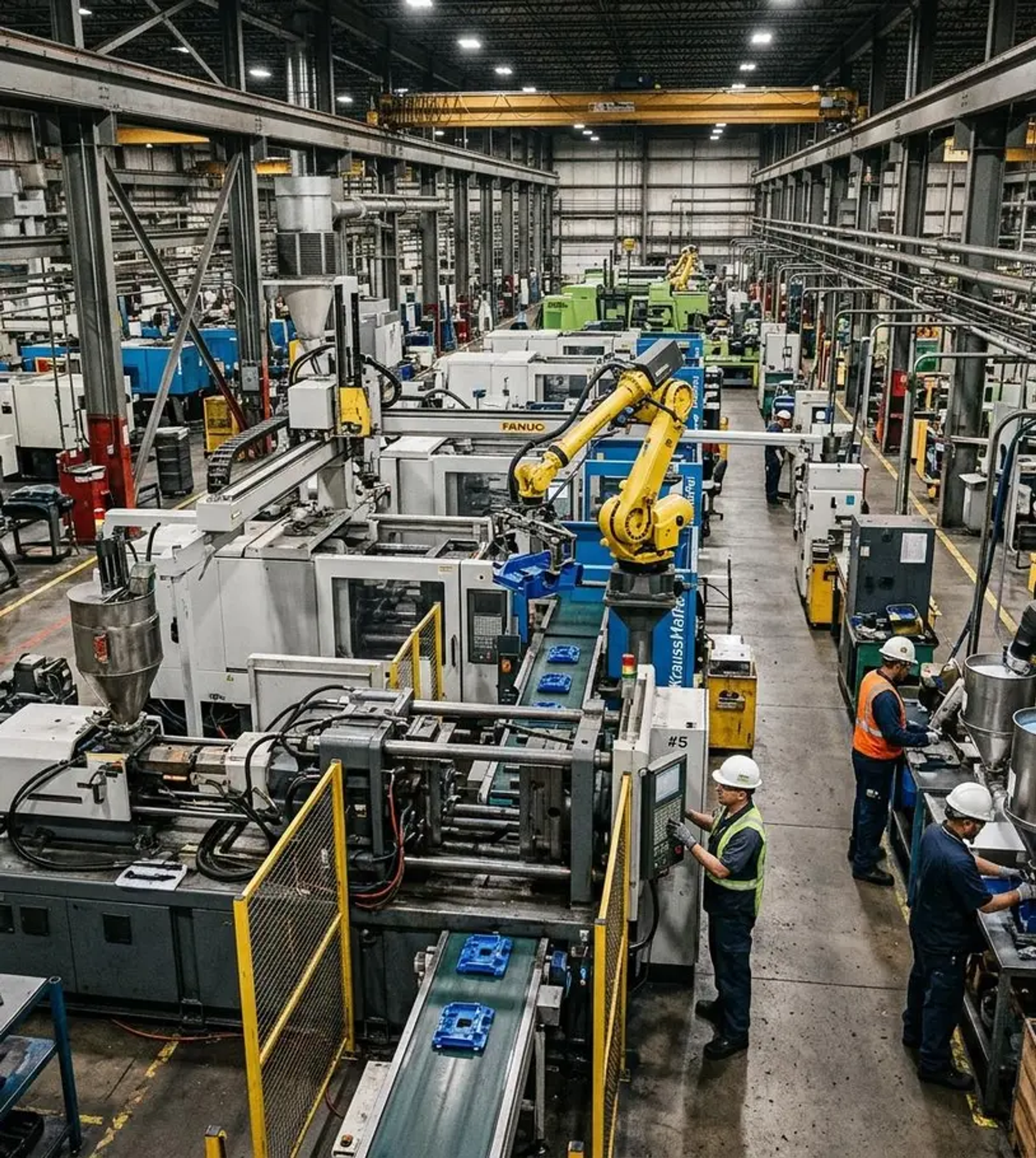
A plastics plant usually runs two pressures and two air qualities. Injection molding, clamping, ejection, and shop tools run on low pressure plant air near 100 to 125 psi. PET stretch blow molding needs high pressure air in the 250 to 600 psi range, which is best supplied by a dedicated booster or high pressure compressor rather than pressurizing the whole plant. On air quality, hygroscopic resins such as nylon, PET, and polycarbonate demand dry air so moisture does not cause splay or silver streaking, and food and beverage bottles need oil-free air where the high pressure supply contacts the container. Vacuum for robot tooling and chillers for process cooling round out the system.
A plastics plant usually runs two pressure levels and two air qualities. Getting the split right between low pressure plant air and high pressure blow air, and between refrigerated and desiccant drying, is the difference between an efficient system and one that wastes energy or scraps parts.
Two pressures and two air qualities in a plastics plant
Low pressure plant air: 100 to 125 psi rotary screw with refrigerated drying near 38 F pressure dew point for clamping, ejection, conveying, and shop tools.
High pressure blow air: 250 to 600 psi from a dedicated booster or high pressure compressor for PET stretch blow molding. Oil-free Class 0 where the bottle holds food or beverage.
Resin and melt-contact air: Desiccant dried to a low pressure dew point so moisture is not reintroduced to hygroscopic resins after the resin dryer.
Run the numbers yourself
Book a plant air audit to log the real demand split before you size new equipment.
Low pressure plant air for mold clamping assist, core pulls, ejection, and air blast part release on injection molding machines.
High pressure air at 250 to 600 psi inflates the heated preform against the mold to form the finished bottle.
Dry compressed air feeds desiccant resin dryers so hygroscopic resins reach the correct moisture level before the melt.
Dilute-phase conveying moves pellets and regrind from silos and gaylords to the presses and dryers.
Vacuum cups and air blasts on take-out robots and sprue pickers grip and release molded parts.
Instrument-quality air actuates chiller and mold temperature control valves in the process cooling loop.
Clean, dry air operates blow pins, cavity blow-off, and mold surface cleaning between cycles.
General shop air for trim tools, deflashing, air knives, and downstream packaging equipment.
Four decisions keep a plastics plant air system from wasting energy on pressure and from scrapping parts to moisture.
Injection molding, clamping, ejection, and plant tools run on 100 to 125 psi. PET stretch blow molding needs 250 to 600 psi. Running the entire plant at high pressure to serve one process wastes a large amount of energy because every added psi of system pressure raises compressor power. Brabazon designs a low pressure base supply for the plant and a dedicated high pressure booster or high pressure compressor for the blow header, so each process gets the pressure it needs and nothing more.
Splay and silver streaking are cosmetic and structural defects that show up when moisture reaches the melt, and hygroscopic resins such as nylon, PET, ABS, and polycarbonate absorb water readily. A refrigerated dryer near 38 F pressure dew point handles general plant air. Air that dries resin or contacts the melt should be desiccant dried to a lower dew point so moisture is not reintroduced after the resin dryer has done its work.
When high pressure air inflates a PET bottle that will hold food or beverage, the air contacts the inside surface of the container. ISO 8573-1 Class 0 oil-free compressors eliminate hydrocarbon carryover so no oil reaches the product contact surface. For non-food blow molding, an oil-injected high pressure machine with high-efficiency coalescing filtration can meet the specification at lower capital cost.
Robot end-of-arm tooling relies on vacuum to pick and hold parts, and venturi generators fouled by wet, dirty air lose grip and drop parts. Process cooling with chillers keeps mold temperature stable so cycle times and part quality stay consistent. Treating compressed air, vacuum, and cooling as one system, rather than three separate purchases, keeps the whole molding cell reliable.
For a plant running both injection molding and PET blow molding, the setup we configure most includes a VSD low pressure rotary screw sized for the presses, conveying, and tools, feeding a refrigerated dryer and a properly sized receiver. A dedicated high pressure booster or high pressure compressor supplies the blow header at 250 to 600 psi with its own receiver to absorb cycle spikes, and food and beverage lines get an oil-free Class 0 supply. Resin drying air and melt-contact air run through a twin-tower desiccant dryer. See the rotary screw page and the oil-free compressor page for equipment details.
Typical project: Plastics processing
A common scenario in this industry is a plastics plant that added PET blow molding by raising the pressure on its existing shop air system to serve the blow molders. Running every compressor at high pressure to feed one process drove up energy cost, and moisture defects started showing up on nylon and polycarbonate parts because the drying was sized for the old low pressure load. A typical project splits the system: a low pressure supply near 100 to 125 psi for the plant, a dedicated high pressure booster or compressor with its own receiver for the blow header, and desiccant drying on the resin and melt-contact air. Brabazon sizes and installs each part so pressure is spent only where it is needed and dry air reaches the resin, which cuts energy and the splay and silver streaking scrap at the same time.
Factory-trained technicians dispatch from 7 branches serving 14 metro areas with an under 2 hour average emergency response. Find your nearest branch:
PET stretch blow molding typically needs high pressure air in the 250 to 600 psi range to inflate the preform against the mold and form the bottle. Most plastics plants split this from the shop air system: a standard 100 to 125 psi low pressure supply handles clamping, ejection, and plant tools, while a dedicated high pressure booster or high pressure compressor feeds the blow air header. Running the whole plant at 600 psi to serve one process wastes a large amount of energy.
Moisture in compressed air causes surface defects such as splay and silver streaking, especially on hygroscopic resins like nylon, PET, ABS, and polycarbonate. When wet air contacts resin during conveying or reaches pneumatic actuators and blow pins, water vapor and condensate carry into the process. A refrigerated dryer holding a pressure dew point near 38 F handles most plant air, while resin drying air and any air that contacts the melt should be desiccant dried to a lower dew point.
For food and beverage PET bottles, the high pressure air that contacts the inside of the container is typically oil-free Class 0 per ISO 8573-1 to avoid any hydrocarbon contact with the product. For non-food blow molding, an oil-injected high pressure machine with high-efficiency coalescing filtration can meet the requirement. The right choice depends on what the bottle will hold and the customer specification.
Sprue pickers and take-out robots use vacuum and low pressure air for end-of-arm tooling: vacuum cups grip parts, and short air blasts release them. Vacuum is usually supplied by a dedicated industrial vacuum pump or venturi generators fed from clean, dry shop air. Wet or dirty air fouls venturi generators and vacuum sensors, so the same drying and filtration that protects the process protects the robots.
Brabazon has supported plastics processors from 7 branches serving 14 metro areas since 1978 and has been the authorized Sullair dealer since 1984. We service low pressure plant air, high pressure blow molding air, dryers, and vacuum, with an under 2 hour average emergency response across Wisconsin, Illinois, Minnesota, and Missouri.
Tell us your process mix, the pressures your presses and blow molders need, your resins, and your vacuum and cooling load. We design the low pressure supply, the high pressure blow air, the drying, and the vacuum to match your plant.
Press Escape to close. Use the arrow keys to move through results.