Steel and Metals
Full guide to compressed air for metal fabrication: blasting, laser, and machine shop applications.
See all metal fab applications
Application: Plasma cutting
Plasma Cutting Air Spec Plate
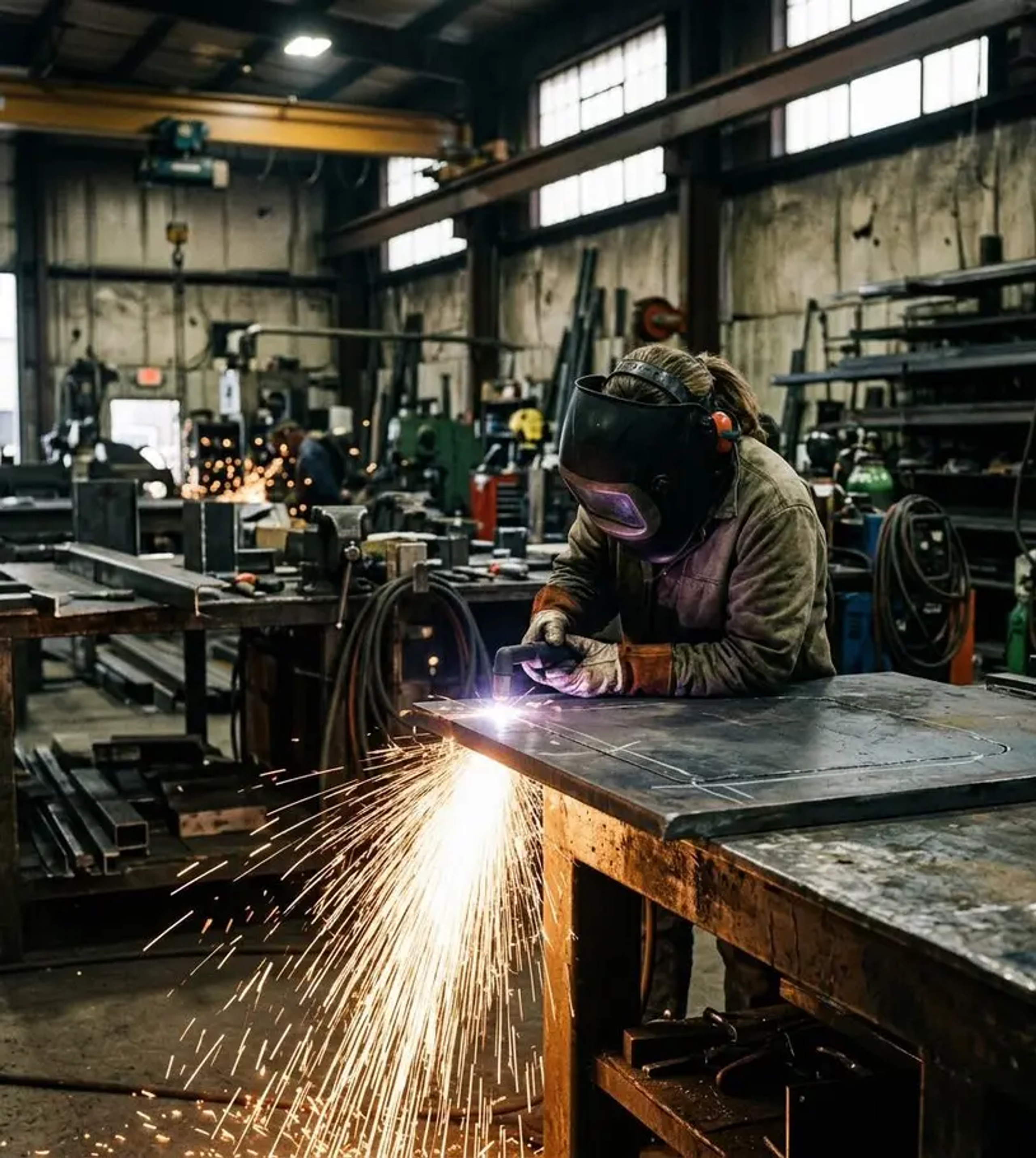
The right air compressor for a plasma cutter is one that holds the manufacturer specified pressure and flow at the torch during a continuous cutting cycle, with air that is dry and free of oil aerosols. Most quality problems attributed to the plasma system trace back to moisture, oil, or pressure drop in the air supply. The table below gives starting CFM and pressure values by amperage class.
Starting CFM and pressure values by amperage class. Always verify against your system manufacturer specification plate since requirements vary by plasma brand and model. Add 20 percent to the manufacturer CFM for the compressor selection.
| Amperage class | Typical CFM at torch | Typical pressure at torch | Compressor recommendation |
|---|---|---|---|
| Light duty (20 to 40A) | 4 to 6 CFM | 60 to 75 psi | 5 to 10 HP rotary screw or equivalent shop system with dryer and filter |
| Mid range (45 to 65A) | 6 to 10 CFM | 65 to 90 psi | 10 to 15 HP rotary screw with refrigerated dryer |
| Production (70 to 100A) | 10 to 20 CFM | 90 to 120 psi | 15 to 25 HP rotary screw with refrigerated dryer |
| Heavy duty (125A and up) | 20 to 30 CFM | 100 to 120 psi | 25 to 40 HP rotary screw with refrigerated dryer and coalescing filter |
| Multiple tables (2 or more) | Combined demand plus shop | Per manufacturer | 50 HP and up; size for simultaneous cutting load |
Verify against your plasma system manual. CFM and PSI specs vary by manufacturer and model. Always verify at the torch under full cutting load, not at the compressor outlet.
Run the numbers yourself
Production tables running continuous duty cutting cycles on mild steel, stainless, and aluminum.
Manual plasma torches for cutting, gouging, and piercing in fabrication and maintenance.
Beam and plate cutting for structural fabrication shops running mid to high amperage.
Light to medium amperage cutting of sheet steel, aluminum, and stainless for formed parts.
Air carbon arc and plasma gouging for weld prep and root removal on heavy sections.
Plasma cutting of pipe and tube for mechanical and process fabrication shops.
Automated cutting cells requiring consistent, regulated air at the torch head.
Plasma beveling heads on pipe mills and fabrication shops requiring stable air at consistent pressure.
Four air quality disciplines separate a plasma system that holds cut quality and consumable life from one that runs expensive replacement cycles every few weeks.
Water in the plasma air supply is the most common cause of short consumable life. Moisture at the torch causes uneven arc starts, swirl ring corrosion, and electrode pitting that dramatically shortens tip and electrode life. A refrigerated dryer holding the supply air below 50 F pressure dew point is the minimum treatment for any production plasma system.
Oil carryover from an oil-injected compressor without adequate filtration deposits on the plasma nozzle and electrode over time, changing the arc geometry and cut quality. A coalescing filter downstream of the dryer, sized correctly for the air flow, removes oil aerosols to below the plasma manufacturer limit. Replace the filter element on the manufacturer schedule.
Many shops set a high pressure at the compressor outlet but never verify what arrives at the torch under continuous cutting duty. Pressure drop through undersized hose, manifolds, and aging connections can reduce torch pressure by 10 to 20 psi during a cut cycle. Size the supply to hold the manufacturer specified pressure at the torch when the machine is running, not when it is idle.
A shop running two or three plasma tables plus shop tools off the same header needs a compressor sized for the worst-case simultaneous draw: both plasma tables at full amperage plus the background shop load. Undersizing shows up as pressure drop during table cycles, cut quality degradation on the second table, and shortened consumable life.
For a single production plasma table in the 60 to 100A range, the setup we install most is a 15 to 25 HP rotary screw compressor with a refrigerated dryer on the main line and a coalescing filter at the table inlet. For a shop running two or more tables plus general tools, the same compressor feeds everything from a ring main, and the plasma circuit branches off through a dedicated filter station. See rotary screw compressors and dryers and filters for specific products.
Typical project: plasma air quality
A common scenario in this industry is a fabrication shop running a production CNC plasma table and replacing electrodes and tips every two to three days. An inspection often finds no dryer on the plasma circuit: the shop air compressor feeds the table directly without moisture removal. A typical project adds a refrigerated dryer and a coalescing filter at the table inlet, and consumable life extends to two to three weeks under the same cutting load. Annual consumable cost falls sharply and cut quality on thin stainless improves noticeably. Brabazon specs and installs the dryer and filtration for this kind of plasma circuit.
Factory-trained technicians dispatch from 7 branches serving 14 metro areas with an under 2 hour average emergency response. Find your nearest branch:
Plasma cutter air demand ranges from about 4 CFM for a light duty 30A unit up to 25 CFM or more for a production 100A class machine. Check the manufacturer specification plate on your plasma system for the exact CFM and PSI at full amperage. Add 20 percent to that number for the compressor selection to hold pressure under continuous cutting cycles.
Plasma cutters need clean, dry air free of liquid water and oil aerosols. They do not always require a dedicated oil-free compressor. A standard oil-injected compressor with a refrigerated dryer and a quality coalescing filter typically meets most plasma manufacturer air quality specifications. The key is holding oil aerosol content below the torch manufacturer limit, which is listed in the system manual.
Most plasma cutting systems run at 60 to 120 psi at the torch, depending on amperage class and material. Check the plasma system manual for the operating pressure. The important figure is pressure at the torch under cutting load, not pressure at the compressor outlet. Pressure drop in undersized hose or manifolds can cause quality problems even when the compressor gauge looks correct.
The two most common causes of short consumable life are moisture in the air supply and inadequate filtration. Moisture causes arc instability and electrode corrosion. Oil aerosols from an under-filtered compressor deposit on the nozzle and change the arc geometry. Check the dryer and coalescing filter as the first diagnostic step before replacing consumables again.
Yes, if the shop system has the CFM and pressure to supply the plasma at the torch specification without drop, and if the air is dried and filtered adequately. Many shops add a refrigerated dryer and coalescing filter on the plasma circuit without replacing the whole compressor system. The critical question is whether the existing compressor can hold torch pressure during a continuous cutting cycle.
Brabazon has supported fabrication shops from 7 branches serving 14 metro areas since 1978. Factory-trained technicians dispatch with an under 2 hour average emergency response and we have been the authorized Sullair dealer since 1984.
Tell us your plasma amperage class, number of tables, and current consumable change frequency. We assess the dryer, filter, and compressor capacity from the torch specification.
Press Escape to close. Use the arrow keys to move through results.