Sandblasting air compressor sizing
Sizing guide by nozzle orifice and job type with compressor class recommendations.
Size blast air
Industry: Steel and metals
Metal Fabrication Air Spec Plate
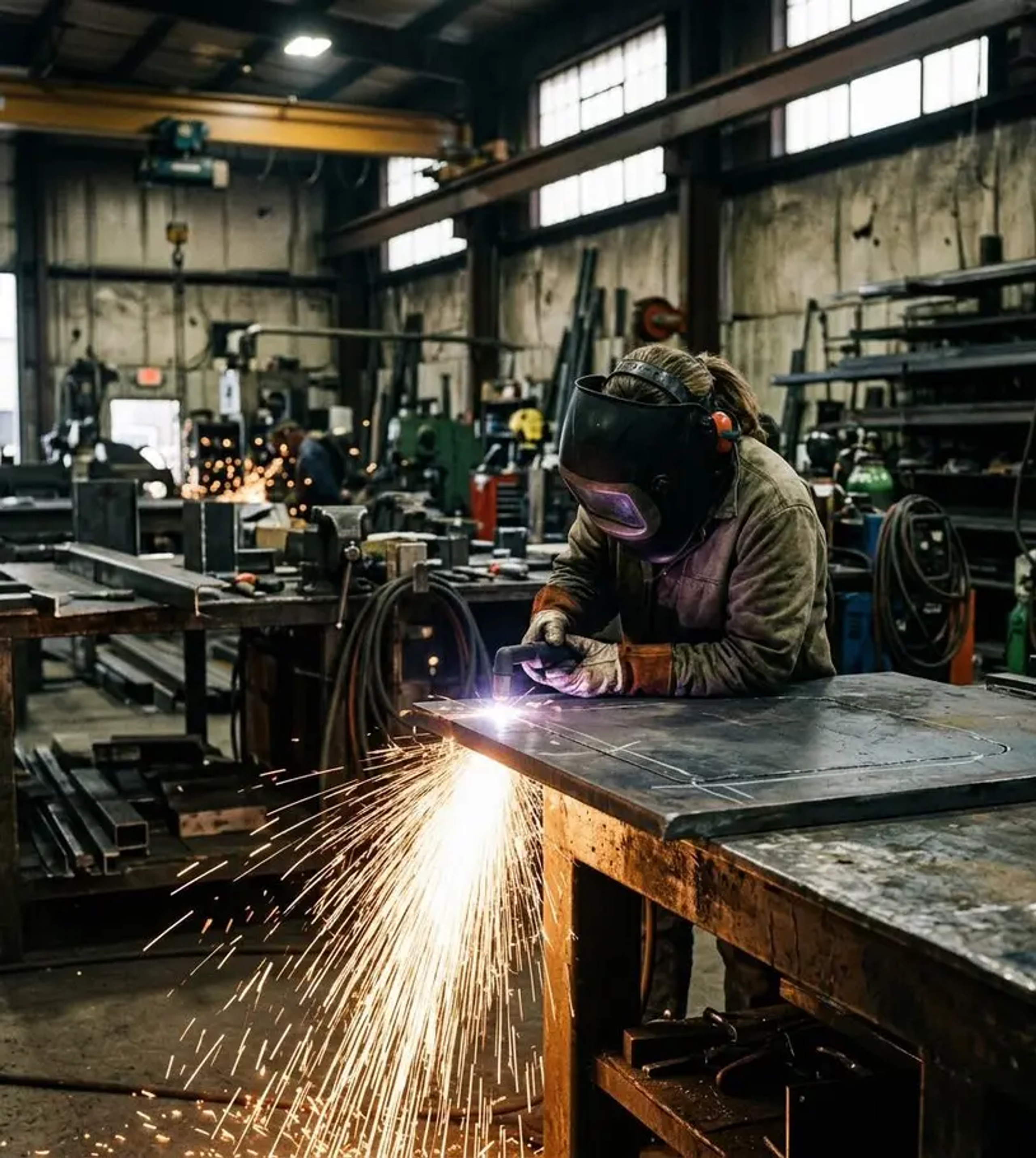
A metal fabrication shop typically runs three or four different air applications with different pressure, moisture, and oil-content requirements. Blasting needs volume and dry air at the nozzle. Plasma needs clean dry air at the torch. Laser cutting needs the cleanest air in the building. Machine tools need reliability and consistent pressure. The pages below cover each application with sizing tables. This page covers the system that serves all of them from one compressor room.
Starting points for sizing each application. All CFM values are at the tool or nozzle. Add hose losses and a 20 percent reserve before picking the compressor. Use the CFM calculator to combine simultaneous loads.
| Application | Typical CFM | Pressure | Air quality note |
|---|---|---|---|
| Sandblasting (single nozzle) | 50 to 200 CFM | 90 to 125 psi | Dry; desiccant for coating specs |
| Plasma cutting (up to 100A) | 5 to 20 CFM | 60 to 120 psi | Clean and dry; no free oil |
| Laser cutting (fiber, air assist) | 10 to 50 CFM | 100 to 200 psi | ISO 8573-1 Class 1-2 |
| Air grinders and die grinders | 20 to 35 CFM each | 90 psi | Standard filtration |
| Welding fixture air and clamps | 5 to 10 CFM | 80 psi | Standard |
| Machine tools and chip blow-off | 5 to 15 CFM each | 80 to 100 psi | Standard filtration |
Run the numbers yourself
Application-Specific Guides
Blast rooms, structural steel prep, and surface treatment for coating and welding.
Clean dry air at the torch for quality cuts and maximum consumable life.
High-pressure clean air as assist gas for fiber lasers cutting carbon steel.
Purge gas lines, fixture air, and pneumatic clamps for welding cells.
Air actuators, tool changes, chip blow-off, and coolant system air.
Air-powered grinders, die grinders, and sanders for finishing work.
Cleaning machined parts, fixtures, and conveyors before inspection.
Air cylinders, slides, and hoists moving stock and finished parts.
Four disciplines separate a shop that cuts and blasts at full rate from one that loses production to moisture, pressure drop, and undersized equipment.
Plasma torches, laser cutting heads, and blast nozzles all degrade with moisture in the air supply. Refrigerated drying handles the baseline in temperate climates. Laser assist circuits and formal coating specifications typically require a desiccant polisher downstream. Mapping which circuits need which specification avoids over-drying the entire shop and saves energy.
Most blasting, plasma cutting, and mechanical tools run fine on oil-injected compressors with standard coalescing filtration. Laser cutting with compressed air as the assist gas requires cleaner air because oil contamination fouls the lens and nozzle and degrades cut quality. A dedicated oil-free machine or a high-efficiency coalescing filter train on the laser circuit is the practical choice.
A multi-station shop runs blast rooms, plasma tables, and machine tools at the same time. Sizing from nameplate CFM of each tool overstates demand because not everything runs simultaneously at full rate. A diversity factor of 0.6 to 0.8 on the total connected load gives a realistic base, with a 20 percent reserve on top. An audit confirms it.
Blasting needs 90 to 125 psi at the nozzle. Plasma cutters run 60 to 120 psi at the torch. Laser assist gas for fiber lasers cutting thick carbon steel runs 145 to 200 psi. Machine tools run 80 to 100 psi. A single compressor at 125 to 175 psi covers all these applications. The laser circuit uses a secondary booster or higher-pressure machine if pressures above 175 psi are required.
For most metal fabrication shops, the foundation is a 50 to 150 HP rotary screw compressor with a refrigerated dryer serving the general shop load: tools, blow-off, actuation, and plasma. A dedicated clean-dry circuit from a coalescing filter bank feeds the laser. Blasting runs from the same header if CFM allows, or from a dedicated machine sized to the blast room. See the application pages for detailed sizing: sandblasting, plasma cutting, laser cutting, and machine shops.
Typical project: fabrication shop air system
A common scenario in this industry is a fabrication shop running three separate compressors for blast rooms, plasma tables, and machine centers, each at high duty cycle, with no dryer on the plasma circuit. A typical project starts with an audit that often uncovers significant leak loss from decade-old connections, then replaces the three machines with two properly sized rotary screw units: one for the shop base load and one dedicated to the blast rooms. A refrigerated dryer on the main header and a desiccant polisher on the plasma and laser circuits clear up the cut quality complaints. The result is lower compressed air energy spend and fewer weekend emergency calls. Brabazon audits the system, sizes the machines, and installs the drying and distribution for this kind of consolidation.
Factory-trained technicians dispatch from 7 branches serving 14 metro areas with an under 2 hour average emergency response. Find your nearest branch:
Start from the tools that run at the same time: add their nameplate CFM, apply a diversity factor of 0.6 to 0.8 since not everything runs at full rate simultaneously, then add 20 percent reserve. A shop running two plasma tables, one blast room, and several machine tools might land in the 200 to 400 CFM range. The CFM calculator on this site does the math from tool count.
Not necessarily, but it does need clean, dry air. A standard oil-injected compressor with a quality coalescing filter and refrigerated dryer meets most plasma manufacturer air quality specs. The key is holding moisture and oil aerosols below the torch manufacturer limit, which is specified in the plasma system manual.
Fiber laser assist gas for cutting must be cleaner than what most plasma systems require because oil contamination on the lens or nozzle degrades cut quality and can damage optics. ISO 8573-1 Class 1 or Class 2 air is the typical spec. A dedicated oil-free compressor or a high-efficiency filtration train on the laser circuit is the common solution.
Yes, if it is sized for the combined demand. A blast nozzle pulling 100 to 200 CFM is the dominant load. Machine tools and blow-off add 50 to 100 CFM on top. A 75 to 150 HP rotary screw covers both in a typical shop. Separating them onto a dedicated blast header with a booster valve protects machine tool pressure while the blast pot runs.
Brabazon has dispatched factory-trained technicians from 7 branches serving 14 metro areas since 1978 and has been the authorized Sullair dealer since 1984. Our under 2 hour average emergency response covers fab shops, steel service centers, and welding operations across our territory.
Tell us your blast rooms, plasma and laser stations, machine centers, and shift schedule. We size the compressor room, dryers, distribution, and circuit quality map from the tools up.
Press Escape to close. Use the arrow keys to move through results.