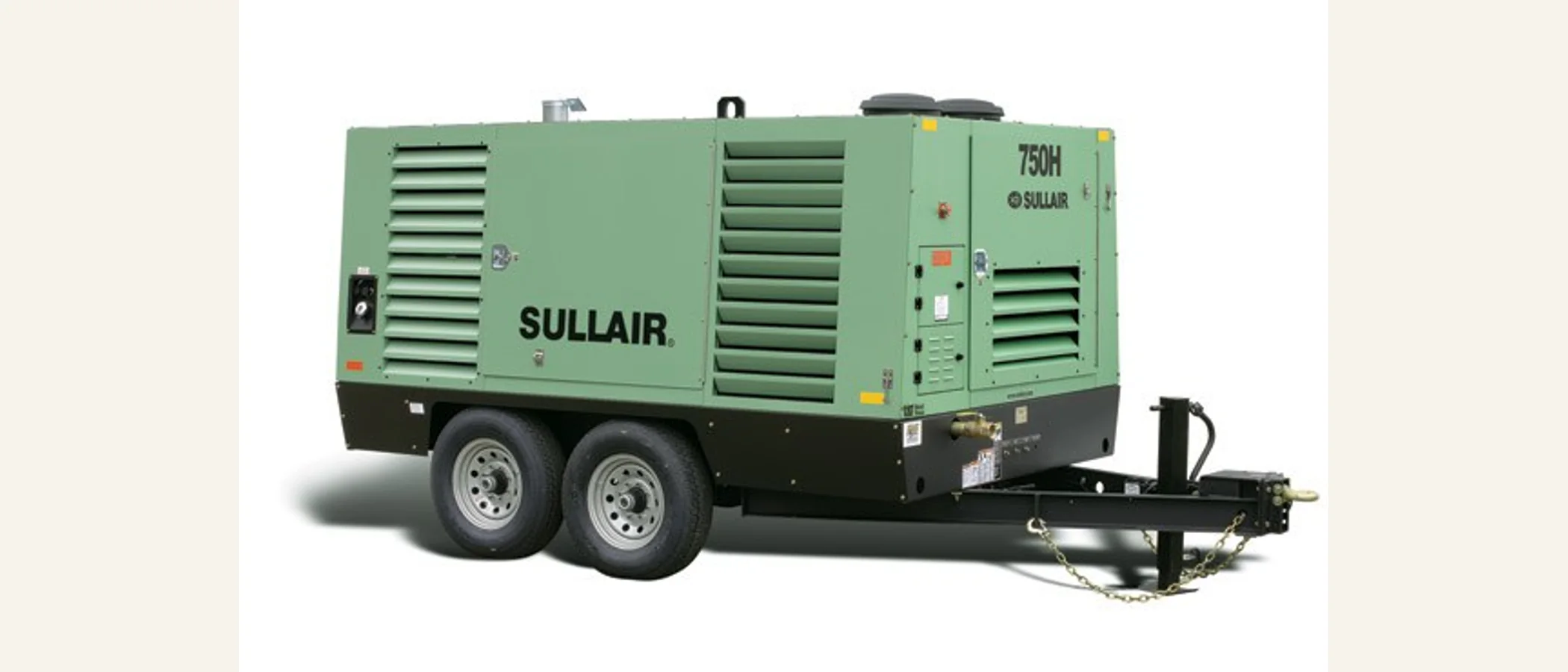
A portable rotary screw air compressor combines the efficiency and continuous-duty performance of a rotary screw unit with the mobility needed for construction sites, oil fields, mining operations, and remote industrial facilities. Whether you need high-volume air for pneumatic tools, drilling, sandblasting, or pipeline testing, a portable rotary screw compressor delivers performance that portable piston units can't match. Here's what you need to know before you buy or rent.
In this article
How Portable Rotary Screw Compressors Differ from Stationary Units
Portable rotary screw compressors are built on trailers or skids designed for towing or transport. Key differences from stationary units include:
Prime mover:
Most portable units use diesel engines rather than electric motors, making them self-contained and deployable anywhere without electrical infrastructure. Some electric-powered portable units exist for indoor or grid-connected applications.Built-in fuel tank:
Diesel-powered units include an onboard fuel tank for extended operation away from refueling points.Environmental protection:
Enclosures are weather-resistant for outdoor use in rain, dust, and temperature extremes.Outlet connections:
Multiple service valves (typically 3/4" or 1" NPT) allow connecting multiple hoses simultaneously.DOT/road compliance:
Towable units are designed to trailer regulations for road transport.
Diesel vs. Electric Portable Rotary Screw Compressors
The choice between diesel and electric depends primarily on whether a power source is available at the work site:
Diesel-powered:
Self-contained, highly mobile, no electrical infrastructure needed. Ideal for construction, pipeline, mining, and remote sites. Higher fuel cost than electricity, requires more maintenance (engine oil, filters, fuel system).Electric-powered portable:
Lower operating cost, quieter, no exhaust emissions - suitable for indoor or semi-enclosed locations. Requires appropriate electrical service at the site. Less flexible than diesel for truly remote applications.
Key Specifications for Portable Rotary Screw Compressors
When evaluating portable compressors, these specifications matter most:
Free Air Delivery (FAD) in CFM:
The volume of air actually delivered at rated operating pressure. This is the critical performance number - match it to your peak tool demand.Working Pressure (PSI):
Portable compressors typically offer one or more selectable pressure ranges. Common configurations include: 100 PSI/175 CFM, 125 PSI/150 CFM (dual-pressure), or high-pressure variants at 200 to 350 PSI for drilling and sandblasting applications.Engine horsepower (HP) or kilowatts (kW):
Larger engines deliver more air. Most portable industrial units range from 25 HP (small towable) to 400+ HP (large trailer-mounted).Fuel efficiency (gallons/hour at full load):
Important for operational cost planning, especially on long-duration jobs.Noise level (dB(A)):
Relevant for urban job sites or sites near residences with noise ordinances.Cold-start capability:
Important for cold-climate operations; look for glow plugs and cold-start aids for operations in freezing temperatures.
Common Applications for Portable Rotary Screw Compressors
Construction:
Jackhammers, rock drills, concrete demolition, and pneumatic nailing at sites without electrical servicePipeline and utility work:
Pneumatic tooling for pipe fitting, pressure testing, and purgingSandblasting and surface preparation:
High-volume air demand for abrasive blasting on bridges, tanks, and structuresMining and quarrying:
Drill rigs, roof bolters, and ventilation in underground or open-pit operationsOil and gas:
Wellhead operations, pipeline maintenance, and chemical injectionDisaster recovery:
Rapid deployment for emergency infrastructure repairRental and equipment dealers:
Portable compressors are a staple of equipment rental fleets
Top Brands in Portable Rotary Screw Compressors
Several manufacturers offer strong portable rotary screw compressor product lines:
Sullair:
Known for durable construction and excellent service network. The Sullair 185, 375, and 825 series are widely used in construction and oil/gas.Atlas Copco:
The XATS and XAHS series offer a wide range of pressures and flows, with advanced controllers and fuel-efficient engines.Doosan Portable Power:
Broad range of diesel-portable compressors from 100 to 1,600 CFM. Strong North American service network.Ingersoll Rand:
P-Series portable compressors known for reliability in construction and industrial rental markets.Gardner Denver:
The VHP series offers high-pressure capability for demanding applications like drilling and sandblasting.
Renting vs. Buying a Portable Rotary Screw Compressor
For occasional or short-duration projects, renting is often more economical than owning. Consider buying when:
- You run portable compressors more than 800 to 1,000 hours per year
- You need a specific pressure/flow combination not readily available from rental fleets
- You require rapid deployment and cannot depend on rental availability
- You have a dedicated maintenance team that can service the unit
Brabazon offers sales and service of Sullair portable rotary screw compressors throughout the Midwest. We also provide parts and service for Atlas Copco, Ingersoll Rand, and other major brands already in your fleet.
Maintenance Tips for Portable Rotary Screw Compressors
- Change engine oil and compressor oil per the manufacturer's hour-based schedule, not just by calendar
- Keep the air/oil separator element and intake air filter clean - clogged filters reduce output and accelerate wear
- Check belt condition and tension on belt-driven units at each daily pre-operation inspection
- Drain the moisture separator daily to prevent water in the air lines
- Inspect coolant level, radiator fins, and cooling fan on diesel units before each use
- Track hours religiously - service intervals are hours-based, not time-based
Contact Brabazon for Portable Compressor Sales and Service
Brabazon is the Midwest's authorized Sullair dealer, with factory-trained technicians who service portable and stationary compressors throughout Wisconsin, Illinois, Minnesota, Missouri, and Indiana. Contact us at 800.825.3222 or request a quote online for portable compressor sales, rental referrals, or field service.
GET A QUOTE