Rotary screw and reciprocating (piston) compressors are the two most common types of industrial air compressors, and choosing between them is one of the first decisions you face when specifying a new compressed air system. They work on fundamentally different principles, have different strengths and limitations, and are suited to very different applications. This comparison breaks down the key differences and tells you how to determine which type belongs in your facility.
In this article
How Each Type Works
A reciprocating (piston) compressor uses pistons driven by a crankshaft to compress air in a cylinder. It works essentially the same way an automobile engine works in reverse - instead of combustion driving pistons to turn a crankshaft, an electric motor turns a crankshaft to drive pistons that compress air. The compressed air is stored in a receiver tank and delivered on demand.
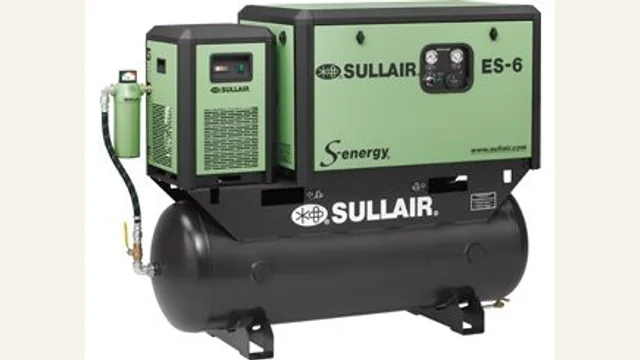
A rotary screw compressor uses two interlocking helical rotors to continuously compress air as it moves along the length of the rotors. There are no pistons, no valves, and no reciprocating motion. The result is a much smoother, continuous compression process with less vibration and lower maintenance requirements.
Duty Cycle: The Critical Difference
Duty cycle - the percentage of time the compressor can run continuously - is where the two types diverge most sharply. Reciprocating compressors are designed for intermittent operation: typically 60 to 75% duty cycle for industrial models. Running them at 100% duty cycle overheats the cylinders, accelerates valve wear, and dramatically shortens service life.
Rotary screw compressors are designed for 100% duty cycle operation. They run continuously without overheating because the oil injection (in oil-lubricated units) provides constant cooling. For any application requiring continuous air supply - or where demand could require the compressor to run uninterrupted for hours - a rotary screw is the appropriate choice.
CFM Range
Reciprocating compressors are available from very small (1 to 2 CFM portable units) up to approximately 50 to 100 CFM for industrial multi-stage models. Above that range, they become impractical - too large, too heavy, too vibration-intensive.
Rotary screw compressors start at around 5 to 10 CFM at the small end and scale up to thousands of CFM for large industrial installations. For facilities requiring more than 25 to 30 CFM on a sustained basis, a rotary screw is almost universally the right choice.
Pressure Capability
Both types can produce high pressure, but they do so differently. Reciprocating compressors are better suited to high-pressure, low-flow applications - specialty uses up to 3,000 to 5,000 PSI or more are achievable with multi-stage designs. Standard industrial rotary screw compressors typically produce 100 to 200 PSI, though high-pressure variants exist.
For standard industrial applications (90 to 150 PSI), both types are capable. For specialized high-pressure requirements above 200 PSI, reciprocating designs are often more practical.
Maintenance Requirements
Reciprocating compressors have more moving parts - valves, pistons, rings, rods, bearings - each of which wears independently and requires inspection and replacement on a schedule. Valve replacement is a recurring maintenance cost in high-cycle reciprocating compressors. Total maintenance burden is higher than an equivalent rotary screw unit.
Rotary screw compressors have fewer wearing parts. Primary maintenance consists of oil changes, separator element replacement, filter changes, and periodic belt or coupling inspection. With proper preventive maintenance, rotary screw compressors routinely achieve 80,000 to 100,000+ hours of service life.
Noise and Vibration
Reciprocating compressors are significantly louder and produce more vibration than rotary screw units. The reciprocating piston motion creates inherent vibration that requires proper mounting and isolation. Noise levels of 80 to 90 dB are common even for quality industrial reciprocating units.
Rotary screw compressors operate at 65 to 75 dB in sound-attenuated enclosures - comparable to normal conversation. They can be installed in production areas without the noise isolation required by reciprocating units.
Cost Comparison
Reciprocating compressors have lower purchase prices at equivalent horsepower ratings, which makes them attractive for lower-budget applications and intermittent use. A quality industrial reciprocating compressor in the 5 to 25 HP range typically costs 30 to 50% less than an equivalent rotary screw unit.
However, total cost of ownership over 10 to 15 years typically favors rotary screw in any continuous-duty application - lower energy consumption, lower maintenance costs, and longer service life more than offset the higher initial price.
Which Type Is Right for You?
Choose a reciprocating compressor if: your demand is intermittent (tools used for short bursts with significant idle time), your CFM requirement is below 25 to 30 CFM, you need high pressure above 150 PSI, or budget constraints make the lower purchase price decisive.
Choose a rotary screw compressor if: your demand is continuous or near-continuous, you need more than 25 to 30 CFM, noise levels matter, you want lower lifetime maintenance costs, or you need the efficiency and control that VSD technology provides.
Brabazon supplies both types and has no incentive to steer you toward one over the other - the right recommendation depends on your specific duty cycle, pressure requirements, and budget. Our factory-certified team can evaluate your current demand profile and specify the right compressor for your application.
Related Resources
- Industrial Air Compressors - rotary screw and other compressor options from Brabazon
- Compressor Repair Services - all-brand service and repair across the Midwest
- How Much CFM Do I Need? - size your compressor correctly before choosing a type
Get a Compressor Recommendation