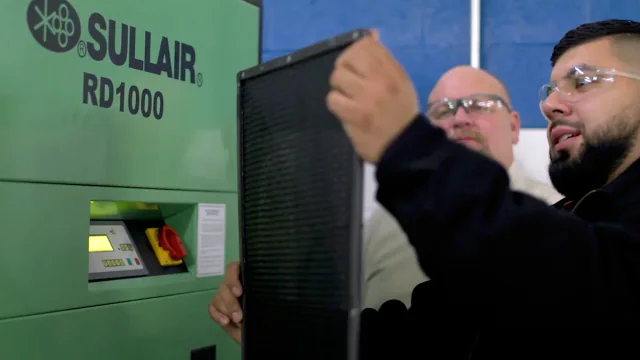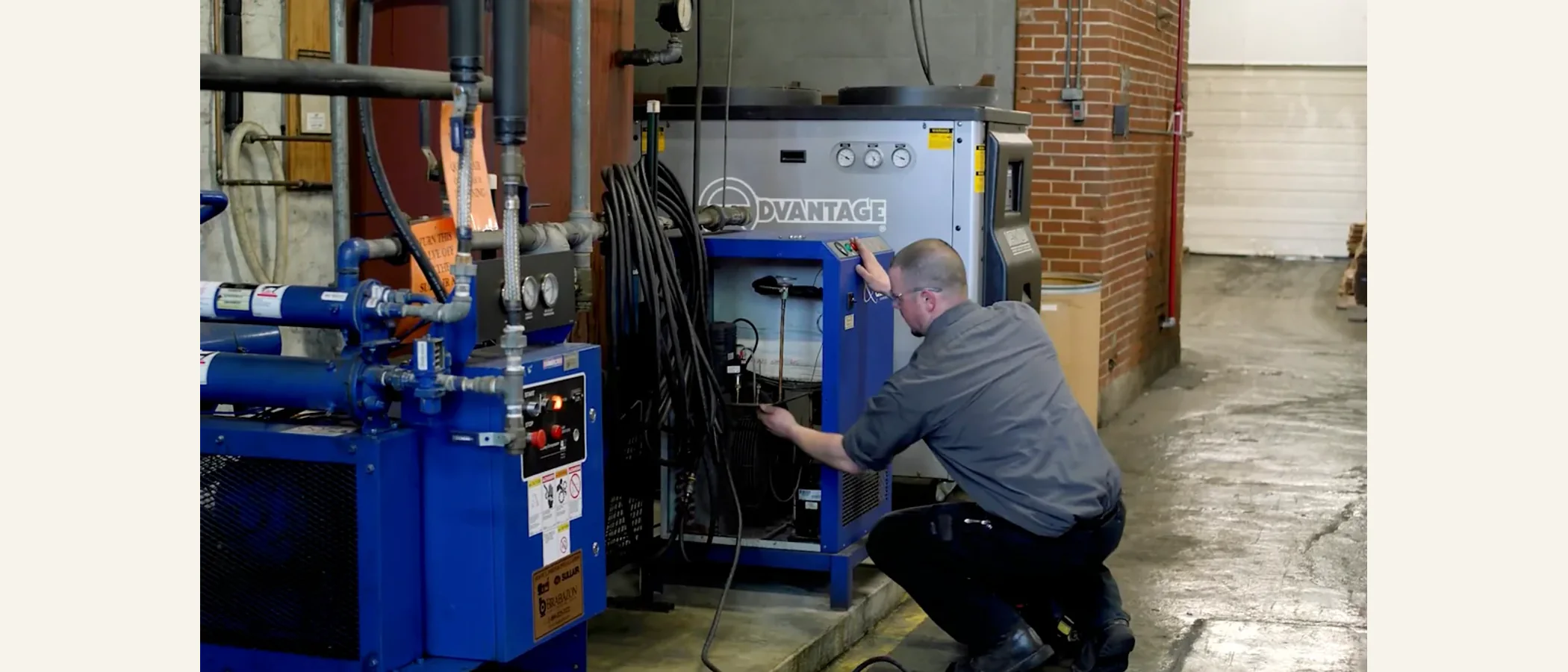
Compressed air always contains water vapor. As air is compressed and then cools, that moisture condenses into liquid water - and if it's not removed, it causes serious problems: rust in piping, frozen outdoor lines, damaged pneumatic tools, contaminated products and shortened equipment life. A refrigerated air dryer is the most common and cost-effective solution for removing moisture from compressed air systems.
In this article
How Does a Refrigerated Air Dryer Work?
A refrigerated air dryer works on the same principle as a household refrigerator or air conditioner. Compressed air passes through a heat exchanger where it is cooled to approximately 35 to 38°F (the pressure dew point). At this temperature, most of the moisture in the air condenses into liquid water, which is then separated and drained automatically. The now-drier air is reheated slightly before returning to the compressed air system.
The result is compressed air with a pressure dew point of 35 to 38°F - meaning moisture won't condense as long as the air remains above that temperature. For most industrial applications, this is more than sufficient.
Types of Refrigerated Air Dryers
Cycling Refrigerated Dryers
Cycling dryers use a thermal mass (refrigerant or water/glycol) that stores cooling energy. When air demand drops, the refrigeration system cycles off while the thermal mass maintains the dew point. This saves significant energy during low-demand periods, making cycling dryers ideal for facilities with variable air demand.
Non-Cycling Refrigerated Dryers
Non-cycling dryers run their refrigeration system continuously regardless of air demand. They are simpler, less expensive upfront and reliable in steady, continuous-use applications. However, they consume more energy during low-load periods.
Refrigerated vs Desiccant Air Dryers
Refrigerated dryers achieve a pressure dew point of approximately 35 to 38°F. For most industrial applications - pneumatic tools, machine automation, general manufacturing - this is perfectly adequate. However, some applications require much lower dew points:
- Outdoor compressed air lines in cold climates (lines can freeze if dew point exceeds ambient temperature)
- Instrument air for sensitive controls and analyzers
- Pharmaceutical and food processing applications requiring ultra-dry air
- Painting, coating or laser cutting where trace moisture causes defects
For these applications, desiccant (regenerative) dryers achieve dew points of -40°F to -100°F. They cost more to purchase and operate but are necessary when a refrigerated dryer's dew point isn't low enough.
How to Size a Refrigerated Air Dryer
Refrigerated air dryers are rated in SCFM at specific inlet conditions. To properly size a dryer for your system:
- Determine your compressor's maximum output in SCFM
- Note the inlet air temperature (hot air from the compressor aftercooler is typically 100 to 120°F)
- Note your ambient temperature around the dryer
- Check the dryer's correction factors - performance drops at higher temperatures and higher altitudes
- Select a dryer with a rated capacity that exceeds your compressor output after applying correction factors
Undersizing a dryer is a common and costly mistake. An undersized dryer will be overwhelmed during peak demand, allowing moisture to pass through and contaminate your system.
Refrigerated Air Dryer Maintenance
Refrigerated dryers require regular maintenance to perform properly:
- Clean condenser coils regularly - dirty coils reduce cooling capacity and increase energy consumption
- Test and inspect automatic condensate drains monthly - clogged drains allow water to carry over into the air system
- Check refrigerant charge annually - low refrigerant degrades dew point performance
- Inspect heat exchangers for fouling
Refrigerated Air Dryer Sales and Service from Brabazon
Brabazon Pump, Compressor and Vacuum supplies and services refrigerated air dryers from leading manufacturers including Sullair, Zeks, Hankinson, Beko and others. Our application engineers can help you select the right dryer for your compressor and application. Contact Brabazon to discuss your compressed air drying needs today.
GET A QUOTE