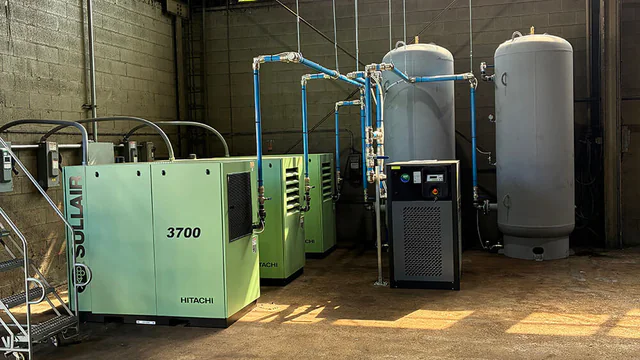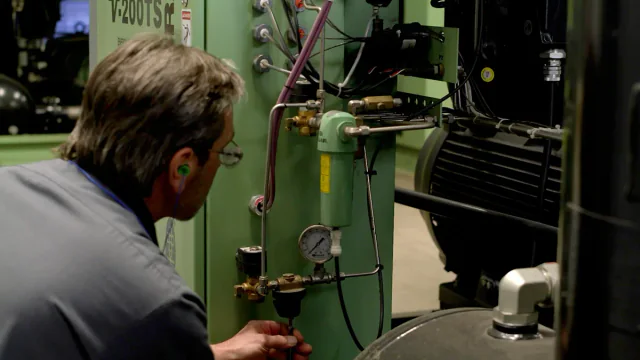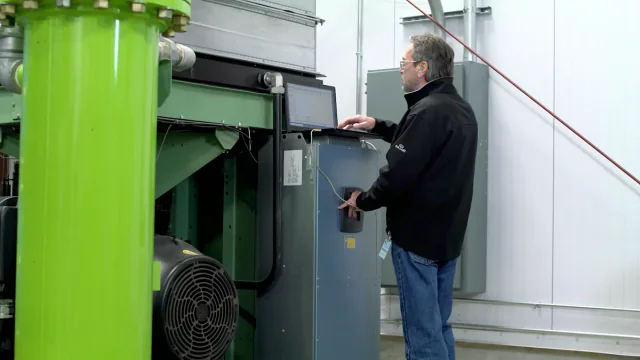
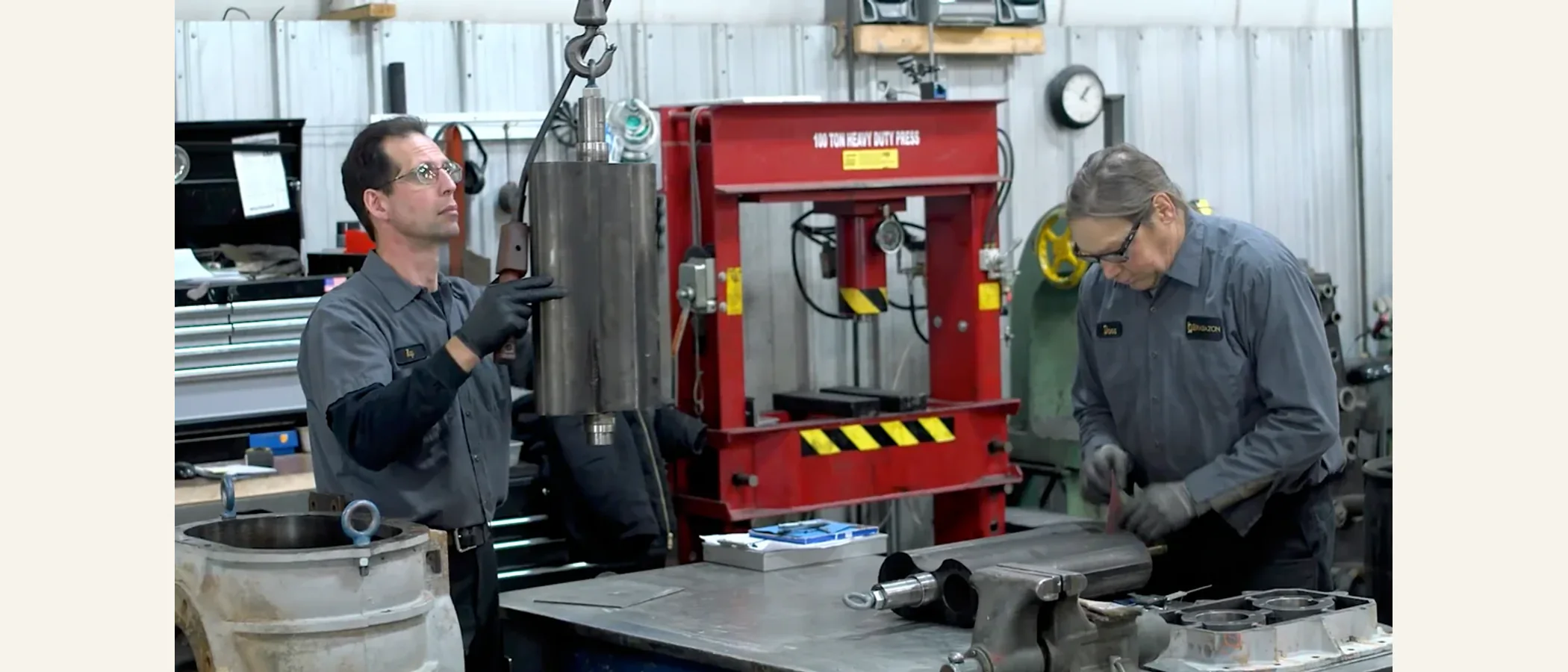
When your air compressor goes down, you need a technician - but not just any technician. The difference between a factory-certified specialist and a generalist mechanic isn't just a matter of credentials. It affects how quickly the problem is diagnosed, whether the repair is done correctly the first time, whether your OEM warranty remains intact, and how long the repair actually holds.
Brabazon employs factory-trained, factory-certified technicians for all major air compressor and vacuum system brands - including Sullair, Atlas Copco, Ingersoll Rand, Kaishan, Quincy, Gardner Denver, Kaeser, and Champion. Here's what factory certification means in practice, and why it should be a non-negotiable requirement when you're choosing an industrial equipment service provider in the Midwest.
In this article
What Factory Certification Actually Means
Factory certification is not a generic course or an online exam. For air compressor technicians, it means attending brand-specific training programs conducted or approved by the equipment manufacturer - covering the specific systems, components, failure modes, and diagnostic procedures unique to that manufacturer's product line.
Sullair's factory certification program, for example, trains technicians on the specific engineering of Sullair's rotary screw airends, the behavior of Sullair's SulPro fluid system, the controller diagnostics built into Sullair's SUPERVISOR systems, and the correct torque specifications, clearances, and rebuild procedures for each product line. A technician certified on Atlas Copco equipment has gone through equivalent brand-specific training on Atlas Copco's GA, GX, and ZR/ZT series compressors - training that simply doesn't transfer to other brands.
Brabazon's technicians receive this factory training initially, then participate in annual supplemental training to stay current as manufacturers update product lines and diagnostic tools. This ongoing education is a direct investment in the quality of service your facility receives.
Why It Matters for First-Visit Resolution
Over 90% of Brabazon service calls are resolved on the first visit. That number isn't accidental - it's the direct result of two factors: factory-trained technicians who can diagnose problems correctly the first time, and fully stocked service vehicles carrying OEM parts for all major brands.
A generalist technician encountering an unfamiliar compressor model may spend significant time diagnosing a problem that a factory-certified specialist would identify within minutes. Worse, misdiagnosis leads to replacing parts that aren't the actual root cause - costing you time and money while the underlying problem persists and potentially causes further damage.
Factory-certified technicians know the common failure modes for the specific equipment they're working on. They know which symptoms indicate which problems. They know the diagnostic tools and procedures the manufacturer designed for that system. That knowledge translates directly into faster, more accurate diagnosis and repair - and fewer callbacks.
Warranty Compliance: Why It Matters More Than You Think
Industrial air compressors typically carry manufacturer warranties ranging from 1 to 5 years depending on the brand, model, and components. Most of these warranties include specific requirements around who performs maintenance and repair work - and what parts are used.
Using non-OEM parts or having maintenance performed by technicians without manufacturer authorization can void your warranty coverage entirely. If a major component - like an airend, a motor, or a controller - fails while your warranty is still active, the difference between a covered repair and an out-of-pocket expense can be $10,000 to $50,000 or more.
Brabazon's status as an authorized dealer and service provider for Sullair and other major brands means our service work maintains your warranty coverage. We use OEM-grade parts that meet manufacturer specifications, and our technicians follow manufacturer-approved procedures. When we sign off on a repair, your warranty remains intact.
The Long-Term Cost of Using the Wrong Technician
Facilities sometimes choose the lowest-cost service provider for air compressor maintenance and repair - only to discover that the savings are quickly consumed by repeat service calls, premature component failures, and eventually, major equipment damage that proper maintenance would have prevented.
Common consequences of substandard service include incorrect lubricant specifications leading to premature airend wear, improper adjustment of pressure settings causing chronic inefficiency, missed early warning signs that develop into major failures, and non-OEM parts that don't meet manufacturer tolerances and fail prematurely.
Brabazon's technicians document every service visit in detail, maintain service histories for each piece of equipment we service, and provide written reports on equipment condition after every call. That documentation gives your maintenance team the information they need to plan ahead - and gives you the records you need to support warranty claims when issues arise.
Request a Certified Technician
Need a Factory-Certified Technician at Your Facility?
Brabazon's factory-certified technicians serve industrial facilities throughout Wisconsin, Illinois, Minnesota, and Missouri from 7 branches serving 14 metro areas. Our 24/7 emergency line 800.825.3222) is answered by a live representative every hour of every day - who can dispatch the nearest certified technician to your facility immediately.
Contact Brabazon to discuss your facility's service requirements, schedule a preventive maintenance visit, or set up an ongoing service agreement with guaranteed response times.
Written by
Heath Brabazon
President