Metal fabrication and stamping facilities are among the most demanding compressed air environments in industrial manufacturing. High-volume intermittent demand from stamping presses, stringent air quality requirements for laser cutting assist gas, and the contamination challenges of a metal-working environment all combine to create a compressed air system design problem that demands more thought than simply installing the biggest compressor that fits in the budget. This guide covers the key compressed air requirements and design considerations specific to metal fabrication and stamping operations.
In this article
Key Compressed Air Applications in Metal Fabrication
A typical metal fabrication or stamping shop uses compressed air for multiple applications, each with distinct pressure, flow, and air quality requirements:
Stamping press actuation and counterbalances:
Pneumatic press counterbalances require high-volume, high-pressure air (90 to 150 PSI) delivered reliably on demand. Pressure drops during the press cycle cause counterbalance malfunction and can create safety issues. Adequate storage capacity near the presses is critical to meeting instantaneous demand without pressure drop.Laser cutting assist gas:
Fiber laser cutting typically uses nitrogen (for clean cuts on stainless steel and aluminum) or compressed air (for mild steel) as the assist gas. Compressed air used for laser cutting must be extremely clean and dry - even small amounts of oil vapor cause contamination of the cut edge and laser optics. This application typically requires ISO 8573-1 Class 1 or better air quality.Plasma cutting:
Plasma cutting systems use compressed air as both the plasma gas and the shield gas. Air quality and pressure stability are critical - pressure fluctuations during the cut cause inconsistent arc performance and cut quality issues. Typical requirements are 60 to 90 PSI at 10 to 25 CFM per cutting station.Part blow-off and cleaning:
Blowing chips, coolant, and debris from parts between operations is a high-volume, intermittent compressed air use. Blow-off nozzles in high-production environments can consume 20 to 50 CFM per station.Pneumatic tools:
Grinders, impact wrenches, drill motors, and torque tools for assembly and fabrication operations - typically 3 to 8 CFM each at 90 PSI.Air-operated clamping and fixtures:
Pneumatic workholding for machining and welding fixtures - typically 4 to 8 CFM per fixture at 80 to 100 PSI.
Sizing for Stamping Press Demand Spikes
Stamping presses create some of the most challenging demand profiles in industrial compressed air. A large press counterbalance can demand 200 to 500 CFM instantaneously during the press stroke, then drop to near-zero demand between strokes. If your compressor is sized only for average demand, pressure will drop during each press cycle - causing counterbalance issues, potential safety concerns, and quality problems on the stamped part.
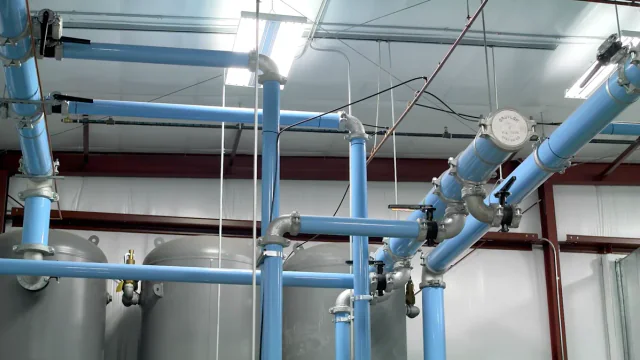
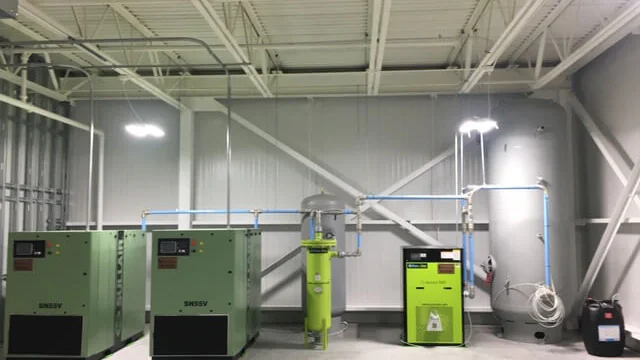
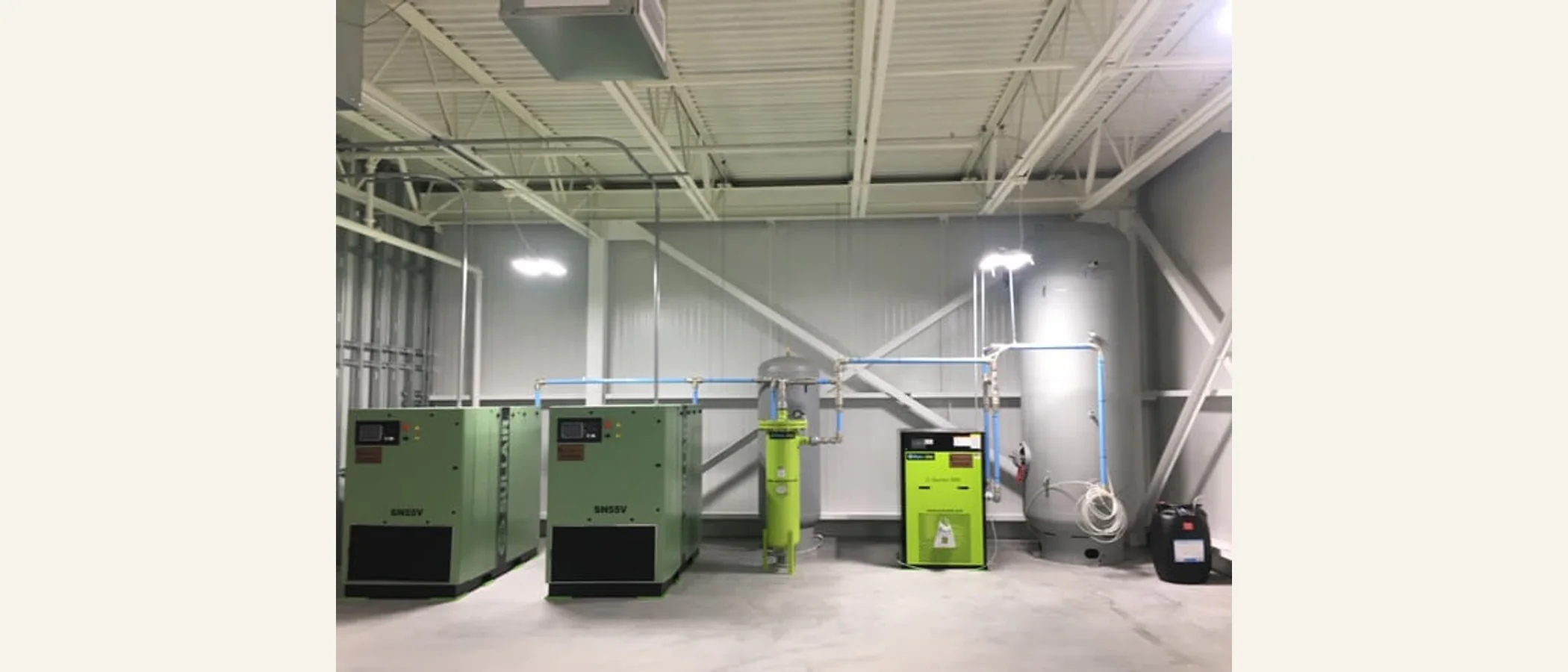
The solution is adequate compressed air storage located close to the presses - receiver tanks sized to buffer the instantaneous demand spike so the compressor sees a smoother average load. Proper storage sizing allows a smaller compressor to handle a much higher instantaneous demand without pressure drop. A compressed air specialist can calculate the storage volume required based on your press cycle time, counterbalance volume, and acceptable pressure drop.
Air Quality Requirements in Metal Fabrication
Metal fabrication environments are harsh for compressed air systems. Metal dust, grinding debris, welding fumes, and cutting fluid mist can contaminate both the compressor intake and the distribution system. Key air quality considerations:
Compressor intake location. The compressor intake should be located away from grinding, welding, and cutting operations. Metal dust ingested through the intake is abrasive to the airend and can contaminate the oil, causing accelerated wear. Remote intake ducting - pulling fresh air from outside or from a clean area of the facility - protects the compressor from this contamination source.
Moisture control. Compressed air used for blow-off, plasma cutting, and tool operation must be dry enough to prevent rust on parts and corrosion in pneumatic tools. A refrigerated dryer achieving a pressure dew point of +37°F or lower is minimum for most metal fabrication applications.
Oil content for laser cutting. As noted above, laser cutting requires very low oil content in the assist air. If you are running laser cutting with compressed air as the assist gas, install a coalescing filter followed by an activated carbon filter immediately upstream of the laser system, and verify oil content periodically.
Distribution System Considerations
Metal fabrication shops often expand over time - adding presses, laser systems, and machining centers in different areas of the facility. A distribution system designed for original equipment loads may have undersized headers, excessive pressure drop, and inadequate branch sizing for current loads. If you are experiencing pressure drops between the compressor and point of use - particularly during peak demand - the piping system deserves a pressure drop analysis before you add compressor capacity. A piping issue that adds 10 PSI of pressure drop forces your compressor to run at 10 PSI higher discharge pressure, wasting 5% in energy around the clock.
Brabazon Experience in Metal Fabrication
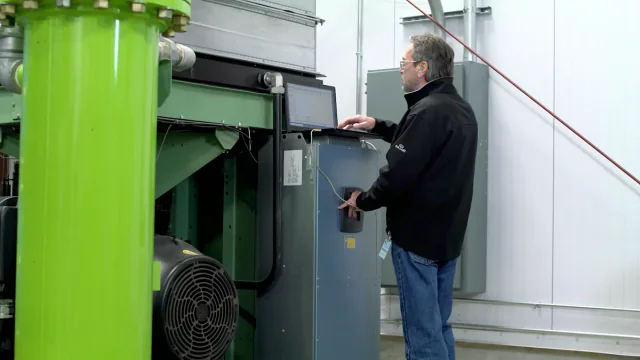
Brabazon serves metal fabrication and stamping operations throughout the Midwest - job shops, Tier 1 and Tier 2 automotive suppliers, custom fabricators, and stamping houses ranging from small operations to large multi-press facilities. Our factory-certified technicians understand the specific demands of fabrication environments and can evaluate your current system, identify sizing and air quality gaps, and design improvements that match your production requirements. We supply and service Sullair compressors, nitrogen generation systems for laser cutting, filtration systems for air quality control, and storage solutions for demand buffering.
Related Resources
- Industrial Air Compressors - rotary screw compressors built for demanding metal fabrication environments
- Compressor Repair Services - all-brand service for the compressors in your metal fab facility
- How Much CFM Do I Need? - size your compressed air system for stamping presses and laser cutting
Get a System Assessment