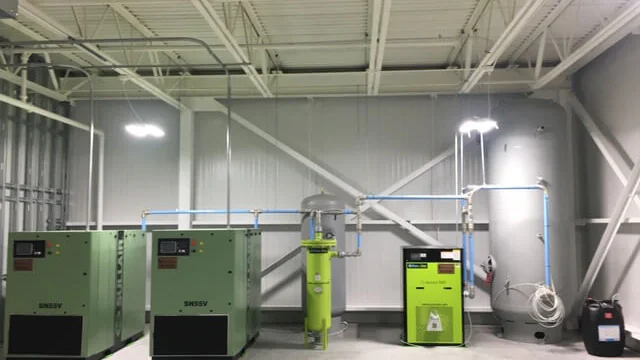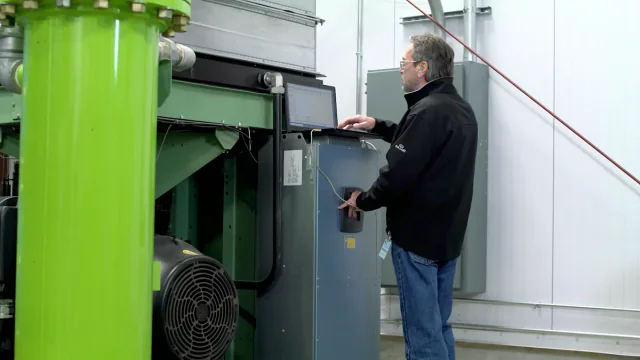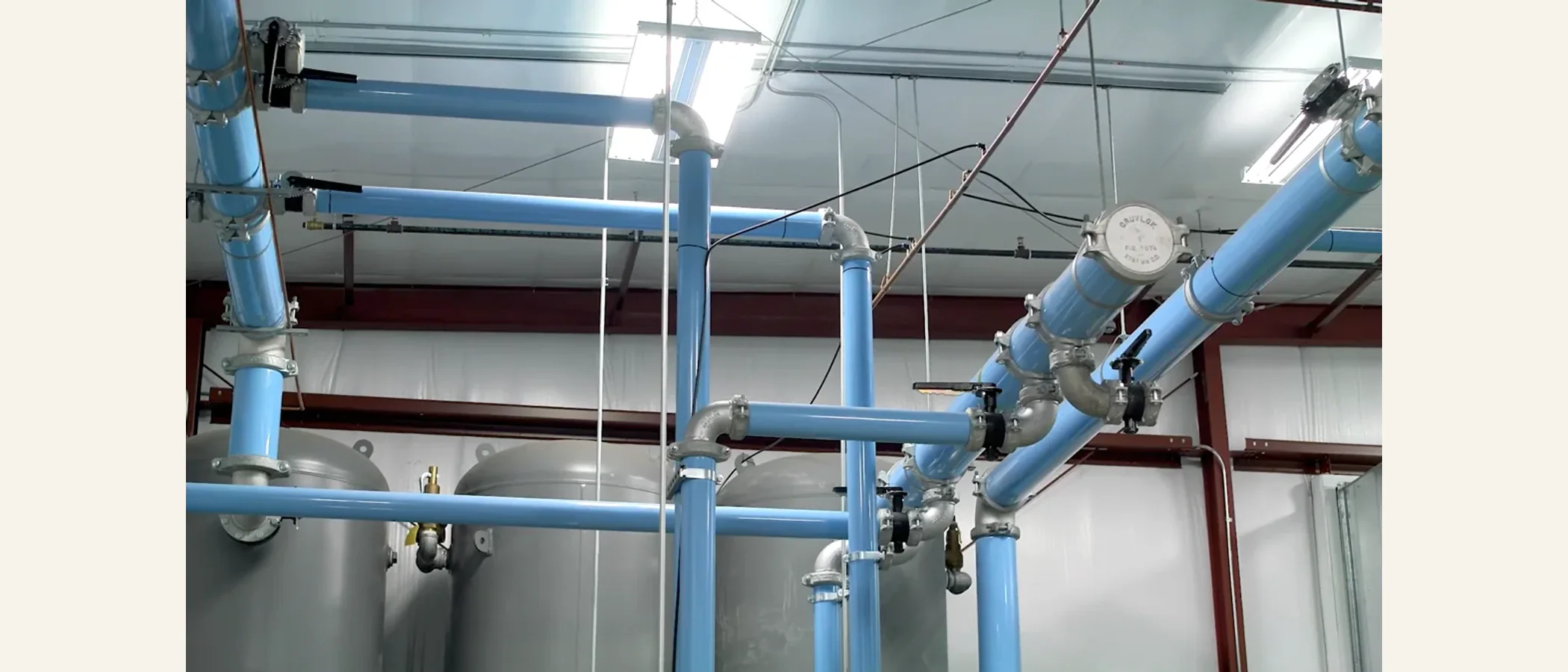
Your compressed air piping system is the circulatory system of your facility's compressed air supply - and like any circulatory system, poor design or deteriorating infrastructure directly impacts performance. Undersized pipe, poor layout choices, corroding iron pipe, and leaky fittings can cause significant pressure drops, air quality problems, and wasted energy. This guide covers everything you need to know about compressed air piping: materials, sizing, layout, and installation best practices.
In this article
Compressed Air Pipe Materials: Which Is Right for Your Application?
Choosing the right piping material is one of the most important decisions in compressed air system design. Here's a comparison of the most common options:
Black Iron / Carbon Steel Pipe
The traditional compressed air pipe material. Strong, widely available, and relatively inexpensive. However, carbon steel corrodes on the inside over time, generating rust particles and scale that contaminate downstream equipment, clog filters, and damage tools. For facilities with high air quality requirements, carbon steel requires aggressive filtration and regular maintenance. Not recommended for new installations where alternatives are available.
Copper Pipe
Copper doesn't rust, provides clean air, and is easy to work with using standard solder or press-fit fittings. Suitable for most industrial compressed air applications up to moderate pressures. Higher material cost than steel, but lower lifetime cost when you factor in reduced filtration requirements and no corrosion issues. A solid choice for facilities that want clean air without premium pricing.
Aluminum Compressed Air Piping
Modern aluminum piping systems (such as Transair or similar modular systems) are the premium choice for new compressed air installations. Advantages include no corrosion, very smooth interior bore (low pressure drop), lightweight construction, and fast modular assembly that doesn't require threading or welding. Initial cost is higher than steel but installation labor is significantly lower, and the lifetime performance is superior.
Stainless Steel
Used in applications requiring maximum corrosion resistance or where air purity is critical - pharmaceutical, food & beverage, semiconductor. Higher cost, but often required by process standards.
What to Avoid: PVC and Plastic Pipe
Standard PVC pipe should never be used for compressed air. It degrades with exposure to compressor oils and heat, becomes brittle over time, and can shatter catastrophically under pressure - creating a serious safety hazard. This is explicitly prohibited by many safety standards. Only compressed-air-rated polymer systems from manufacturers that specifically certify their products for compressed air service are acceptable alternatives to metal pipe.
Compressed Air Pipe Sizing: Avoiding Pressure Drop
Undersized piping is one of the most common compressed air system problems - and one of the most expensive to ignore. Pressure drop in undersized pipe forces compressors to operate at higher pressure (and use more energy) to compensate. The key sizing parameters are:
Flow rate (CFM):
Total demand at the point in the system being sizedPipe length:
Total equivalent length including fittings (elbows, tees, valves add equivalent pipe length)Allowable pressure drop:
Typically no more than 1 to 2 PSI total across the distribution systemOperating pressure:
Higher pressure systems can use smaller pipe for the same flow
As a rule of thumb: when in doubt, go one size larger. The energy savings from reduced pressure drop will pay for the incremental pipe cost many times over. A 2 PSI pressure drop across a 100 HP system wastes roughly 1% in energy - that's hundreds of dollars per year from undersized pipe alone.
Compressed Air System Layout Best Practices
Loop configuration:
Running a main loop around the facility (rather than a straight dead-end trunk) ensures pressure equalizes from two directions and eliminates low-pressure zones at the end of long runs.Drop legs for connections:
Branch connections to tools and equipment should drop down from the main header - not tap off the side - so condensate doesn't flow into downstream equipment.Slope toward drain points:
Pipe should slope slightly toward drip legs and condensate drain points to prevent water accumulation.Isolation valves:
Install isolation valves at intervals so sections can be taken offline for maintenance or repair without shutting down the entire system.Pressure gauges:
Install pressure gauges at key points - compressor discharge, after the dryer, and at critical use points - to monitor system performance and detect developing problems.
Compressed Air Piping Installation and System Design
Brabazon's team can design, size, and install compressed air distribution systems for new construction and facility upgrades across our Midwest service territory. Whether you're adding capacity to an existing system, replacing aging black iron pipe with modern aluminum piping, or designing compressed air distribution for a new facility, our engineers can develop a system that meets your flow and pressure requirements with minimal pressure drop and energy waste. Call 800.825.3222 or contact us online to get started.
PIPING & SYSTEM DESIGN